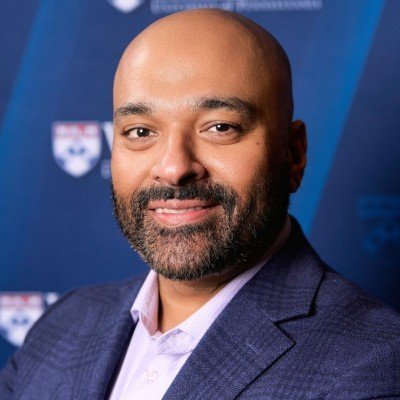
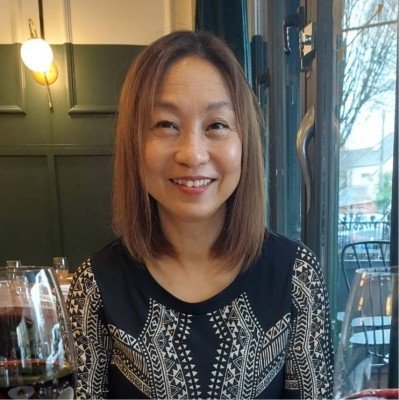
Natasha Robbins
BioTc Search
“I just love solving companies' problems. It's not just doing the recruitment itself, but it's really solving growth problems if they really need somebody quite niche and specific.”
Natasha Robbins has been named to the Talent 100, Class of 2026, the annual award recognizing up to 100 leaders in each category of talent acquisition. Honorees are nominated by peers or found by committees that look for excellent work wherever it happens, then chosen for the depth of their craft and their impact on hiring. This is Natasha's story.
On her first day at a recruitment agency nearly two decades ago, Natasha Robbins was told she would be running the life sciences desk. She knew absolutely nothing about life sciences. Today she runs her own executive search business in biotech, placing the directors, VPs, C-suite executives and board members who decide whether a young company raises its next round, reaches the clinic, or gets acquired.
That first assignment turned out to be the whole career. She spent three years there specializing in microbiology before realizing how much wider the scientific landscape was, then pitched her boss on a change of direction: drug discovery and early stage R&D. She built that desk herself, focused squarely on early stage startup companies, and in doing so found the corner of the market she has occupied ever since.
From Door-to-Door to the Boardroom
Before any of it, there was sales. Robbins came up through the unglamorous end of the trade, door-to-door and telesales, the kind of work that teaches a person how to open a conversation with a stranger and keep them on the line. Friends already in recruitment kept telling her the same thing: you would be great at this, it is very people driven. When she left a call center role, she decided they were right. Nearly twenty years later, the instinct has been vindicated.
For the last ten years she has run her own executive search business specializing in biotech, working with everything from startups to global organizations and building leadership teams across the scientific, clinical and commercial functions. The mandates she takes on now sit at director, VP, C-suite and board level, and she is candid that the appeal is not the transaction. It is the puzzle underneath it.
The Hire That Changes the Company
Robbins frames biotech executive search as a question of timing rather than a question of resumes. "Every company reaches a point where the next hire in a growth phase ultimately changes the business," she says. Sometimes that means a CEO whose specific job is to bring in funding. Sometimes it means a leader hired for the end game, for the buyout. The brief is rarely just a role description; it is a diagnosis of where the company sits on its own arc.
That is also why she resists the shorthand of simply filling seats. Biotech at this level frequently demands what the industry calls a unicorn, a candidate whose combination of scientific depth, commercial judgment and stage-appropriate experience genuinely does not exist in large numbers. Her work is as much about understanding growth problems as it is about sourcing. "It's about really looking at what do they need for that moment in time."
AI, and the Case for Staying Human
Robbins is an enthusiast, with conditions. AI, she argues, is a great tool that everybody should be looking to use, but the industry has skipped a step. "There's not enough training. I think people just start using it on their own." What is missing is not access but awareness of the right way to use it.
She is clear-eyed about the strain it has placed on her peers. Drop a job spec and a CV into a model and the CV comes back looking like a perfect match, which means that on paper nearly everyone now looks like a good fit. That makes it genuinely harder for talent professionals to work out who is who they say they are, and it pushes the burden of judgment back onto the human in the process.
For her own business, the technology has been a multiplier. Running her own company, previously supported by virtual assistants, she has used automation tools to build her brand and scale her operation. Automated workflows handle outreach and send emails on cue. Transcription replaces pen and paper across her meetings, so that when she picks up a follow-up conversation she can review a summary and know exactly where to resume. The efficiency is real. So is the boundary she draws around it. Her verdict is characteristically direct: people need to be more human in amongst all the AI.
Advice: Spend Six Months Not Selling
Asked what she would tell someone entering the industry, Robbins does not hesitate. Ask questions. Always be asking questions. "You can't become a good recruiter until you really understand your niche, your industry, the people that you work for, the problems that they need solving." Everything else, she believes, falls into place after that.
Her more provocative counsel is about restraint. Do not focus on selling. Do not sell anything for your first six months. Spend that time learning what problems the companies in your market actually have, because that information, once you own it, is gold. It applies as readily to tech or IT as it does to biotech. Coming from someone who started in door-to-door sales and now advises boards on the hire that will define their next chapter, the advice carries the weight of someone who has tested it.
The Talent 100 exists to celebrate the people shaping the future of how the world hires, and few embody that better than Natasha. We are honored to welcome Natasha Robbins to the Talent 100, Class of 2026, and grateful for the experience, perspective, and craft they bring to this community. Congratulations, Natasha. Welcome to the Talent 100.
About the Talent 100
The Talent 100 is an annual list spotlighting the leaders who push HR and talent acquisition forward, organized by Noon AI. Honorees are selected through peer nominations and independent selection committees. Selection is entirely merit-based, with no fees or pay-to-play requirements.