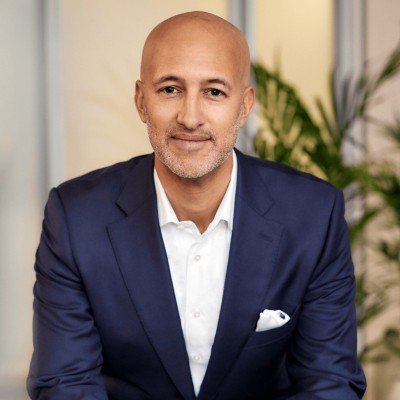
Laura Thomas
Haleon
“We do not want to get to a point where we are so automated that we lose a personal touch.”
Laura Thomas has been named to the Talent 100, Class of 2026, the annual award recognizing up to 100 leaders in each category of talent acquisition. Honorees are nominated by peers or found by committees that look for excellent work wherever it happens, then chosen for the depth of their craft and their impact on hiring. This is Laura's story.
The searches Laura Thomas runs rarely appear on a careers page. At Haleon she works at the very top of the house, hiring the executive team, the CEO's direct reports and the level below them, in a corner of the talent function that is confidential by nature and political by definition. Executive search at Haleon sits inside talent but does not report into talent acquisition, and that structural quirk says something about the craft itself: it operates on its own clock, sometimes moving in days, sometimes taking the better part of a year.
Her model for that work is deliberately unfashionable in an age of automation. She calls it white glove: personal outreach, one real conversation at a time, patient engagement with people who were not looking and had no reason to answer. It is a discipline she has practised across three markets and two continents, and one she is now trying to modernise without hollowing out.
A Marketer Who Learned to Pick Up the Phone
Thomas began her career in marketing, and stayed in it for years before a return from maternity leave sent her in a different direction. The role she accepted next was, as she understood it at the time, a sales job. It turned out to be with a very boutique search firm specialising in financial services, placing commercial directors and bank managers, and it was relentlessly phone based: dial, source, engage, repeat.
She has never treated that as an accident of fate. Talent acquisition, in her reading of it, is substantially an act of engagement, influencing and selling, which is precisely why a marketer's instincts travel so well into it. "It was a good start," she says of the boutique years, and the grounding shows. The habits formed on that desk, the personal outreach and the belief that persuasion is earned rather than automated, still define how she approaches a shortlist for a chief executive's direct report.
Building a Business From Scratch in Singapore
The turning point came from a leader who bet on her. The chairman of a search firm specialising in life sciences moved Thomas from the UK to Singapore to establish the firm's Asia Pacific branch. Thomas is originally from Singapore, and the assignment married her market knowledge to a genuinely entrepreneurial brief: build a business from nothing, remotely, with the chairman based in the UK. She became managing director of the Singapore branch, and the operation grew from a standing start to a headcount of ten, with strong contracts across both academia and industry.
He also gave her the sector that would define the rest of her career. "He really kind of brought me into the healthcare space, which I absolutely love," she says. "It's an industry that I would never want to leave." She names the opportunity, the mentoring and the sheer faith placed in her abilities as things she remains grateful for.
Where AI Helps, and Where It Must Not
Thomas is candid that her end of the profession sits behind the core talent acquisition group on artificial intelligence. Sourcing can be assisted, and the admin burden of a search practice is an obvious win: the volume of reports, candidate profiles and documentation generated as part of the service to stakeholders has become dramatically lighter to produce. But the heart of an executive search remains a human conversation, and no tool has yet earned that seat. Her ambition is for the AI journey in executive search to become far more integrated into the actual work rather than bolted onto its edges.
Elsewhere she has seen a genuinely exciting application. Deployed inside talent acquisition, AI is starting to solve the visibility problem for internal talent, pushing a function that is habitually outward looking to turn and examine its own workforce. It can surface a match, flag that an employee is ready for a move, and build real pipelines, particularly at middle management and the level below. For an organisation that has spent years hunting externally for capability it may already employ, that is not a marginal gain.
The Duty of Care
Her advice to other talent leaders is cautionary, and it is offered without apology. Efficiency is not the only variable. "We do not want to get to a point where we are so automated that we lose a personal touch," she says. Even where AI handles initial screening and calibration, the interaction itself still carries weight, because of who is on the other end of it.
That conviction rests on a single organising idea: in HR and in talent acquisition, the clients are people. Respect is therefore not a courtesy but an obligation, and the obligation runs in two directions at once. Thomas frames it as a duty of care owed not only to her own company but to every candidate who takes an interest in it. "It's very important that we manage every interaction very, very carefully," she says. At the level she recruits, where a single conversation can reshape a leadership team and a mishandled one can close a door permanently, that is less a philosophy than an operating requirement.
The Talent 100 exists to celebrate the people shaping the future of how the world hires, and few embody that better than Laura. We are honored to welcome Laura Thomas to the Talent 100, Class of 2026, and grateful for the experience, perspective, and craft they bring to this community. Congratulations, Laura. Welcome to the Talent 100.
About the Talent 100
The Talent 100 is an annual list spotlighting the leaders who push HR and talent acquisition forward, organized by Noon AI. Honorees are selected through peer nominations and independent selection committees. Selection is entirely merit-based, with no fees or pay-to-play requirements.