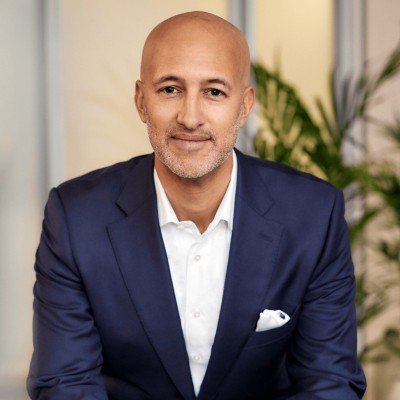
Annie Wenzel
SwingSearch
“Become a student of business, not just recruiting.”
Annie Wenzel has been named to the Talent 100, Class of 2026, the annual award recognizing up to 100 leaders in each category of talent acquisition. Honorees are nominated by peers or found by committees that look for excellent work wherever it happens, then chosen for the depth of their craft and their impact on hiring. This is Annie's story.
When a $150 million company recently asked Annie Wenzel to prove she could deliver a revenue leader, the ask was specific: show us the executives you have placed who have carried a business from $200 million to $2 billion. Wenzel went back through her own placement history and found hires who had launched products that did not exist before, generated hundreds of millions in revenue, and given entire teams an exit. Senior Partner at SwingSearch, she has spent 14 years helping VC-backed startups hire the leaders who shape the trajectory of their companies.
Her focus today is retained executive search across go-to-market and G&A, partnering directly with founders and investors on VP and C-level talent. She also leads a team that covers everything from individual contributor roles through senior director and head-of hires. It is a portfolio that requires her to move between two conversations at once: the tactical one about a role, and the strategic one about what a company is actually trying to become.
Serendipity, Then Fourteen Years of Compounding
Wenzel is candid that she did not plan any of this. A recruiter who recruits recruiters, an R for R, reached out to her one day, and her reaction was refreshingly uncomplicated. "Huh, that sounds really interesting. I'd love to hire people," she remembers thinking. "There was not a ton more thought brought into it."
What she brought with her was a sales background built in an era before automation smoothed the edges off prospecting. Earlier in her career she worked as a telemarketer, a role she describes as demanding the same raw ingredients recruiting demands: hustle and grit. That foundation turned out to be durable. Fourteen years later she is one of the people founders and investors call when the hire in question will determine whether the next funding round happens.
AI Everywhere Except the Human Part
Wenzel is unambiguous about the technology reshaping her field. "AI has been the greatest invention since the internet," she says, and she credits it directly for SwingSearch's performance: last year was the firm's best year, and this year has been better still.
She sees the same shift on the client side. Companies are adopting AI to become highly efficient, to hire less, and to bring on what she calls super ICs, people who can do more with tools instead of with headcount and salaries. Inside her own practice, she uses AI for systems, sourcing, target list building, meeting preparation, keeping her information clean and correct, and pressure testing creative ideas before she reaches out to candidates herself. She works across a mix of tools, ChatGPT, Claude, Perplexity, and Gemini, on the theory that each is better at different things and the only way to know is to try them.
Then there is the line she will not cross. Candidate experience, she argues, is a competitive advantage at SwingSearch, and it is the one area she deliberately keeps out of AI's hands. "I'm not a proponent of replacing human connection with AI wherever available," she says. She also flags a tension few recruiters are naming out loud: candidates evaluating offers now have to ask whether the product they would be joining is even defensible. Will Anthropic or OpenAI simply do this better within two years? Her honest answer is probably, which makes this, in her words, a really weird market to make a career decision in.
A Student of Business, Not Just Recruiting
Her advice to other talent leaders is a single instruction with real homework attached. Become a student of business, not just recruiting. Find the best articles and podcasts, from Hunters and Unicorns to MKT1, and build them into your weekly learning rather than treating them as optional.
The reasoning is commercial. The recruiters who create the most value, Wenzel believes, genuinely understand products, platforms, markets, sales motions, company stages, org design, and leadership. That fluency is what lets someone sit across from a founder and talk about the business rather than the job description, and ask the probing questions that surface what the company actually needs. The alternative, measuring the job in calls made and touchpoints logged, produces activity without alignment. "I've got to really understand a founder and their needs and really get aligned up front," she says, "is the best advice that I could give to anyone entering this process."
Your Product Is Your People
The sentence that organizes Wenzel's philosophy is short: your product is your people. She deliberately partners with founders who already believe it, the ones who do not describe an open role as a spot to fill but as a chance to bring in someone who changes what the company is capable of. Those are also the founders who treat an external search partner as a real part of the process rather than a vendor.
One moment stands out. Years ago, the first female founder to reach a $2 billion valuation reached out to tell Wenzel that she could count on ten fingers the people who had helped get her there, and that Wenzel was one of them. It is the kind of feedback that reframes an entire career. "I never feel like, oh, I'm just doing a job or I'm shuffling paper or I'm just filling a seat," she says. "I luckily don't hear that often and don't have that kind of viewpoint, because then I think otherwise it'd be tough to do this job."
That same generosity extends to how she talks about her peers. She points to the VP of Global Talent at Cursor, formerly of Vercel, as the most impressive internal talent leader she has ever worked with. In a function Wenzel knows is often undervalued, she spends a notable amount of her own credibility making sure other people get theirs.
The Talent 100 exists to celebrate the people shaping the future of how the world hires, and few embody that better than Annie. We are honored to welcome Annie Wenzel to the Talent 100, Class of 2026, and grateful for the experience, perspective, and craft they bring to this community. Congratulations, Annie. Welcome to the Talent 100.
About the Talent 100
The Talent 100 is an annual list spotlighting the leaders who push HR and talent acquisition forward, organized by Noon AI. Honorees are selected through peer nominations and independent selection committees. Selection is entirely merit-based, with no fees or pay-to-play requirements.