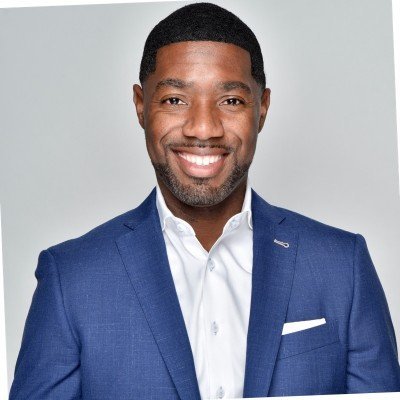
Laurence Ashby
Hanover
“You do not make something and then try to find someone to sell it to: you ask someone what their problem is, and then you make them something that solves it.”
Laurence Ashby has been named to the Talent 100, Class of 2026, the annual award recognizing up to 100 leaders in each category of talent acquisition. Honorees are nominated by peers or found by committees that look for excellent work wherever it happens, then chosen for the depth of their craft and their impact on hiring. This is Laurence's story.
Laurence Ashby's working day is measured in conversations rather than call volume: six or seven chief executives, four or five operating partners. As a Partner at Hanover, he builds, replaces and future-proofs the executive teams inside private equity backed software, technology and cybersecurity assets, work he has done alongside Carlyle, HG, Thoma Bravo, Clearlake, Silver Lake, Francisco Partners and Vista. His remit runs from large cap in the United States to mid-market and large cap in Europe and lower mid-cap in the UK.
What makes that position unusual is where it came from. Ashby never served an apprenticeship on a high-street recruitment desk. He arrived at senior search having already spent two decades selling to boardrooms in an entirely different industry, and he brought the habits of that industry with him: understand the client's problem first, build the answer second.
An Advertising Education in Listening
Ashby spent years in advertising, latterly as one of the global leaders for the American business Clear Channel. His accounts were the largest in the market: Unilever, Procter & Gamble, Masterfoods, and any client spending $5 million or more across the G8 markets in Europe, plus the emerging markets they were moving into. He dealt with chief executives and media directors on both sides of the Atlantic, and the discipline he took from it was blunt. Establish the need before you sell anything. Most salespeople, he argues, get that backwards.
By his early forties he could read the industry's own arithmetic. Advertising, he notes, has a well-worn change model: replace one forty-year-old with two twenty-year-olds at half the cost. Facebook had launched, YouTube had arrived, and platforms were beginning to trade directly with advertisers through digital planning interfaces. So he moved into technology consulting, advising clients on how to use and maximise those systems, and joined a listed business selling marketing resource management platforms into organisations including Royal Bank of Scotland. The sell was conceptual rather than transactional, and it suited him.
Building a Practice From Scratch
The search firm that had placed him on that board eventually turned the tables and asked him to join. The decision was sharpened by a departing chief executive who told him plainly that he could stay and stagnate, or take a settlement and go and become what he was capable of becoming. He left, and was handed a blank sheet: build an advertising practice. Working with the big networks including Omnicom and WPP, he improvised the mechanics as he went, relying on a strong network and one deceptively simple filter. Would he want this person in his own team? If the answer was no, the conversation ended there.
From advertising he moved laterally into the firm's industrial and software engineering clients, mining existing relationships rather than chasing new logos. When those technology businesses turned out to be private equity backed, the funds began asking who was standing up their centres of excellence in Krakow, Ukraine and India. The answer was Ashby, and the work escalated accordingly: from hiring Python engineers to appointing CIOs, CTOs, CROs and, in some cases, chief executives.
Three Interventions Across the Investment Cycle
Today his ecosystem is chairs, chief executives, operating partners and M&A advisors, and his work maps neatly onto the life of an asset. Before a transaction, he places domain experts alongside chairs so the asset can be properly evaluated. Once the investment lands, he builds the team for value creation and growth alignment. Roughly two years out from exit, he installs succession, because, as he puts it, nobody sells an empty business. The next investor needs a team ready to take it through the following term.
He is candid that this level suits him. There are no questions about whether a candidate will turn up or how they will present. He also remains a determined student: when he does not know something, he says, the answer is to find five people who have done it and ask them. The entrepreneur he rates most highly, a founder chief executive who built NP Group and for whom Ashby worked directly, taught him that visionary thinking and commercial discipline are not opposites. He describes him as the best chief executive he ever had.
The 20/60/20 Rule for AI
Ashby is an early adopter with a governor fitted. His framework: 20 percent is framing the question, 60 percent is the heavy lifting done by the machine, and the final 20 percent is iteration and critical thought. The test he applies to any output is whether he could stand up, defend it and admit to knowing it. At 55, with a classical education plus degrees in law and mathematics behind him, he describes the technology as the ability to consult a thousand people of his own vintage, each differently educated, and get a distilled answer in seconds.
The applications have been practical and wide. He has used it to model blood tests and diet while losing 10 kilograms in four months, to assess whether a contract was as enforceable in France as in the UK, and to populate an RFI against a job description and credentials from an iPhone while standing on a beach in Italy. Sixteen to eighteen months ago, he says, none of that was possible.
He is equally clear about the limits. Recipients now recognise machine-written outreach, and the market is quietly rejecting it. A handwritten, personally crafted mailout he sent to 70 contacts returned a 60 percent response rate. An AI-generated campaign to 900 contacts produced three replies. Where he sees genuine value is workflow management: a system that surfaces the ten people he needs to engage with today, with the engagement still done by him.
Advice for Talent Leaders
His counsel for the year ahead is a single instruction with a long tail. Do not be the solution to the problem a client thinks they already have. Be an advisor on the business and the challenges ahead of it. In practice that means asking senior leaders what they believe their problems are, how they know, and whether insight from comparable organisations run by comparable leaders would give them an advantage. Then it means working backwards from the ambition they wrote into the strategy when the investment was made.
He reaches for German car manufacturing to make the point. Porsche sells a dream first and engineers backwards to a cost. The alternative approach, he says, is to assemble something you think is clever, add ten percent, then go hunting for an audience and act surprised when nobody wants it. Clients who are told you can make their life easier and move them toward where they want to be tend not to argue about the invoice. As Ashby summarises it: go and ask, then find the solution together.
The Talent 100 exists to celebrate the people shaping the future of how the world hires, and few embody that better than Laurence. We are honored to welcome Laurence Ashby to the Talent 100, Class of 2026, and grateful for the experience, perspective, and craft they bring to this community. Congratulations, Laurence. Welcome to the Talent 100.
About the Talent 100
The Talent 100 is an annual list spotlighting the leaders who push HR and talent acquisition forward, organized by Noon AI. Honorees are selected through peer nominations and independent selection committees. Selection is entirely merit-based, with no fees or pay-to-play requirements.