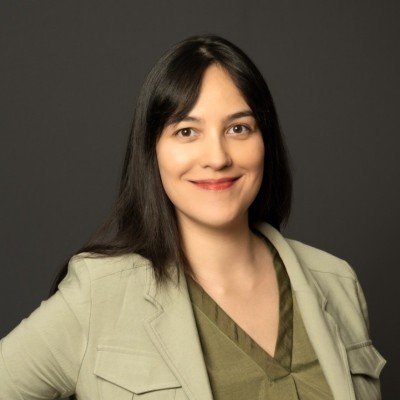
Andrew Caraballo
Solomon Page
“People will always want to work with people.”
Andrew Caraballo has been named to the Talent 100, Class of 2026, the annual award recognizing up to 100 leaders in each category of talent acquisition. Honorees are nominated by peers or found by committees that look for excellent work wherever it happens, then chosen for the depth of their craft and their impact on hiring. This is Andrew's story.
At 22, Andrew Caraballo was responsible for the entire front end of a $65 million Target store: every cashier, the guest service desk, the Starbucks counter, the Target cafe, and a team of roughly 85 people. He had a finance degree, he was the first person in his family to go to college, and he had never heard of the staffing industry. Today he is an Executive Recruiter at Solomon Page, and the whole arc traces back to a realization he had on that store floor: the operations were educational, the nights and holidays were not, but the people were everything.
The Accidental Entry Point
"Nobody goes to college and is like, I'm going to be a recruiter," Caraballo says. He is not an exception to that rule so much as a case study in it. As the first in his family to earn a degree, he had no map for what came after graduation, so he did what the map in front of him suggested: he went to a campus career fair, took a job in Target's store operations program, and got dropped into a store to rotate through departments and learn how a large retail business actually runs.
The management experience was real. Hiring, staffing, coaching, running a floor on duty, and understanding the economics of a nine figure operation at an age when most of his peers were still learning to build a spreadsheet. But retail management was not the career he wanted, and after about a year and a half he adopted a strategy that would be familiar to any recruiter reading this: he started answering every single LinkedIn InMail that came in.
One of them was from a staffing firm. Caraballo had no idea what staffing was. "I didn't know the industry existed," he says. "I thought people got their jobs through career fairs or from applying online, because that's how I got my job." The pitch was simple and, for him, decisive: you get to talk to people all day, and you will never work another Christmas Eve. He had interviewed for five or ten roles by that point. This was the first offer he received, and he took it.
The instinct turned out to be right. Colleagues tell him he has the gift of gab; one candidate told him he could sell ice to an Eskimo. "I like people, and so getting to connect people is where I feel like I'm pretty much the strongest," he says. Nearly a decade in, that is still the part of the job he would not automate away.
A Practitioner's Field Report on AI
Caraballo has integrated AI across essentially all of his workflows, and he is refreshingly unsentimental about which tools earn their keep. He was resistant to ChatGPT at first, then converted the moment he watched it produce a candidate write up in 15 seconds. He has since moved to the paid version of Claude, which he found meaningfully better, and uses it for the volume work of the job: cleaning up a resume in about three seconds rather than routing it to an admin for manual formatting, and drafting write ups that used to take five minutes and now take one. He calls it roughly an 80% time save. He also always edits the output, because, as he notes, it still reads as AI.
Not everything gets a pass. He tried LinkedIn Hiring Assistant and stopped using it, concluding he is simply more efficient sending InMails himself. The AI matching bot in Bullhorn, which is meant to pair candidates with open roles, he rates at two or three out of ten for relevance. He makes a pointed observation from that: LinkedIn is owned by Microsoft, an enormous amount of money is being poured into these products, and the results are still uneven. "I don't think we're as close to replacing our admin as we think," he says, while allowing that the next couple of years will close much of that gap.
He is also honest about the limits of trusting output you have not checked. He once planned a vacation with an AI assistant, skipped verifying the reviews himself, and ended up in a hotel that did not live up to its billing. His wife has not entirely let it go. He tells the story as a working recruiter's reminder: the tool gets you the bones, the human still has to do the diligence.
What Survives, and What Has to Adapt
Caraballo is neither an alarmist nor a cheerleader. "I'm not scared of AI. I think it's just something that's inevitable, and either you're going to embrace it and get better," he says, adding immediately that predictions of wholesale replacement strike him as dramatic. Most of the tools he uses today, he notes, cannot replace him.
What he is watching closely is client capability. If a company deploys the right software, 100 applicants should reduce cleanly to three genuine matches, and he is already seeing employers get more effective, aided by a job market where candidates are applying directly in volume. He offers a data point that stopped him cold: a client recently filled a cost accounting role, by far the hardest search in his niche, entirely on their own with no external recruiter involved. "Which never happens," he says.
So he holds two views at once. Over the next five years, he does not expect the fundamental shape of his work to change much: a company calls, he places somebody. Over ten years, he thinks the external recruiter's role is a genuine question mark, while the internal recruiter's is not, because someone will always have to run the screens. If the market demands a pivot, he is prepared to make one, whether that means moving in house or into a different kind of sales. What he is betting on is not a job description but a durable truth about the work: "People will always want to work with people."
It is a conviction earned the long way, from a store floor where he managed 85 people before he was old enough to know what staffing was, to a mentor who taught him empathy is a technique, to a career built on the belief that connection is the one part of recruiting no one is going to ship in a software release.
The Talent 100 exists to celebrate the people shaping the future of how the world hires, and few embody that better than Andrew. We are honored to welcome Andrew Caraballo to the Talent 100, Class of 2026, and grateful for the experience, perspective, and craft they bring to this community. Congratulations, Andrew. Welcome to the Talent 100.
About the Talent 100
The Talent 100 is an annual list spotlighting the leaders who push HR and talent acquisition forward, organized by Noon AI. Honorees are selected through peer nominations and independent selection committees. Selection is entirely merit-based, with no fees or pay-to-play requirements.