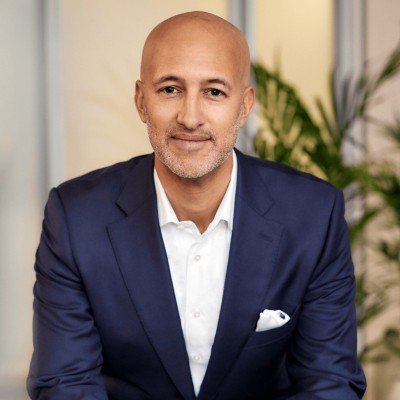
Niklas Sutela
Mercuri Urval
“There's really no excuse for going into any meeting not being well prepared.”
Niklas Sutela has been named to the Talent 100, Class of 2026, the annual award recognizing up to 100 leaders in each category of talent acquisition. Honorees are nominated by peers or found by committees that look for excellent work wherever it happens, then chosen for the depth of their craft and their impact on hiring. This is Niklas's story.
Eleven years at one company is unusual in any industry. In executive search, where consultants often trade logos every two or three years, it is close to an anomaly. Niklas Sutela has spent all eleven of his at Mercuri Urval, a stretch he describes simply as a commitment, and one that has taken him through several sets of responsibilities without ever taking him out the door.
What has kept the work interesting is that it keeps changing shape. Sutela operates in the European executive search market, where GDPR draws hard lines around what can be done with candidate data, and where the arrival of AI has altered not only how a search is run but what a search is now expected to assess. He is unusually clear eyed about both halves of that equation: the tooling that speeds the work up, and the human judgment that cannot be handed over.
A Job Posting in Helsinki
The origin story is refreshingly free of mythology. Sutela was living in Turku when his then girlfriend, now his wife, moved to Helsinki. He followed her. He had graduated and gone to work for a staffing company, so when a posting appeared at Mercuri Urval, he recognized it immediately as a step forward. He applied, went through what he calls a rigorous process, and was selected.
"Quite easily, actually," is how he sums up his entry into the profession. The eleven years that followed were less easy and considerably more interesting. He moved through different responsibilities inside the firm, building the kind of institutional knowledge that only accrues to people who stay long enough to see the same clients, industries and cycles come around again.
AI Inside a Search Firm
Mercuri Urval has built its own AI capability in a sandbox within its systems, with agents developed by the firm's own IT function, which means Sutela can use it across the work rather than treating it as an outside utility. In a European context governed by GDPR, that distinction matters enormously. Strict limitations apply to what can be done with candidate information, and having the tooling live inside the company's own environment is what makes serious use possible at all.
The clearest gain, he says, has been in preparation. A new client, a new industry, an unfamiliar counterpart across the table: none of it is an excuse anymore. General information is always there, and new sectors and topics can be learned quickly. He also uses it to spar with ideas and iterate text and information, provided no personal data is involved.
Where he draws the line is precisely where executive search earns its fee. At the top of an organization, chemistry and trust between people sit at the core of the process. Those cannot be automated, sped up, or approximated. Sutela's position is not skepticism about AI so much as discipline about it: use it hard where it helps, and be mindful about how you use it everywhere else.
The New Question in Every Search
The more interesting shift, in his view, is not what AI does for the recruiter. It is what AI now demands of the candidate. Sutela argues that the topic has to be considered in every single executive search his firm runs. How well equipped is this leader on the subject? How do they use it? Do they see how it shifts and moves their industry?
That turns the assessment itself into a harder problem. It demands, he says, that consultants analyze a leader's adaptability, their capability, and their curiosity to learn new topics. New CEOs and new leaders, in his reading, simply need a mindset of continuous learning: watching what is changing in the world, working out how their own way of working has to change, and identifying the new business opportunities that change creates. The practical consequence for his profession is that the context of each search has become more complicated, and that complexity is now permanent.
Curiosity, and No Substitute for Hard Work
His advice to people entering recruiting is, by his own cheerful admission, the same thing he says about chief executives, and he is not apologetic about the repetition. Be curious. Keep an open mind. Keep your eyes open on how things are changing, and work continuously on your own learning and development.
Then comes the part that no tool has yet made obsolete. "There's no work where there's any substitute for hard work," he says. "That always comes with it." Around that foundation he stacks the rest: find new ways to use the tools that exist, look for where you can improve, bring new ideas into the working environment, and keep picking up learnings from other great professionals.
It is, in the end, a description of how Sutela has spent his own eleven years. Someone took a chance on a 26 year old, someone else showed him what standing behind your people looks like, and he has spent the time since compounding both lessons in a business that keeps rewriting its own rules.
The Talent 100 exists to celebrate the people shaping the future of how the world hires, and few embody that better than Niklas. We are honored to welcome Niklas Sutela to the Talent 100, Class of 2026, and grateful for the experience, perspective, and craft they bring to this community. Congratulations, Niklas. Welcome to the Talent 100.
About the Talent 100
The Talent 100 is an annual list spotlighting the leaders who push HR and talent acquisition forward, organized by Noon AI. Honorees are selected through peer nominations and independent selection committees. Selection is entirely merit-based, with no fees or pay-to-play requirements.