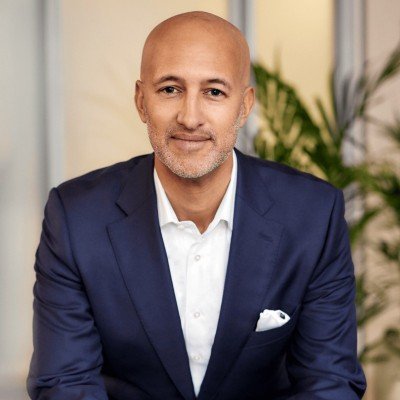
Garrett Stephenson
“Recruiting is never a short-term opportunity: the longer you do it, the more people you know and the more opportunity you have.”
Garrett Stephenson has been named to the Talent 100, Class of 2026, the annual award recognizing up to 100 leaders in each category of talent acquisition. Honorees are nominated by peers or found by committees that look for excellent work wherever it happens, then chosen for the depth of their craft and their impact on hiring. This is Garrett's story.
Garrett Stephenson starts work every day at 3:00 a.m. Central Time and likes to say he works half days: 3:00 a.m. to 3:00 p.m. He still answers the phone at night. He is CEO & Senior Partner of Gateway Recruiting, the executive search firm he founded, which he says has been listed among Forbes' best professional recruiting firms for each of the past eight years.
Twenty-six years into the profession, and, as he puts it, lucky enough to have been featured in The Wall Street Journal, Garrett credits something slower than any headline: trust built over time. Branding, he says, is never a short journey. It takes time and investment to build a personal brand and the trust that comes with it.
At the senior end of the market, that trust does the heavy lifting. Unless a search is at the C-level, Garrett no longer sources candidates himself, and when it is, he draws on what amounts to a personal database. He does not need software to tell him where to find a CEO. His team, working at other levels, relies on a range of tools.
Garrett began in corporate IT within commodities trading. In 2000 a recruiter placed him in a new position, and he moved to the Bay Area. When he saw that the startup he had joined would not be viable long term, he went back to the same recruiter and asked for another job. A couple of months into that search, the recruiter turned the tables, pointing out that he had been brokering commodities and dealing with people for a living, and suggested he come do the same thing in recruiting.
He took the advice. About 15 years ago, he says, he concluded that he would not be leaving the career no matter what. Part of the appeal is intellectual. Rather than specializing narrowly in semiconductors or airplane engines, he gets to learn about new technologies, new therapies, medical devices and new ways of thinking. He jokes with his three daughters that he knows enough about implantable cardiac devices to play a surgeon on TV. For people who crave knowledge and want work that is never stagnant, he believes the profession is an ideal fit.
When Garrett married 16 years ago, clients and candidates were among the guests, friendships forged over years of personal connection. He is still struck by the access the career has given him: the CEO of a major medical device company returns his calls within a couple of hours. Professionals he placed as controllers 15 years ago are now CFOs of public Fortune 500 companies, and they still remember the service he provided. Some continue to use his firm, and some now mentor him.
Demanding clients shaped his work ethic early. He recalls a managing director and partner at FTI Consulting, an early client, who would call at 8:00 p.m. and ask for eight candidates in the office by 8:00 a.m. the next day. The demands were steep, and he delivered anyway. He was youthful then, he says, though the hours have hardly changed. Today the table has turned, and Garrett mentors people early in the industry and others further along in their careers, acting as part career coach, part contact and part counselor as they work out what sacrifices it will take to reach where they want to go. When someone wants out because of a corporate upheaval, he offers perspective: change is constant in corporate America.
Ethics, he says, have been his livelihood. He estimates he has helped people land jobs for free more often than he has been paid, because connecting people is symbiotic and, in his experience, it always comes back around.
Garrett describes the past 24 months in AI as something of a space race, with people building their own agents or relying on Claude, ChatGPT, Grok or Copilot. He sees plenty of fine-tuning still ahead, but real power already in place. Frustrated that past systems never provided real-time updates, he used Claude to build a brand new applicant tracking system for his firm.
The problem was one he had lived with for years. Having worked through four different ATS iterations in 26 years and, by his account, every brand of technology available, he found that data in CRM and ATS platforms inevitably goes stale. A contact listed as an account manager a decade ago is likely a director somewhere now, perhaps in another industry. His system goes out to the internet every morning to confirm that contacts and information remain current. Many companies claim to offer automatic, continual updating, he notes, but he has yet to see it, and he expects it to be one of the industry's next steps.
Claude, Garrett says, is a powerful tool for building lists, organizing work, and supporting branding, marketing campaigns and SEO. It also makes mistakes, which means constant double-checking, though he expects that to improve. What it will never replace is human compassion and the ability to pick up the phone, connect with someone and find their real reason for wanting to change careers or wanting to hire.
People crave interaction, he argues, and the blend of heart, compassion and logic that humans bring is hard for any learning system to replicate. Some people now treat AI as a counselor, but that still falls short of meeting someone one-on-one and understanding where they are in life and where they need to be. He expects AI to keep evolving and to make lives better over an interesting decade ahead. As a father, he also wants the industry to get guardrails right, not only for the general population but especially for kids.
Garrett's guidance for fellow recruiting leaders is compact and characteristically direct. Be adaptable. Be resilient, and do not give up. Stay client-centric and customer-focused. Above all, he says, always do the right thing.
The Talent 100 exists to celebrate the people shaping the future of how the world hires, and few embody that better than Garrett. We are honored to welcome Garrett Stephenson to the Talent 100, Class of 2026, and grateful for the experience, perspective, and craft they bring to this community. Congratulations, Garrett. Welcome to the Talent 100.