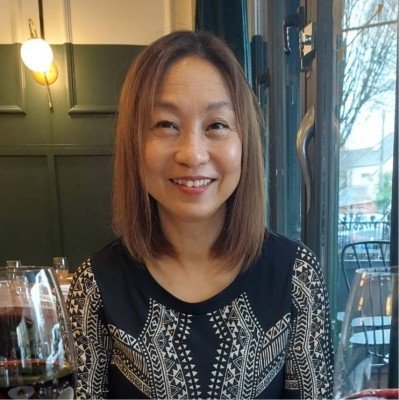
Michelle Smalls
Fustech Consulting
“Really the bulk of it is going gradually in each stage of my development in recruiting and in human resources.”
Michelle Smalls has been named to the Talent 100, Class of 2026, the annual award recognizing up to 100 leaders in each category of talent acquisition. Honorees are nominated by peers or found by committees that look for excellent work wherever it happens, then chosen for the depth of their craft and their impact on hiring. This is Michelle's story.
Before Michelle Smalls ever ran a search, she was grading salaries. Her first seat in the talent world was inside a hospital, handling scheduling, pay grades, salary inputs and the administrative machinery behind every position on the org chart: roughly eighteen months of unglamorous groundwork that became the foundation of everything after it. Smalls, an Executive Recruiting Manager with Fustech Consulting, has spent a career moving deliberately through each stage of the talent function rather than skipping steps, and it shows in how completely she understands both ends of the employment relationship.
"I started off literally learning the whole business from the operational side," she says. The phrasing is modest. The consequence is not. Many practitioners enter the profession through tools and requisitions, learning first how to fill a role. Smalls learned first how a role is built, graded, paid and staffed. That is a different kind of literacy, and it has never stopped paying her back.
Eight Years Inside Healthcare Hiring
From that operational grounding, Smalls graduated into recruiting in a hospital setting and stayed for about eight years. Her scope widened steadily until she was hiring at all levels, from nursing through the C-suite, and the work extended well beyond posting and screening. She partnered with colleges. She spoke at conferences and events. She ran Lunch and Learns with students, promoting the hospital and its recruitment program to people who had not yet pictured themselves in healthcare at all.
That pairing became a signature. High-stakes executive hiring on one side, early-career evangelism on the other. Smalls has rarely been content to work only at the top of a market. She has consistently spent energy building the pipeline that will eventually supply it.
A Leap of Faith into Technology
Then she changed industries entirely, in what she describes as "a different leap of faith." Smalls moved into information technology and joined Microsoft, walking into a hybrid remit that would have overwhelmed a narrower practitioner: human resources business partner work combined with recruiting. She supported the LATAM division from the United States, covering every country in the region with the exception of Brazil, and stepping in there when help was needed.
The work sat high in the organization. Smalls partnered with the executive team at the C level across Latin America and with their direct reports, handling talent management, performance management and one on one coaching alongside hiring. In effect she learned a second version of recruitment, practiced from a different vantage point and inside a very different business culture from the hospital corridors where she began.
DigiGirlz and the Deliberate Pipeline
Inside LATAM, Smalls also ran diversity programs, and one in particular captures how she works. DigiGirlz is a Microsoft companywide program championing girls in technology, run region by region, and LATAM was the region Smalls was assigned to lead. As she puts it, she would "create this synergy" with a school in Miami and another in Boca to bring the girls in. Then she did the thing that makes such events actually land: she put the company's executive women team in front of the room to present.
None of that was incidental. Girls in the seats, women running the podium, by design. It was the same instinct that had sent her into college Lunch and Learns years earlier, translated into technology. Show young women the people who already did it, and the career stops looking like someone else's. Smalls has never treated diversity work as an accessory to a recruiting portfolio. She treats it as recruiting, conducted several years upstream.
Mapping the Top of the House
From there Smalls elevated again, into recruitment management and resource management, and then into executive recruiting, where her work centered on C-level searches. The instruments of that trade are talent mapping and market mapping, the patient cartography of an industry's leadership bench: understanding who exists, where they sit, and which of them could be dropped into a high-level position and genuinely thrive in it.
She has done, by her own accounting, so many things across so many realms that the list resists summary. What organizes it is not a single job but a single arc. "Really the bulk of it is going gradually in each stage of my development in recruiting and in human resources," she says, learning the whole aspect of both ends of it. That means knowing what has to happen at the front end, getting the right person through the door, and what has to happen afterward, developing that person into who they become inside the organization over time. Very few practitioners can credibly claim both. Smalls built her career specifically so she could.
The Talent 100 exists to celebrate the people shaping the future of how the world hires, and few embody that better than Michelle. We are honored to welcome Michelle Smalls to the Talent 100, Class of 2026, and grateful for the experience, perspective, and craft they bring to this community. Congratulations, Michelle. Welcome to the Talent 100.
About the Talent 100
The Talent 100 is an annual list spotlighting the leaders who push HR and talent acquisition forward, organized by Noon AI. Honorees are selected through peer nominations and independent selection committees. Selection is entirely merit-based, with no fees or pay-to-play requirements.