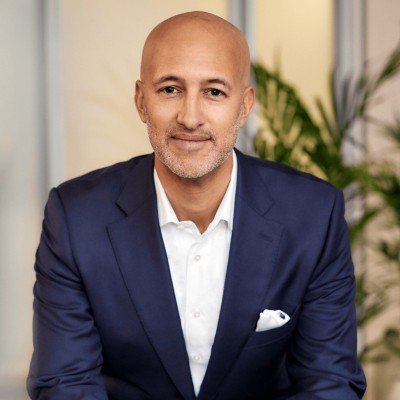
Mark Di Staulo
17 Oranges
“You have to adopt, change, persevere and move on.”
Mark Di Staulo has been named to the Talent 100, Class of 2026, the annual award recognizing up to 100 leaders in each category of talent acquisition. Honorees are nominated by peers or found by committees that look for excellent work wherever it happens, then chosen for the depth of their craft and their impact on hiring. This is Mark's story.
Sixteen years ago, Mark Di Staulo entered the recruiting world as a consultant. He never left. At the time of this interview he was Chief Technology Officer at Russell Reynolds Associates, and in the years between he had rebuilt the firm's technology landscape several times over, each rebuild an answer to an industry that refuses to sit still. He has since become Senior Advisor and Fractional CTO at 17 Oranges.
That trajectory, from outside consultant to full time hire to the C-suite of one of the most recognized names in executive search, is unusual in a profession where technology leaders and talent leaders often speak different languages. Di Staulo speaks both. He works out of Manhattan, commuting in from New Jersey, and his vantage point on the search business is the one very few people occupy: close enough to the recruiting process to know exactly where the friction lives, and senior enough to do something structural about it.
A Four-Industry Education
Di Staulo did not learn his craft in a single vertical. Over his career he has worked across four distinct industries: manufacturing, transportation, financial services and professional services. Each brought a different operating tempo, a different tolerance for risk, and a different definition of what good technology looks like. The through line was the caliber of the people he answered to.
Asked to name the leaders who shaped him, he does not reach for a list of recruiting celebrities. He points instead to the executive teams he has served, the CEOs, the C-suite peers he worked alongside, and the board members who challenged his thinking. "Most of the individuals I learned from were mostly the executive teams that I work for," he says. What he learned from recruiters came in a different form: absorbed in fragments across hundreds of conversations, picked up from practitioners he encountered along the way, each interaction adding something that made him more valuable in the marketplace. He describes it not as mentorship in the formal sense but as a culmination of conversations and relationships built over years, which is arguably the harder kind of education to acquire and the more durable kind to keep.
Where AI Actually Helps, and Where It Does Not
Di Staulo has spent serious time deploying technology and AI inside the recruiting process, and he is precise about what it delivers. Speed, first. The march from a long list to a short list, historically one of the most labor-intensive stretches of any search, has collapsed. Work that once consumed as much as a month can now be turned around in three to seven days.
He is equally precise about the limits. "It doesn't necessarily replace the recruiter, but it certainly facilitates the business process," he says. AI is strong at parsing skill sets and mapping capability. It is not, in his assessment, ready to own the cultural read or the assessment judgment that determines whether a candidate will actually succeed inside a specific organization. For now, the professional recruiter and the human in the mix remain non-negotiable, not out of sentimentality but because that is where the accuracy still lives.
It is a position that requires some discipline to hold. The loudest voices in the market tend to argue either that AI changes everything or that it changes nothing. Di Staulo occupies the more useful middle, treating the technology as an accelerant on a process that still needs an experienced hand steering it.
Change as a Professional Skill
Ask him for advice heading into 2026 and he starts in the same place every time: be open to change. It sounds simple until he unpacks why it is not. "No one inherently wants to change or likes to change," he says. "But it's one of the attributes that will help you with your career and your growth." His formula is blunt and easy to remember: adopt, change, persevere and move on.
The urgency comes from the pace. We are not doing things today the way we did them 25 years ago, he notes, and we will not be doing them a year from now the way we do them today. AI improves daily. Adjacent technologies evolve alongside it. Di Staulo describes the result as a wheel that keeps turning and keeps accelerating, and he is candid about what that means for expertise itself: "No one knows it all anymore. Experts come and go really fast now. So you have to roll with it." For a technology executive, that is a striking admission and a healthy one. It reframes the job from knowing the answer to building an organization that can find the next answer faster than the last one expired.
He applies the same evidence-based lens to the workplace debate. Most of his team had worked remotely since COVID, and in his view the productivity did not go anywhere. If anything, he believes the combination of remote work and technology advancement has increased it. But he stops short of treating distributed work as a solved problem. Culture needs oxygen, and oxygen means people in a room together at least some of the time. Social gatherings, physical gatherings, real meetings: the balance matters, and leaders who ignore the cultural half of the equation will eventually pay for it.
The Talent 100 exists to celebrate the people shaping the future of how the world hires, and few embody that better than Mark. We are honored to welcome Mark Di Staulo to the Talent 100, Class of 2026, and grateful for the experience, perspective, and craft they bring to this community. Congratulations, Mark. Welcome to the Talent 100.
About the Talent 100
The Talent 100 is an annual list spotlighting the leaders who push HR and talent acquisition forward, organized by Noon AI. Honorees are selected through peer nominations and independent selection committees. Selection is entirely merit-based, with no fees or pay-to-play requirements.