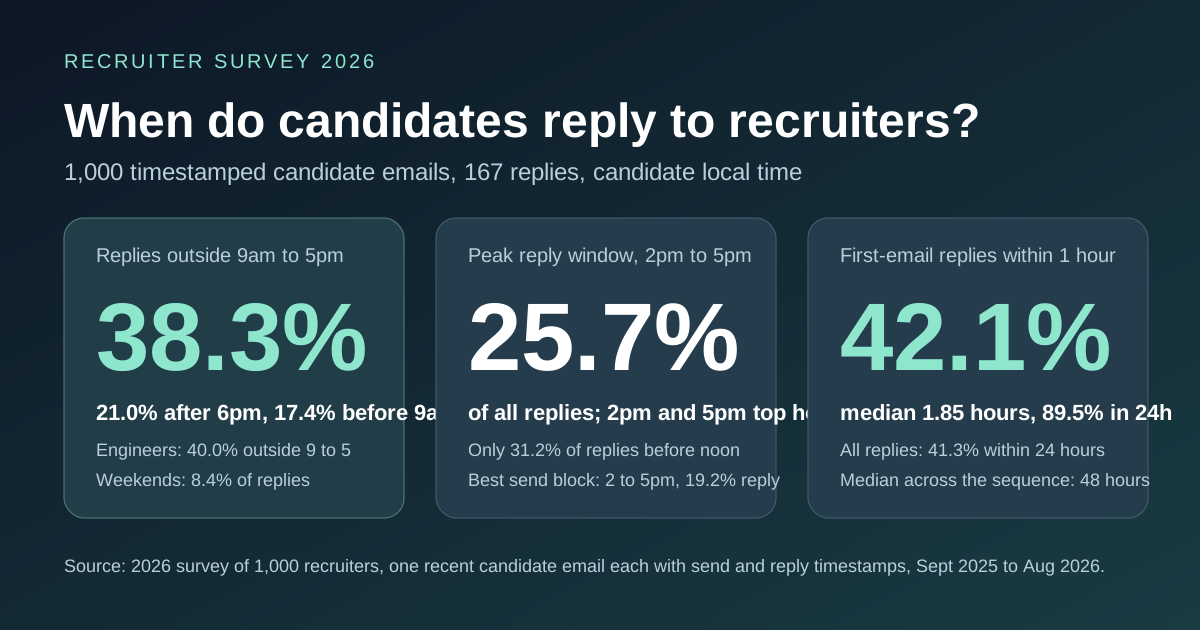
Key takeaway: 38.3% of candidate replies to recruiter emails arrive outside 9am to 5pm in the candidate's local time, and 21.0% arrive after 6pm. The single busiest reply window is 2pm to 4:59pm, which carries 25.7% of all replies, with 5pm the joint top hour. In a 2026 survey of 1,000 recruiters, who each submitted one recent candidate email with send and reply timestamps, 167 emails drew a reply. Candidates who answered the first email did so fast: a median of 1.85 hours, with 42.1% replying within the hour. Recruiters sending between 2pm and 4:59pm local time saw the highest reply rate (19.2%); the 9am to 11:59am block came second at 17.4%.
Pages about when to email candidates usually stop at the send side. This one reports both sides, by hour, from timestamped data: when recruiters sent, when candidates answered, and how long the gap was. In 2026 we surveyed 1,000 recruiters and asked each for one recent outbound email to a candidate, sent between September 2025 and August 2026, with the send time in the candidate's local time zone, the reply time if any, the candidate's role and seniority, and the sequence step that drew the reply. 95.6% of the candidates were in the US. 167 of the 1,000 emails got a reply (16.7%) and 87 a positive one (8.7%).
The companion pages from this survey program cover the best day of the week to email engineers and how many days candidates take to reply. This page is about the clock.
What time of day do candidates reply to recruiters?
| Candidate local time of reply | Share of 167 replies | Engineers (65 replies) |
|---|---|---|
| Midnight to 5:59am | 7.2% | 9.2% |
| 6am to 8:59am | 10.2% | 4.6% |
| 9am to 11:59am | 13.8% | 12.3% |
| Noon to 1:59pm | 11.4% | 9.2% |
| 2pm to 4:59pm | 25.7% | 24.6% |
| 5pm to 7:59pm | 18.0% | 21.5% |
| 8pm to 11:59pm | 13.8% | 18.5% |
The busiest single hours were 2pm and 5pm, each with 10.8% of replies, followed by 3pm at 9.0%. The morning is quiet: fewer than one reply in three (31.2%) arrived before noon. Replies then build through the afternoon and stay high into the evening.
Engineers skew later. 40.0% of engineer replies arrived outside 9am to 5pm, against 38.3% for all candidates, and 18.5% came after 8pm, against 13.8% overall. The early-morning block was almost empty for engineers (4.6% between 6am and 9am).
How many candidates reply outside work hours?
| Window (candidate local time) | Share of replies |
|---|---|
| During 9am to 5pm | 61.7% |
| Outside 9am to 5pm | 38.3% |
| Before 9am | 17.4% |
| 6pm or later | 21.0% |
| Saturday or Sunday | 8.4% |
More than a third of candidate replies land when most recruiting teams are not watching the inbox. That matters because of the second finding below: candidates who reply fast expect a fast answer back, and a reply that sits from 7pm to 9am the next morning has lost 14 hours of momentum. Weekend replies were less common (8.4%) than weekday evening replies, and Wednesday (21.6%), Monday (21.0%) and Tuesday (19.8%) were the heaviest reply days.
How quickly do candidates reply after an email is sent?
| Time from send to reply | Share of 167 replies |
|---|---|
| Within 1 hour | 19.2% |
| Within 24 hours | 41.3% |
| Within 72 hours | 60.5% |
| Within 7 days | 79.0% |
| Median | 48.4 hours |
34.1% of replies came on the same calendar day as the email. The median across all replies, including replies to follow-ups, was just over two days.
The first email is a different animal. Of the 76 replies that came in response to the first email in the sequence (rather than a follow-up), the median time to reply was 1.85 hours, 42.1% arrived within one hour, and 89.5% within 24 hours. If a candidate is going to answer the first email, they almost always do it that day. Replies to follow-ups arrive on a slower curve because the sequence itself is spread over days; that is why the overall median is two days while the first-email median is under two hours. The recruiting follow-up email benchmarks page covers how much reply volume the later steps add.
What time of day should recruiters send?
| Send time (candidate local) | Emails | Reply rate | Positive reply rate |
|---|---|---|---|
| Midnight to 5:59am | 76 | 13.2% | 6.6% |
| 6am to 8:59am | 76 | 15.8% | 7.9% |
| 9am to 11:59am | 184 | 17.4% | 9.2% |
| Noon to 1:59pm | 164 | 16.5% | 7.9% |
| 2pm to 4:59pm | 219 | 19.2% | 9.6% |
| 5pm to 7:59pm | 172 | 16.3% | 9.3% |
| 8pm to 11:59pm | 109 | 14.7% | 8.3% |
64.0% of recruiters sent during 9am to 5pm candidate time. The 2pm to 4:59pm block had both the most emails and the best reply rate, 19.2%, and the 9am to noon block was second at 17.4%. Sends before 6am did worst at 13.2%. The spread between the best and worst block is six points, smaller than the effects of seniority or sequence length in the same survey program, so send hour is a tuning knob, not a strategy.
For engineering candidates (419 emails) the morning block led: 18.3% for 9am to noon, 16.0% for both 2pm to 5pm and 8pm to midnight, and 12.2% for 5pm to 8pm. Engineers also had a weak early-morning result (12.5% for 6am to 9am, n=32).
What recruiting teams should do with this
- Send mid-afternoon or mid-morning, candidate local time. 2pm to 5pm had the highest reply rate overall; 9am to noon led for engineers.
- Cover the inbox after 5pm. 38% of replies arrive outside 9 to 5 and 21% after 6pm. First-email repliers answer within two hours and expect the same back.
- Treat the first 24 hours as the window for the first email. Nine in ten first-email replies arrive inside it; silence after that is a signal to follow up, not to wait.
- Do not rely on the weekend. 8.4% of replies, lower than any weekday evening.
Teams that run sequences through an AI outreach agent can schedule sends in the candidate's time zone and let an AI scheduler answer the 7pm "yes, when can we talk?" reply immediately rather than the next morning, which is the operational point behind the after-hours number.
Methodology
In 2026 we surveyed 1,000 recruiters. Each submitted one recent outbound candidate email (sent between 2 September 2025 and 31 August 2026) with the send date, day and hour in the candidate's local time zone, the send hour in UTC, the candidate's role function, seniority and region, whether the candidate replied, reply sentiment, the local date, day and hour of the reply, hours from send to reply, and which sequence step the candidate replied to. Reply rates use all 1,000 emails as the denominator (this file did not separate bounces). Time-of-day shares are computed on the 167 replies. All figures come from a committed script run on the survey file.
Limitations
Hour-of-day analysis on 167 replies is thin: a single-hour share of 10.8% is 18 replies. Three-hour blocks are more reliable than single hours, which is why the tables use them. Send-hour reply rates are observational; recruiters who send at 3pm may differ from those who send at 6am in other ways. 95.6% of candidates were in the US, so the pattern may not transfer to other markets. Each recruiter contributed one email.
FAQ
What time of day do candidates reply to recruiter emails? Most often between 2pm and 5pm local time (25.7% of replies), with 2pm and 5pm the busiest single hours. 38.3% of replies arrive outside 9am to 5pm.
Do candidates reply to recruiters in the evening? Yes. 21.0% of replies in this survey arrived at or after 6pm local time, and 13.8% after 8pm. Engineers skewed later than other candidates.
How fast do candidates reply to a recruiter's first email? When they reply to the first email at all, the median is 1.85 hours; 42.1% reply within one hour and 89.5% within 24 hours.
What is the best time to send a recruiting email? In this survey, 2pm to 4:59pm candidate local time had the highest reply rate (19.2%), followed by 9am to 11:59am (17.4%). For engineers the morning block led at 18.3%.
Do candidates reply to recruiters on weekends? Rarely: 8.4% of replies came on Saturday or Sunday.
How many recruiter emails are sent during work hours? 64.0% were sent between 9am and 5pm in the candidate's local time.