
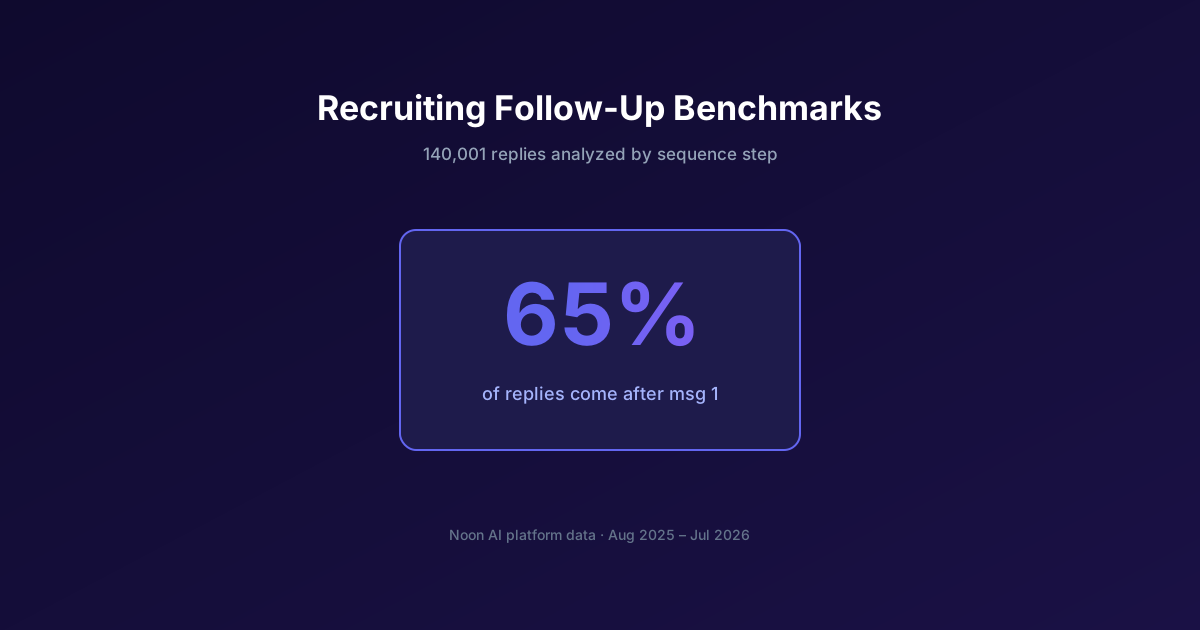
Key takeaway: 64.9% of candidate replies to recruiting outreach arrive only after a follow-up message, based on 140,001 measured replies from the twelve months ending July 2026 (Noon AI platform data). Message two alone captures 27% of all replies, and messages two through four capture 55%. Recruiters who send a single cold message reach barely a third of the candidates who were willing to respond.
Follow-ups feel like nagging, so most recruiters under-send them. The data says the opposite: the majority of candidates who eventually replied did not reply to the first message — they replied to the second, third, or fourth.
At which message do candidates reply?
Distribution of first replies by sequence step, across 140,001 replies:
| Message # | Share of all replies | Cumulative |
|---|---|---|
| 1 | 35.1% | 35.1% |
| 2 | 27.0% | 62.1% |
| 3 | 17.9% | 80.0% |
| 4 | 10.4% | 90.4% |
| 5 | 5.5% | 95.9% |
| 6 | 2.3% | 98.2% |
| 7+ | 1.8% | 100% |
Two things stand out:
- The first follow-up is nearly as productive as the opener. Message two converts 27% of all eventual repliers — a candidate who ignored message one is far from a lost cause.
- The curve flattens after message five. Messages six and beyond contribute under 5% of replies combined. Past that point, additional touches cost goodwill for little return.
How many follow-ups should a recruiting sequence have?
Three to four follow-ups (four to five messages total). That captures 96% of achievable replies. The sequence-length data backs this up: most high-performing sequences in our dataset run three to five outbound messages.
Stopping after one message forfeits 65% of potential conversations. Going past six messages adds almost nothing.
How should follow-ups be spaced?
Match the reply-time distribution: the median reply arrives 2.8 days after first contact, 75% within a week, 90% within two weeks. A spacing of 2–4 business days between touches keeps the sequence inside the window when candidates actually respond, and the whole sequence should stay alive for at least two weeks.
Vary the channel too, not just the copy: a follow-up that arrives on a different channel from the opener gets read as a new message rather than a repeat.
Why do follow-ups work this well?
Not because candidates need convincing — because they need catching. Recruiting outreach lands in inboxes owned by employed people who weren't job-hunting that morning. The reply distribution mirrors attention, not interest: message two catches the candidate whose Tuesday was quieter than their Friday.
That is also why follow-up quality bars are low but timing bars are high. A two-line "any thoughts?" bump at the right interval outperforms a long re-pitch. At Noon, the outreach agent sends multi-step, multi-channel sequences by default and stops instantly on any reply, so every candidate gets the full follow-up curve without a recruiter tracking timers.
FAQ
What percentage of candidates reply to the first recruiting email? 35.1% of eventual repliers respond to the first message. The other 64.9% reply to a follow-up (Noon AI platform data, 140,001 replies, 2025–2026).
How many follow-up emails should a recruiter send? Three to four follow-ups. Messages one through five capture 96% of all replies; later messages add under 5% combined.
How long should a recruiter wait between follow-ups? 2–4 business days. The median candidate reply arrives in 2.8 days, and 90% of replies arrive within 14 days of first contact.