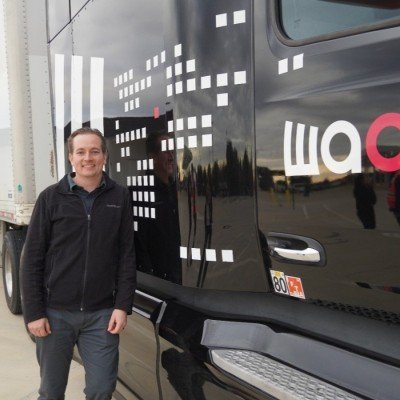
Shane Ahmed
Nebius
“Never fully believe ChatGPT. It's agreeable by default.”
Shane Ahmed has been named to the Talent 100, Class of 2026, the annual award recognizing up to 100 leaders in each category of talent acquisition. Honorees are nominated by peers or found by committees that look for excellent work wherever it happens, then chosen for the depth of their craft and their impact on hiring. This is Shane's story.
Shane Ahmed's calendar reads like a map. He lives in London, spends stretches of the year working from Nebius's Amsterdam headquarters, and moves straight from one call into another with a direct report sitting six hours behind him in Atlanta. It is a fitting shape for a career built on following technical talent wherever it goes, which, over the last three years, has been almost everywhere at once.
What separates Ahmed from many of his peers is the width of the lens he brings to the work. Ask him how AI has changed recruiting and he does not start with tools. He starts in mid 2022, with the political climate, the markets, the end of the zero interest rate era and the layoff rounds that followed, and he builds forward from there. Sourcing, in his telling, is the easy part. Reading the market is the job.
A Phone Call in 2010
Ahmed finished university in 2010 with no fixed idea of what came next and an open mind about where to point it. Then a recruiter called and pitched him on what he now describes, with some affection, as all of the magic involved in agency recruiting. Several interviews with search firms later, he landed at his first agency, placing top one percent software engineers into investment banks, trading firms and hedge funds.
He was hooked almost immediately. Over that first year the curiosity compounded, and the pattern set early: a fascination with the very top of the technical market, and with the small number of people capable of changing what an engineering organisation can attempt. He has been working that end of the market ever since, through agency search, through Deliveroo, through Facebook, and now at Nebius.
When the Landscape Stopped Holding Still
Ahmed's account of the last few years is unusually structured. First came the correction. Companies that had been over hiring, hiring irresponsibly and hiring without a plan through the ZIRP era swung hard into frugality. Hiring plans were rewritten, layoff rounds landed globally, and firms that had never cut before began cutting. The predictability of hiring, he says, disappeared entirely. Even mapping the career trajectory of a top one percent senior engineer became difficult, because the usual anchors had come loose.
Then ChatGPT reached the mainstream at the end of 2022 and the start of 2023, and the second shift arrived on top of the first. Technical teams found enormous upside as engineers picked up ChatGPT, Copilot and Gemini, then still called Bard. Ahmed watched a noticeable uptick in individual engineers who, with those tools, effectively became ten to twenty engineers in one. Companies that were already hiring less cut back further, and demand for mid level engineers changed shape completely.
The consequence was a barbell. The very best engineers became more valuable, not less. Demand for research scientists and research engineers pushed engineering salary bands upward, and compensation became as unpredictable as headcount. Talent teams, Ahmed argues, had to become far more reactive to the market. Real time compensation data, organisational design and workforce planning stopped being someone else's remit and became part of the recruiter's job, well beyond simply finding people. At the same time, the arrival of AI tooling inside applicant tracking systems and products such as MetaView stripped out a great deal of administrative work and handed recruiters their hours back.
Agreeable by Default
His advice to other talent leaders is direct. Do not ignore the AI boom. Use AI for everything you are doing, and push your team to keep hunting for shortcuts with it: thought tasks, data tasks, soundboarding, mapping total addressable markets, going as deep as possible into unfamiliar talent landscapes, uncovering talent trends, reading published papers, tracking economic and labour trends. Plug the interesting and seemingly impossible questions into the models and see what comes back.
Then comes the caveat he repeats like a refrain. "Never fully believe ChatGPT. It's agreeable by default." The models will not hand a talent leader the answers to their problems, he says, but they will hand over a structure for how to go about solving them. Used that way, with judgement intact, they are the most useful thing to arrive in the profession in a decade.
It is a characteristically balanced position from someone who has spent fifteen years learning that the market rewards people who read it early and honestly. Ahmed does not treat AI as a threat to recruiting or as a replacement for it. He treats it as one more variable in a landscape that has stopped being predictable, and he expects the recruiters who thrive to be the ones who can hold the whole picture: the technology, the compensation data, the plan, and the person on the other end of the call.
The Talent 100 exists to celebrate the people shaping the future of how the world hires, and few embody that better than Shane. We are honored to welcome Shane Ahmed to the Talent 100, Class of 2026, and grateful for the experience, perspective, and craft they bring to this community. Congratulations, Shane. Welcome to the Talent 100.
About the Talent 100
The Talent 100 is an annual list spotlighting the leaders who push HR and talent acquisition forward, organized by Noon AI. Honorees are selected through peer nominations and independent selection committees. Selection is entirely merit-based, with no fees or pay-to-play requirements.