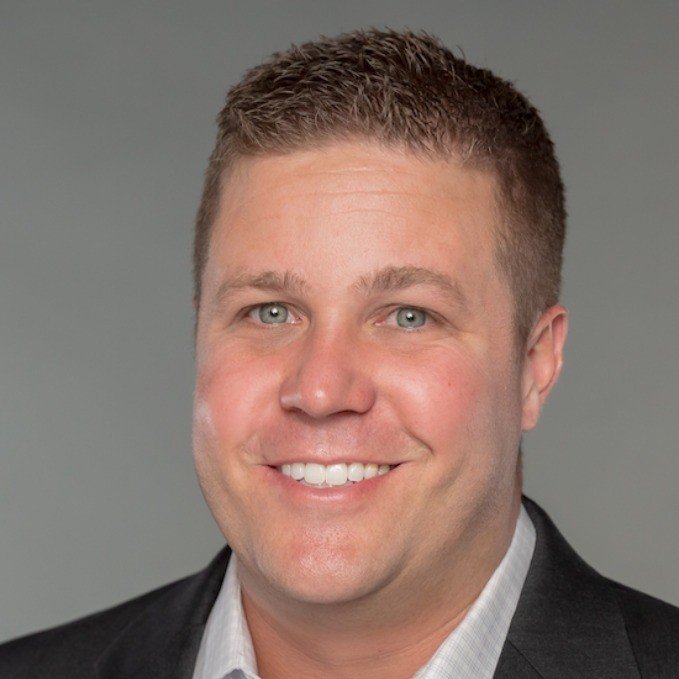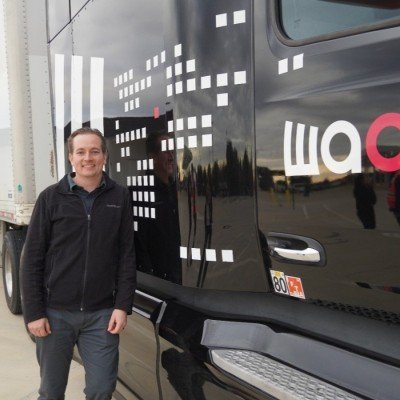
Frits Bigham
Waabi
“I love seeing my team succeed. Watching new recruiters come in, do great work, and grow in their careers is incredibly rewarding.”
Frits Bigham has been named to the Talent 100, Class of 2026, the annual award recognizing up to 100 leaders in each category of talent acquisition. Honorees are nominated by peers or found by committees that look for excellent work wherever it happens, then chosen for the depth of their craft and their impact on hiring. This is Frits's story.
Frits Bigham, Head of Talent Acquisition at Waabi, did not begin his career inside a corporate recruiting function. His path into talent leadership started on college campuses, helping students navigate one of the most important transitions of their lives, and that starting point still colors the way he thinks about hiring today.
Early in his career, Frits worked in higher education, advising students on internships and job opportunities while partnering just as closely with the employers on the other side of the table. He guided companies on which events to attend, how to position their brand, and how to connect with the right early-career talent. The result was a rare dual perspective: an understanding of what candidates actually need, paired with a clear-eyed view of how organizations must show up in order to attract them.
“I really enjoyed helping both sides,” he says. “That’s when I realized recruiting was the right long-term path for me.”
From Campus Recruiting to Cutting-Edge Tech
Frits moved into corporate recruiting with Dick’s Sporting Goods, focusing on university hiring. There he brought his campus expertise directly into an in-house environment, helping the company refine where and how it invested in early-career talent.
A major turning point came in 2016, when he made the leap into technical recruiting at Uber. He joined the company’s Advanced Technologies Group (ATG), where he helped build university recruiting for the autonomous vehicle division, a fast-moving and highly specialized space. Over time his scope expanded beyond campus hiring into industry recruiting, and he eventually led teams covering both university and experienced talent. When Uber’s self-driving unit was acquired by Aurora, Frits continued supporting recruiting efforts through the transition, deepening his experience in recruiting operations along the way.
A few years later he took another step into emerging technology, joining Waabi, an AI company building next-generation autonomous trucking technology, to lead the recruiting function. Today he oversees a team of six, including recruiters and a recruiting coordinator, responsible for scaling talent across the organization during a period of rapid growth.
What Energizes Him Now
Frits has hired across multiple industries and growth stages, but what motivates him most now is watching people develop, both on his team and across the company.
“I love seeing my team succeed,” he says. “Watching new recruiters come in, do great work, and grow in their careers is incredibly rewarding.”
That satisfaction extends to the broader imprint recruiting leaves on the business. “It’s exciting to step back and look at the departments we’ve helped build,” he explains. “Recruiting plays such a big role in shaping what an organization becomes.”
Navigating a More Competitive Talent Market
Looking ahead, Frits believes the talent landscape will only grow more competitive, particularly as AI startups and emerging tech companies continue to multiply. “The demand for specialized talent is only going to increase,” he says. “Candidates have more options than ever, so companies have to be clearer about what makes them different.”
For recruiting leaders, that means sharpening the full value proposition, from candidate experience and compensation to role impact and long-term career growth. Candidates, he notes, increasingly want to understand not just the job in front of them, but the company’s trajectory and why it is positioned to succeed.
He also expects hiring metrics to shift. Offer acceptance rates, he predicts, may decline as candidates juggle multiple strong opportunities, which will require recruiting teams to rethink capacity planning, pipeline strategy, and pass-through rates in order to stay on track.
Balancing Technology and the Human Touch
As someone working inside an AI-driven company, Frits has a front-row seat to how new technologies are reshaping the industry. Even so, he sees recruiting as firmly in the experimentation phase. “Everyone is testing tools right now, sourcing, note-taking, application review,” he says. “But we haven’t had that big breakthrough moment yet.”
By his estimate, the industry is roughly a year away from the kind of advancements that will meaningfully change how recruiters work day to day. Until then, the mandate is simple. “The key right now is getting your hands dirty,” he adds. “You don’t want to miss the boat, but we’re still figuring out what the real game-changers will be.”
Advice for Talent Leaders in 2026
As competition intensifies and technology evolves, Frits’ advice to other talent leaders is rooted in strategy and storytelling. “We have to get better at explaining why our company is set up to win,” he says. “Candidates are looking at long-term growth, impact, and how their compensation and career will develop over time.”
For him, the future of recruiting is about blending operational rigor with a compelling narrative, ensuring teams are prepared for tighter markets while still building authentic connections with candidates. In an era of rapid innovation and rising expectations, Frits sees talent acquisition not as a support function, but as a central force in shaping the future of organizations.
The Talent 100 exists to celebrate the people shaping the future of how the world hires, and few embody that better than Frits. We are honored to welcome Frits Bigham to the Talent 100, Class of 2026, and grateful for the experience, perspective, and craft they bring to this community. Congratulations, Frits. Welcome to the Talent 100.
About the Talent 100
The Talent 100 is an annual list spotlighting the leaders who push HR and talent acquisition forward, organized by Noon AI. Honorees are selected through peer nominations and independent selection committees. Selection is entirely merit-based, with no fees or pay-to-play requirements.