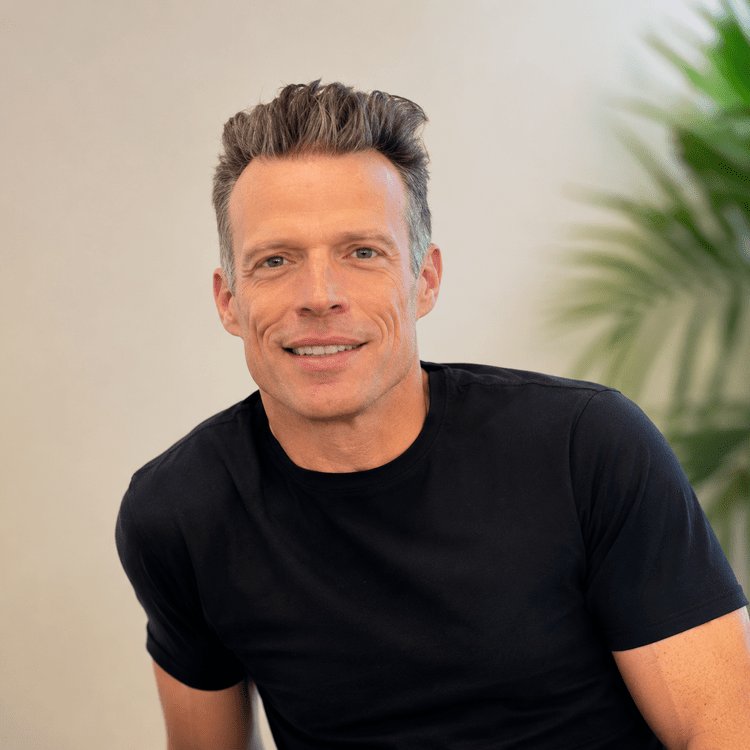
Marvin Cheese
Chainalysis
“As a leader, there will be points that you see later on in your career where you can identify blind spots, or you see opportunities for folks that they might not see in themselves.”
Marvin Cheese has been named to the Talent 100, Class of 2026, the annual award recognizing the 100 most exceptional leaders and practitioners in talent acquisition. Honorees are selected by the Talent 100 committee from thousands of nominations and candidates across the industry, chosen for the impact of their work, the depth of their craft, and their influence on the future of recruiting. This is Marvin's story.
The first job Marvin Cheese ever held in talent acquisition, he held while he was still in high school. Long before the degree, before the flagship office in Manhattan, before Meta, he was the office coordinator at a local Randstad branch, running logistics and calendars for a bench of recruiters who had no idea they were training a future colleague. Today he is a talent leader at Chainalysis, and the throughline of his career is unmistakable: at nearly every inflection point, someone saw capacity in him before he saw it in himself, and he has spent the years since returning the favor.
A Program Manager Who Recruited Program Managers
Cheese did not go to school to become a recruiter. He studied program management, a technical, delivery-focused discipline, and expected to build a career on that track. Then, immediately after graduation, the regional director who had overseen the Randstad office where he interned reached out with a specific proposition. There was a recruiting seat open in the firm's flagship New York City office, and she believed his coursework was an asset rather than a detour.
Her argument stuck with him. Recruit for the people whose work you already understand, she told him, and you will have a leg up in reading profiles and engaging candidates that other recruiters simply will not have. He took the seat and quickly proved the point, hiring project managers before expanding into institutional sales on the trading floor. It was an early and durable lesson in what actually creates credibility with a candidate: not a script, but fluency in the work itself. That conviction, that a recruiter should be able to speak the language of the role, has followed him from staffing into every in-house environment he has worked in since.
The Promotion He Turned Down
When Cheese moved in-house, one of his first roles was at HBO, where he reported to Kathy Saperito, now at NBC, whose remit spanned both HR and technical recruiting. He arrived with roughly a year and a half of in-house experience and was handed the technical function. There was one other tech recruiter. That person left. The whole portfolio landed on his desk.
Eighteen months or so into the role, Saperito came to him with an offer he had not asked for: she wanted to set him up to lead a group of junior recruiters, including outside of tech, because she saw a manager in him. His answer was immediate and unambiguous. No thank you. He wanted to stay in his lane and stay close to the technical work he had built his reputation on.
She did not accept the answer. What followed was a longer conversation that Cheese still cites as the most formative feedback of his career. Her point was that leadership is fundamentally an act of sight. As a leader, she told him, there will be moments when you can identify blind spots, or see opportunities for people that they cannot yet see in themselves. Then she pushed him into the role so that he could eventually see what she was seeing. He is candid about what that push was worth. Without it, without that framing, he says he might well have remained an individual contributor for the rest of his career.
The Outsider in the First Cohort
The third leader Cheese names is Tristan Weiss, who hired him at Meta at a genuinely unusual moment in the company's history. Meta was scaling fast, and for years it had built its management bench the same way: identify strong individual contributors internally and promote them. Cheese joined as part of the first significant cohort of leaders hired in from the outside, a deliberate experiment in bringing in perspective the company could not grow on its own.
On paper, he was not the obvious pick. The people moving into that cohort tended to come from Google, Amazon and the other large technology companies. Cheese came from media and entertainment, from HBO. What Weiss recognized in him was that the organization already had a surplus of what it kept hiring for, a heavy skew toward quantitative profiles, and a shortage of exactly what Cheese brought. It is a hiring decision Cheese has clearly internalized as a leader: the strongest addition to a team is frequently the person whose background does not match the rest of it.
Paying the Push Forward
Trace the three chapters and a pattern emerges. A regional director who told a new graduate that his technical degree was a recruiting advantage. A manager who refused to let him decline his own promotion. A hiring leader who valued the profile everyone else had screened out. In each case, someone made an assessment of Cheese's potential that was more generous and more accurate than his own, and in each case he moved on it.
That is why gratitude, for him, is not a sentimental exercise. It is closer to a job description. Having been on the receiving end of sponsorship that changed the trajectory of his working life, he treats the identification of unseen potential, in candidates and in the recruiters who report to him, as the actual work of a talent leader rather than a pleasant byproduct of it. Careers, in his experience, rarely turn on a perfectly matched resume. They turn on someone deciding to say the thing out loud.
Now at Chainalysis, operating in one of the most technically demanding and fastest-moving corners of the market, Cheese brings a philosophy assembled from all three chapters: know the work well enough to earn a technical candidate's respect, hire for the gap in the room rather than the pattern in the room, and push good people past the edge of the lane they have drawn for themselves. It began with a high schooler managing other people's calendars. It has become a career spent making sure the right people get in the room.
The Talent 100 exists to celebrate the people shaping the future of how the world hires, and few embody that better than Marvin. We are honored to welcome Marvin Cheese to the Talent 100, Class of 2026, and grateful for the experience, perspective, and craft they bring to this community. Congratulations, Marvin. Welcome to the Talent 100.
About the Talent 100
The Talent 100 is an annual list spotlighting the leaders who push HR and talent acquisition forward, organized by Noon AI. Honorees are selected through peer nominations and independent selection committees. Selection is entirely merit-based, with no fees or pay-to-play requirements.