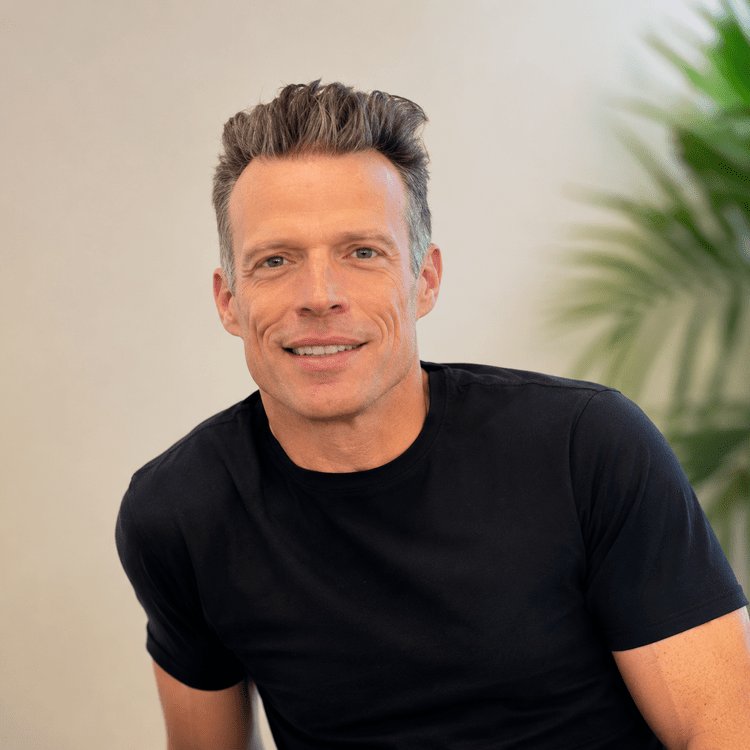
Susan Chy
LILT
“We are in the human business. We talk to people.”
Susan Chy has been named to the Talent 100, Class of 2026, the annual award recognizing up to 100 leaders in each category of talent acquisition. Honorees are nominated by peers or found by committees that look for excellent work wherever it happens, then chosen for the depth of their craft and their impact on hiring. This is Susan's story.
Six weeks into leading talent acquisition at LILT, Susan Chy had already done two things that tell you most of what you need to know about how she works: she got every recruiter on her team a proper LinkedIn account, and she brought in an AI sourcing tool. The function she inherited ran almost entirely on manual effort. Her instinct was not to demand more hours from a stretched team. It was to remove the work that machines should have been doing all along.
That combination of pragmatism and speed has defined a career built across startups and global scale-ups, most of it spent as the senior talent leader in the room rather than a member of someone else's recruiting org. It is also why her philosophy of the profession sounds less like doctrine and more like judgment: know your company, know your candidates, and build the process that fits them.
Philosophy, Law School, and a Question That Started a Career
Chy studied philosophy as an undergraduate and went on to law school before concluding that the law was not the life she wanted. What followed was the kind of accident that a whole generation of recruiters will recognize. Around the 2008 downturn, she was placed at a software company by a recruiting agency, and the placement was good enough that she went back to the same agency later, hoping they could do it again.
They had nothing to offer her. What they had instead was an opinion about her. They liked her enough to suggest she come work for them, maybe starting as a sourcer. Her response has become the origin story she still tells: "What's a sourcer? And also, how much does it pay?" That exchange launched a career that would eventually put her at the head of talent functions across multiple companies.
The philosophy training did not go to waste. Chy's approach to recruiting problems is structural, skeptical of easy answers, and unusually willing to say that the right solution depends on the conditions. It is a habit of mind that has aged well in an industry currently awash in one-size-fits-all promises.
Rebuilding a Function From Manual to Modern
At LILT, Chy was brought in to make a talent organization efficient, and she has moved fast. The LinkedIn accounts came in week one. An AI sourcing tool followed within weeks. From there she has been layering in automation wherever it earns its place: resume screening, sourcing, engagement, and outreach.
The logic is about capacity, not novelty. The company's talent managers are not narrow specialists; they source, they recruit, and they do a little bit of everything, which means they are stretched thin. "That's why the automation part is so important," she says. Every hour returned to a generalist is an hour that goes back into the parts of hiring that only a person can do.
AI Is Old and New at the Same Time
Chy's read on the AI moment is refreshingly unbreathless. AI, she notes, is both old and new: it has been developing for a long time, and it is still developing, which is precisely why it raises so many eyebrows and so much skepticism. She has sat through the HR events and the industry dinners where the same question surfaces again and again: how do we balance the use of AI while still preserving the human touch?
Her answer starts from first principles. "We are in the human business," she says. "We talk to people. We are people-facing." What she refuses to do is pretend there is a universal playbook. The right strategy depends on who you are hiring, what the company looks like, and how big it is. Factor those in and the approach has to be customized. "There's no one size fits all solution."
Where consensus does exist, she believes, is on the shape of the trade. Use AI to streamline process and automate work. Protect the moments that genuinely need a human, and use the time you have freed up to enhance and uphold the candidate experience, and then keep going past the offer into onboarding, where new employees form their first real impression of a company.
Advice: Do What's Right for You
Chy's counsel to other talent leaders navigating the same terrain is deliberately unglamorous, and it is the harder discipline to practice. Resist the pressure to copy someone else's stack, someone else's process, someone else's conference-stage certainty. "What works for me may not necessarily work for you or your environment. Each place is so different from one another."
It is advice with real authority behind it, offered by someone who has walked into enough different companies to know that context is not a detail; it is the whole assignment. Do your own diagnosis. Automate what deserves automating. Keep the ego out of the room. And never lose sight of the fact that on the other end of every workflow is a person deciding whether to trust you with their career.
The Talent 100 exists to celebrate the people shaping the future of how the world hires, and few embody that better than Susan. We are honored to welcome Susan Chy to the Talent 100, Class of 2026, and grateful for the experience, perspective, and craft they bring to this community. Congratulations, Susan. Welcome to the Talent 100.
About the Talent 100
The Talent 100 is an annual list spotlighting the leaders who push HR and talent acquisition forward, organized by Noon AI. Honorees are selected through peer nominations and independent selection committees. Selection is entirely merit-based, with no fees or pay-to-play requirements.