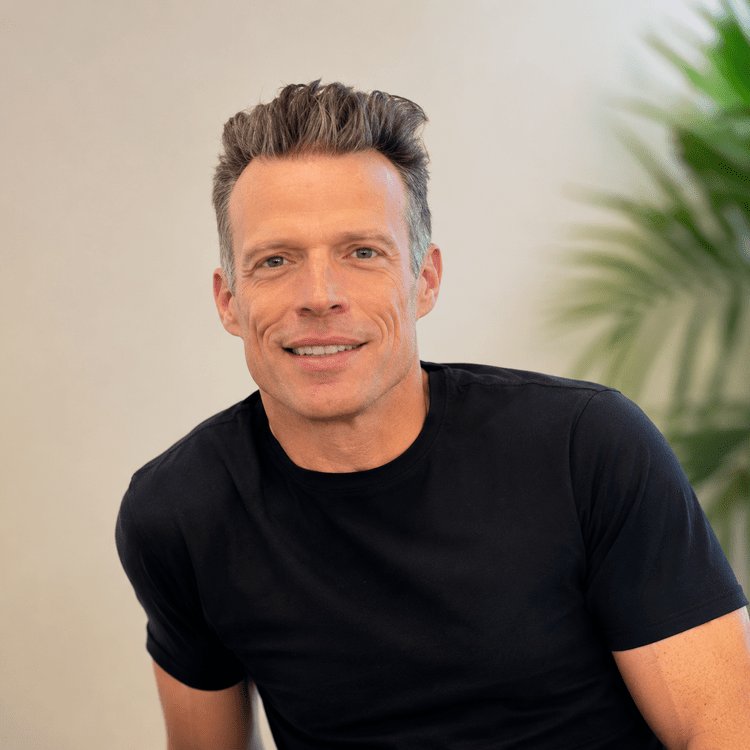
Steven Chan
SoEd Labs
“Learning from people of every background is really key to actually empowering everyone.”
Steven Chan has been named to the Talent 100, Class of 2026, the annual award recognizing up to 100 leaders in each category of talent acquisition. Honorees are nominated by peers or found by committees that look for excellent work wherever it happens, then chosen for the depth of their craft and their impact on hiring. This is Steven's story.
Around 2009, Steven Chan wrote a paper on whether the world should be building artificial intelligence at all. The credential behind that paper was not only computer science, Chan's original field, but a second degree in philosophy. That pairing, the engineer's hands and the ethicist's questions, organizes almost everything that followed: a decade inside banks and hospitals, years at Microsoft and Oracle, and now the role of Chief Cloud & AI Architect at SoEd Labs, a company of Chan's own building in the education domain.
The through line has never really been technology. It has been a single question asked over and over in different settings: how do you solve a business problem in a way that creates impact for society, end to end? Cloud, architecture, product management and AI are simply the instruments that happened to be within reach.
Inside Out, Then Outside In
Roughly ten years of Chan's career were spent inside enterprises, moving through architect and program roles at banks and hospitals. These are not abstract customers. They are the institutions that carry critical services for society, the places where a failed system becomes a person's missed payment or delayed treatment. Working inside them taught Chan how enterprises actually behave under pressure, not how vendors imagine they behave.
Then came the deliberate switch to the other side of the table. Chan moved from in-house work to the vendor world, joining Microsoft and Oracle, in pursuit of a wider surface area for impact. The final Oracle role was in product management, engaging with enterprises globally to resolve their business problems. Chan describes the value of having lived both positions as an inside out and outside in view: knowing what the buyer cannot say out loud, and knowing what the builder can realistically ship.
A Career That Began in Classrooms and Returned to Them
The starting point was education. Chan began working with a university and served as a trainer, then moved through healthcare and the financial sector, then into cloud, then into AI. Along the way the geography changed too: an original background in Asia, then a move to the United Kingdom.
There is a neat symmetry in where that path has landed. After a decade of enterprise work and a run through big tech, Chan now leads the cloud and AI architecture of an education-focused company. The domain that opened the career is the one it now serves, with considerably more tooling behind it.
A Powerful Tool and a Dangerous One
Chan uses AI every day and calls its effect on the work brilliant. The reason is democratization: the entry bar has dropped so far that someone working in plain English, or in a native language, can now produce results that once required deep technical knowledge. No code required. That, to Chan, is the good side, and it should be scaled.
The caution arrives with equal force, and it comes with a story. Chan once questioned a team about a tool that was one day from being pushed into production while handling sensitive data. Two simple questions, where does the data sit and have you run any tests, surfaced multiple security problems before release. Chan's framing of the risk is precise and comes in two parts: the ordinary security measures every system needs, and the subtler question of whether a new technology introduces risks nobody intended to introduce.
The example Chan returns to is hiring itself. AI agents now screen and recruit at volume, which raises an uncomfortable question about guardrails: is anyone monitoring whether bias has entered candidate screening, and if the bias is invisible to the people running the system, how could it ever be fixed? Systems can go off the rails on their own, or they can quietly inherit human blind spots. Either way, Chan notes, AI scales whatever it is given, good or bad, faster than humans can. "We want to scale the good side, but minimize the bad side," is how Chan puts the assignment. Awareness, in that model, is not a soft skill. It is the control.
Advice for 2026
Chan reads the current moment as disruptive and constructive at once, a year of considerable change with AI development set to advance drastically and impactfully into 2027. The obvious instinct is to build faster, and Chan does not dismiss it. Speed, when it comes from leveraging AI well, is genuinely good.
The advice is the counterweight. Slow down a little. Spend real energy confirming that what is being pushed out into the world with AI behind it is going in the right direction and staying under control. For leaders across the talent industry, that is less a brake than a steering correction, and Chan is clear it deserves deliberate time on the calendar rather than whatever attention is left over after the launch.
The Talent 100 exists to celebrate the people shaping the future of how the world hires, and few embody that better than Steven. We are honored to welcome Steven Chan to the Talent 100, Class of 2026, and grateful for the experience, perspective, and craft they bring to this community. Congratulations, Steven. Welcome to the Talent 100.
About the Talent 100
The Talent 100 is an annual list spotlighting the leaders who push HR and talent acquisition forward, organized by Noon AI. Honorees are selected through peer nominations and independent selection committees. Selection is entirely merit-based, with no fees or pay-to-play requirements.