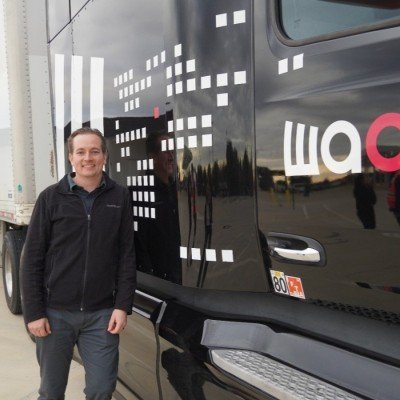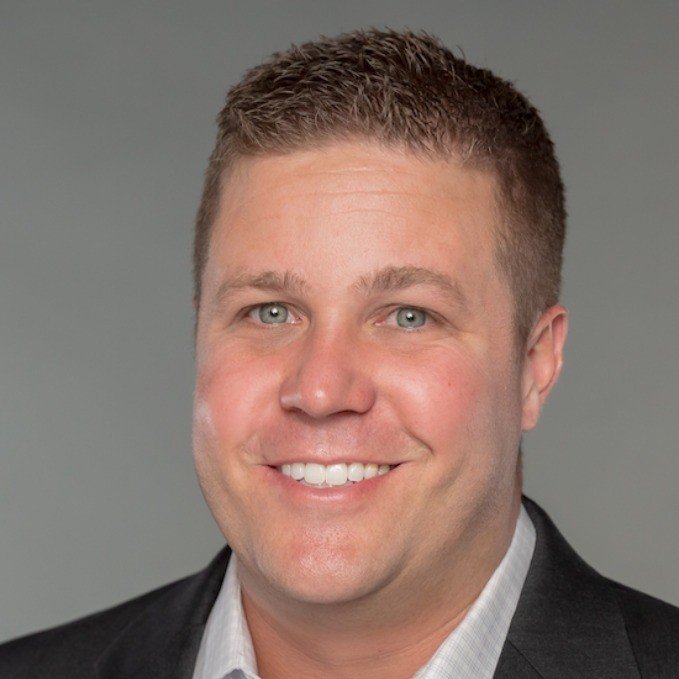
Adam Austad
Bobyard
“It's one thing to join the hottest thing that someone says is cool. What if you join something that isn't cool and then make it cool?”
Adam Austad has been named to the Talent 100, Class of 2026, the annual award recognizing up to 100 leaders in each category of talent acquisition. Honorees are nominated by peers or found by committees that look for excellent work wherever it happens, then chosen for the depth of their craft and their impact on hiring. This is Adam's story.
In 2019, Adam Austad walked out of Michigan State with a humanities degree in anthropology and a conviction almost nobody around him shared: that artificial intelligence was going to decide the shape of the next decade of work. He had no friend group talking about it. He describes himself at the time as a party of one. Seven years later he leads talent at Bobyard, an AI company in construction, and the thing he is most interested in building is not a pipeline but a new kind of role.
That role is the talent engineer, a hybrid of product manager and software engineer who sits inside the talent department and does nothing but hack at efficiency. Bobyard is hiring for it now. Austad frames the mandate as a standing question: how efficient is my recruiting team, can I get them more efficient week over week, and what tools would make that happen. It is a job description that would have read as science fiction in the agency bullpen where he started.
The Entrepreneur Who Found Recruiting by Accident
Austad was the campus entrepreneur, the student perpetually chasing an idea and rounding up classmates crazy enough to build it with him. He built an app in college, which is what first pulled him toward engineers. What he did not know, even after graduation, was that technical recruiting existed. He knew recruiters from career fairs and campus events. The other side of the profession, the one that never sets foot at an event, was invisible to him until he came across a job posting from a 12 person boutique agency called TalentSeer.
The pitch worked on two levels. It spoke to his anthropology training, the study of people and how they organize themselves. And it put him shoulder to shoulder with leading scientists and engineers at the frontier of AI, which was the room he had been trying to get into all along. He spent about a year and a half in agency. It was good, and it was a grind, and by 2021 he wanted to see what it felt like from the inside of a company that was actually scaling.
AI Is Just Statistics With a Mustache
Austad's view of AI is refreshingly unmystical. AI, he says, is just statistics with a mustache. The tools existed when he started recruiting in 2019. The problem then was friction: learning them cost more time than doing the work by hand, so you did the work by hand. What has changed, year over year and exponentially, is that the curve of adoption has flattened until it is almost frictionless. Now the question is simply whether something can be automated, and a thought can be translated into a working prototype nearly as fast as you can have the thought.
He has worked in both startups and big tech and is clear eyed about the difference. Large companies often own the fancier tooling, but complexity scales with headcount, and building AI solutions for a sprawling organization is its own tax. Startups get more leverage from less. The other change he notices is social. Because the tools are in everyone's hands, teams now feel permission to experiment because a peer company did it first. Austad's counter is blunt and characteristic: you never needed the clearance. As he puts it, you can just do cool stuff and see what works for recruiting and hiring.
Used well, he argues, this is not a productivity story but a judgment story. Probability and score matching tighten the confidence intervals around hiring decisions. Better predictions produce better choices, and, in his words, the kind of decisions you look back on a year later and feel even more proud of.
Advice for 2027: Understand Your Own Workflow
Ask Austad what talent professionals should carry into 2027 and he offers a single discipline that applies equally to sourcers, coordinators, recruiters and leaders. Map your process at a zoomed out level. "If I understand the workflow, then I can speak to the workflow. If I can speak to the workflow, I can change the workflow." Your only limitation, he says, is how well you understand your own.
He sees the evidence already. Talent leaders are rethinking strategy from the ground up, no longer treating the ATS as the sole system of record but stitching third party tools together through APIs and building their own dashboards and their own tracking. The parallel he draws is to product managers who now write half a pull request rather than waiting on an engineer. If someone with ten years of experience looks at it and says it is fine, ship it to the customer. The same logic applies to talent. Wherever a recruiter waits on an approval or a handoff, the boundary between roles is now genuinely negotiable, and more of the funnel can be owned by whoever understands it best.
That belief extends to the taxonomy of the profession itself. Austad admires the engineering title member of technical staff precisely because it refuses to specify a lane, and he has started thinking about talent the same way: member of talent staff, with the mandate to work to the edge of your own limit. Talent people, in his framing, can now credibly reach into HR, legal and immigration, because the question is no longer whether something is your specialty but how long it would take to make it one. He expects that to compress further, and he thinks it changes compensation strategy too, since companies can reward people for the widening range of things they are able to do.
Crucially, he does not think this only rewards the relentless operators. The hard chargers get to move faster. The more deliberate people gain something arguably better: time to sit with an idea, form a plan, turn the plan into a structure, turn the structure into a system, and let the system replicate as the company scales. It is, in his word, a glorious time to be doing this work. And at Bobyard, where he believes the company has a real shot at becoming the defining AI business in construction, Austad is doing exactly what his mentor modeled: not chasing the thing everyone already agrees is cool, but building it.
The Talent 100 exists to celebrate the people shaping the future of how the world hires, and few embody that better than Adam. We are honored to welcome Adam Austad to the Talent 100, Class of 2026, and grateful for the experience, perspective, and craft they bring to this community. Congratulations, Adam. Welcome to the Talent 100.
About the Talent 100
The Talent 100 is an annual list spotlighting the leaders who push HR and talent acquisition forward, organized by Noon AI. Honorees are selected through peer nominations and independent selection committees. Selection is entirely merit-based, with no fees or pay-to-play requirements.