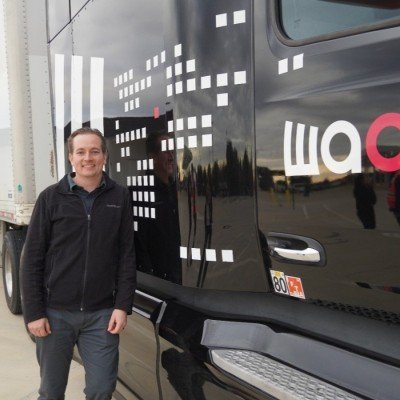
Scott Bianco
Hebbia
“Those who are best fit for survival are those who are most adaptable.”
Scott Bianco has been named to the Talent 100, Class of 2026, the annual award recognizing up to 100 leaders in each category of talent acquisition. Honorees are nominated by peers or found by committees that look for excellent work wherever it happens, then chosen for the depth of their craft and their impact on hiring. This is Scott's story.
Scott Bianco spent about a year on the agency side before he figured out what he actually wanted: not to place people into companies, but to build companies from the inside. That distinction has organized the two decades of work that followed, from S&P Global to Netflix to his current role leading talent at Hebbia, the AI company building document intelligence tools for the world's most demanding knowledge workers.
He is, by his own description, someone who can be sold on a good idea. Coming out of school he knew only that he wanted to work with people, and friends already in the industry made the case that recruiting was a place where you could do well. Agencies were actively courting new grads at the time to hit the phones and do volume outbound, and the sheer competitive energy of it pulled him in. What kept him was something different. In-house work let him see the whole machine, and that is where the career stopped being a job.
What AI Actually Changed, and What It Did Not
Bianco is unsentimental about where AI has landed in recruiting so far. The low-hanging fruit, he notes, has been sourcing, interview transcription and summarization, some outreach and engagement, and mass applicant review. That is roughly the current frontier. The immediate effect is efficiency: the mundane administrative layer of the work can now be offloaded, which frees recruiters for higher leverage work. Teams get tighter. Bianco believes that pattern holds across most of professional services, not just talent.
The more interesting consequence is what it does to the competency model. Bianco used to hire against market knowledge. How well do you understand this market and its key players? Which tier one VC-backed startups should we be mining for strong engineering talent? Those questions used to separate a good recruiter from an average one. Now, as he puts it, you can click a box in a sourcing tool and get exactly that filter applied for you. The knowledge is commoditized. So the question becomes what is left, and his answer is the human middle and the human close.
"How are you qualifying the people in that first conversation? How are you showing them white glove candidate experience throughout? How are you positioning the close?" Those are the skills that now move the number that matters most to him, offers extended versus offers accepted. Interpersonal IQ and EQ, in other words, are no longer soft. They are the differentiated part of the job.
Get Knee-Deep In It Yourself
Bianco is currently running a structured test across several AI sourcing platforms, including Juicebox, MetaView Sourcing and Pin, with a full analysis due within weeks and a decision to invest more deeply in one of them on the other side. That is characteristic. He does not want vendor decks. He wants hands on the tool.
His advice to other talent leaders is the same advice he would give any working professional right now, and it starts from a premise about the moment itself. This is a new environment with new obstacles, new threats and a new reward system. "This is a part of humanity's evolution journey, that those who are best fit for survival are those who are most adaptable." Adaptability, importantly, is within an individual's control. It looks like staying curious, staying open-minded, and being willing to let new perspectives in from your team and from the market, because nobody has this figured out yet.
The second half of that advice is more pointed: do not outsource your understanding. If you are hearing about vibe coding, if you are hearing about people building their own internal tools, go find out what it is and try to build something yourself. Not because every talent leader needs to ship software, but because the experience changes your ability to evaluate. You learn what is genuinely within your capability, you become a sharper judge of the tools you are being sold, and you stop taking the industry's assumptions on faith. "Question the way that we've done things this entire time," he says, because none of it is guaranteed to persist.
He is candid that the pace is genuinely destabilizing. What work looks like in six, twelve, eighteen months is the thing that keeps him up at night, and he does not pretend to know the answer. On the day of this conversation, Anthropic had just released Fable, part of its Mythos ecosystem, previously accessible only to internal engineers. Bianco had already read up on it. "There's never a dull moment in this industry," he says. "It's a wild time to be alive." His operating instruction for the era fits in three words: stay vigilant.
The Talent 100 exists to celebrate the people shaping the future of how the world hires, and few embody that better than Scott. We are honored to welcome Scott Bianco to the Talent 100, Class of 2026, and grateful for the experience, perspective, and craft they bring to this community. Congratulations, Scott. Welcome to the Talent 100.
About the Talent 100
The Talent 100 is an annual list spotlighting the leaders who push HR and talent acquisition forward, organized by Noon AI. Honorees are selected through peer nominations and independent selection committees. Selection is entirely merit-based, with no fees or pay-to-play requirements.