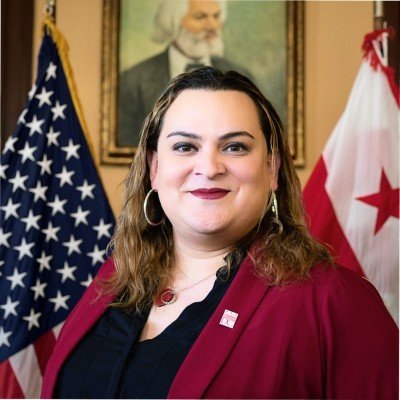
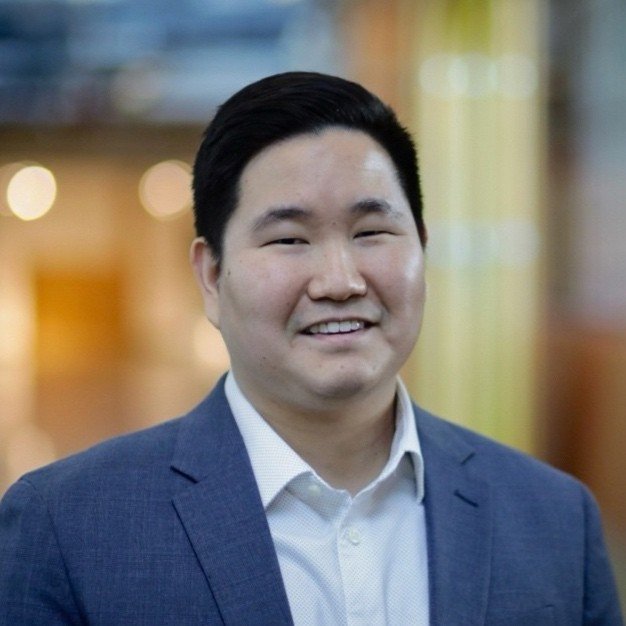
Parker Nielson
Thoropass
“AI should be the Iron Man suit that makes normal people super.”
Parker Nielson has been named to the Talent 100, Class of 2026, the annual award recognizing up to 100 leaders in each category of talent acquisition. Honorees are nominated by peers or found by committees that look for excellent work wherever it happens, then chosen for the depth of their craft and their impact on hiring. This is Parker's story.
Could Tom Brady play defensive line? Technically, yes. Parker Nielson uses that question to expose something companies do constantly: handing a person the one task they are worst at and telling them to keep at it until they figure it out.
Nielson, Head of People at Thoropass, runs the opposite play. He looks for what someone is phenomenal at and builds roughly 90 percent of their week around it. The reasoning is not sentimental: anyone can do anything, he says, but just because someone can does not mean they should. A person working in their strength feels more valued and more gratified, and someone feeling that performs better, which means the team wins better. He leads Thoropass's entire people function, and he describes the job in the same terms he applies to everyone else's: the playmaker behind the scenes, making that happen.
Employee Two, Thirty-Six Locations
Nielson's first real education came as employee number two at a startup that grew to 600 employees across the United States and 36 locations before a successful exit. Along the way he did sales. He did marketing. He did everything. The range was the point, and it was also the problem, because when the exit came he sat with the fact that he could do everything and had done everything. Hire me because I can do it all is not a pitch.
So he worked out where the joy actually lived, and the answer was consistent: finding people with raw talent and putting them somewhere they could thrive and shine. He kept noticing it in interviews, where a candidate would come in for one job and he would stop and think about how much better that person could be in a different seat entirely. Coaching that development was the part he did not want to give up.
A stint on the agency side followed, then Wayfair, where the mandate was expansion: moving beyond B2C into B2B and scaling globally. Nielson helped grow that team. Toast came next, arriving just after the IPO to build out the sales organization. Thoropass poses the same growth-and-scale question at a wider aperture, with recruiting now sitting inside a full people remit rather than defining it.
Frankensteined Together
The most recent chapter of that widening belongs to his former manager, Thoropass's SVP of people. The two joined the company around two and a half years ago, and Nielson told her plainly that he wanted out of pure recruiting and into a broader people scope. She brought him along, and when she moved on to something new, he stepped into her role.
Two years ago, when the co-founders asked whether he thought he could do that job, his honest answer was that he could probably figure it out. Because of his former manager, he now says he knows what he is doing and genuinely feels trained and developed. Her lesson was one of dual obligation: there is the business thing to do, and there is what is right by people, and she leads by both at once.
Thoropass's CFO has been the other close mentor, sharpening how Nielson thinks through the business strategically. Further back, at Wayfair, two leaders gave him something more durable. He always knew they were in his corner. They trusted him, handed him resources, and told him he could figure it out and do hard things.
Nielson attaches an asterisk to all of it. He is the best part of each of them, Frankensteined together, and some of the assembly came from leaders whose habits he decided he never wanted to repeat. Everyone who crossed his path contributed a feature or a warning.
The Iron Man Suit
On technology, Nielson is unapologetically forward-leaning, and he compresses his position into one image: AI should be the Iron Man suit that makes normal people super. The mistake, as he sees it, is treating humans and AI as two separate categories instead of asking how the tools make people better, more efficient, and more capable of finding joy in the work.
He fields the anxious version of that question three or four times a week as new features roll out across the company. Is this going to take my job? His answer to recruiters and salespeople alike is direct without being cruel: if the greatest value someone brings is scheduling interviews, taking notes, and reviewing documents, then yes, because nobody enjoys those things anyway. What the technology cannot take is the human element, or the judgment behind how a person prompts a tool, uses it ethically, and reinvests the reclaimed hours into real partnership.
No recruiter enjoys reading 2,000 resumes; Nielson notes you go brain dead somewhere in the pile, so hand that to the machine. Let the machine take notes, too, so the person in the conversation is actually in the conversation instead of typing into a second screen. Then he applies the test that matters most to him. Of all the recruiters and professionals someone meets over the years, only a handful of names surface without effort, and the reason is always the same: they cared, they were genuine, and you felt your interests were being held. To be great is not hard, he says. You simply have to care.
What He Wants From Peers in 2026
At a conference roughly six months ago, Nielson watched a room split cleanly down the middle. Half the attendees described companies terrified of AI and refusing to touch it. The other half said they used it for everything. His first thought was not about the companies at all. It was about the candidate expected to navigate that gap without a map.
That is the gap he would most like the industry to close in 2026. A candidate who mentions using AI looks forward-thinking to one interviewer and looks like a cheater to the next, and nothing about the candidate changed between conversations. Nielson is not insisting every organization embrace the technology, though he suspects the holdouts get passed with time, as holdouts generally do. What he wants from his peers is a decision, a stance, and a published policy, particularly in recruiting, where laws and regulations already govern AI use in hiring in specific states and countries. Say it out loud so candidates know what they are walking into.
He also wants the apologetic preface to disappear. People still hedge with AI told me this, which strikes him as odd, because nobody announces having used a computer or a typewriter. The future he expects is one where the tooling is assumed and the only question is how well a person collaborates with it.
There is a narrower worry inside his own function. Recruiters have too many resumes, he says, so they do not source at all, and the odds that the right person happens to land on a job board on a Thursday at two in the afternoon are slim.
His conclusion is pragmatic. The platforms building this generation of tools have ethics teams and lawyers working to bring the technology in responsibly, so adopt now, imperfections included, and be five or ten years ahead of the peers who waited.
The Talent 100 exists to celebrate the people shaping the future of how the world hires, and few embody that better than Parker. We are honored to welcome Parker Nielson to the Talent 100, Class of 2026, and grateful for the experience, perspective, and craft they bring to this community. Congratulations, Parker. Welcome to the Talent 100.
About the Talent 100
The Talent 100 is an annual list spotlighting the leaders who push HR and talent acquisition forward, organized by Noon AI. Honorees are selected through peer nominations and independent selection committees. Selection is entirely merit-based, with no fees or pay-to-play requirements.