Leah Schonberg
RWS Global
“You can't replace your experience with a large language model that doesn't actually know you.”
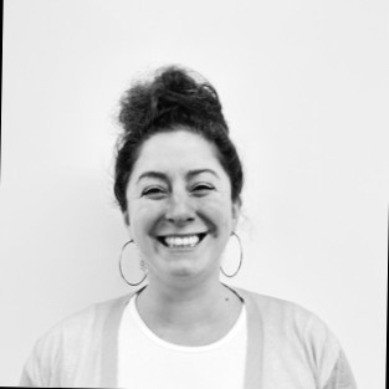
Leah Schonberg has been named to the Talent 100, Class of 2026, the annual award recognizing up to 100 leaders in each category of talent acquisition. Honorees are nominated by peers or found by committees that look for excellent work wherever it happens, then chosen for the depth of their craft and their impact on hiring. This is Leah's story.
Leah Schonberg can usually tell within the first few minutes when a candidate has outsourced their thinking. Someone reading off a screen mid-answer. A take home assignment that reads nothing like the person who submitted it. For her it is less a gotcha moment than a missed opportunity, because the tool being misused is one she considers genuinely powerful in the right hands. "They're not using it as a tool," she says of the pattern she keeps encountering. "They're using it as a replacement."
That instinct for reading people, and her insistence that people be read rather than filtered, runs through a career built across nearly every corner of human resources. "At this point I'm a senior level HR generalist," she says, "because I've worked in so many aspects of HR. I hold expertise in many of them, to be honest." What that breadth has given her is an unusual vantage point on recruiting: not a standalone function, but the opening chapter of something considerably longer.
From a Restaurant Group to Baptism by Fire
Her career began as an administrative HR person for a very small restaurant group in New York. The recruiting there, she says plainly, was rinse and repeat: familiar roles, familiar rhythms, a known quantity.
The real education came at the first startup she joined, a femtech company in the period underwear category. As HR manager she was handed effectively every function in the building, and one of them was scaling the team. She grew it by roughly 75 percent. She did it while learning an entirely unfamiliar world from scratch: what designers actually care about, what programmers care about, what the right questions are to ask someone whose craft you have never practiced yourself.
"It really was like a baptism by fire," she says, and she counts that discomfort among the most valuable teachers she has had. "I think that's where you learn the best, is when you're very uncomfortable and you're unsure and kind of pushed." Building that team gave her the two principles she still works from: this is how you speak to talent, and this is how you treat people you do not know and want to know.
Recruiting as the First Chapter, Not the Whole Book
Having built a team from almost nothing, Schonberg started asking a larger question about where recruiting belonged in the arc of her own career and in the arc of an employee's. The answer reframed the work. She thinks hard about process and vetting, as any serious practitioner does, but she treats them as inputs to the full life cycle of an employee.
That is where her focus sits now: the employee experience, entire and continuous. And that experience, in her framing, does not start on day one or at the offer stage. It starts with the very first outreach message, before the candidate has any reason at all to trust the person on the other end.
She is also clear eyed about a structural oddity in the profession she works in. Recruiting is, in a great many ways, a sales role, and yet it almost always folds under HR. Holding both truths at once, the commercial urgency and the human duty of care, is the discipline she asks of herself and of the people around her.
AI as a Tool, and Its Blind Spots
Because she continues to meet and interview people actively across a range of roles, Schonberg has a front row view of how AI is changing candidate behavior, and much of what she sees concerns her. She has witnessed people reading off of screens. She has received assignments that were very obviously not done by the person handing them in. Used that way, she says, it tends to be an immediate no. Not because the technology is the problem, but because the judgment is. "AI can be a very powerful tool," she says. "It also can make you look like a complete idiot if you don't know how to use it."
On the recruiting side of the equation she is deliberately measured. In her experience, AI applied to seeking talent is still being developed, with a great deal of runway left to hone how it gets used. Her real worry is that the industry is walking into a familiar trap. She sees the same issues resurfacing that applicant tracking systems introduced: filtering on very specific terms in a very black and white way, without taking the big picture into consideration and without accounting for the narrative of someone's journey.
Her advice to fellow talent leaders follows directly from that. Start using it as a tool. See its blind spots rather than discovering them the hard way, and work toward getting out in front of them. Do not deploy something without actually knowing how it can be most effective. And never mistake the output for the person. "You can't replace your experience with a large language model that doesn't actually know you."
The Talent 100 exists to celebrate the people shaping the future of how the world hires, and few embody that better than Leah. We are honored to welcome Leah Schonberg to the Talent 100, Class of 2026, and grateful for the experience, perspective, and craft they bring to this community. Congratulations, Leah. Welcome to the Talent 100.
About the Talent 100
The Talent 100 is an annual list spotlighting the leaders who push HR and talent acquisition forward, organized by Noon AI. Honorees are selected through peer nominations and independent selection committees. Selection is entirely merit-based, with no fees or pay-to-play requirements.