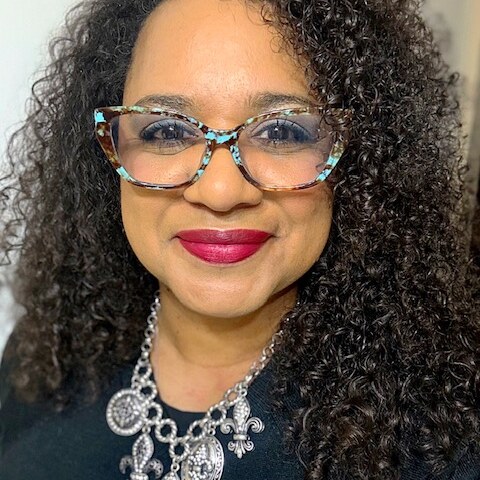
Celia de la Torre
Makwa Global
“The culture is established from the people that the recruiters bring.”
Celia de la Torre has been named to the Talent 100, Class of 2026, the annual award recognizing up to 100 leaders in each category of talent acquisition. Honorees are nominated by peers or found by committees that look for excellent work wherever it happens, then chosen for the depth of their craft and their impact on hiring. This is Celia's story.
At Makwa Global, the entire people function has one name on it. Celia de la Torre is the Senior HR Director, and she is also the recruiter, which means the same person who writes the compensation philosophy is the one calling passive candidates and reading between the lines of a resume. She calls it being a team of one. In practice it is a rare vantage point: she sees the full arc of a hire, from the utilization report that reveals the gap to the culture that person will help build once they arrive.
That dual mandate is not a compromise for de la Torre. It is the thing she has spent a career building toward, and it explains why her advice to other talent leaders sounds less like sourcing tactics and more like organizational design.
The Consulting Firm That Started It All
Roughly 16 years ago, de la Torre left a nine to five job and started a very small consulting company. The premise was personal and pointed: helping working mothers come back into the workforce. Because her background was in HR, the work quickly broadened. She was supporting small organizations across the full spectrum of their people operations, payroll, benefits, compensation, and it was there, inside those engagements, that she first started recruiting in earnest.
Entrepreneurship gave her the network and the range. When she returned to the traditional workforce, she came back at the director level in the talent management space, overseeing talent acquisition rather than executing a single slice of it. Federal government contracting sharpened the rest. In that world, she notes, you are always either acquiring, being acquired, or losing a re-compete, which means the talent leader does not get to stay at the strategy layer. "You kind of have to roll up your sleeves," she says. That is when the recruiting work deepened.
By her most recent role before Makwa Global, the mandate had become explicitly strategic. The CEO leaned on her to study utilization reports, identify where the gaps were, and determine where the company needed to hire. De la Torre took it further on her own initiative, running passive recruiting campaigns to find the strategic leaders the organization was missing and then selling those candidates on the benefits, the company, and the culture. It is a habit she has never dropped: she has always overseen recruiting, and she has always been part of it.
Automate the Workflow, Not the Conversation
De la Torre has seen artificial intelligence from both sides of the hiring table, which is why her position on it is so specific. As a candidate, she found it nearly impossible to tell that an AI agent was on the other end of the screening. She did not like it. It stripped out the human touch at exactly the moment a candidate is deciding whether an employer is worth trusting.
That has not made her a skeptic of the technology. Her organization has embraced AI, and many of its workflows are now automated. She uses AI herself to strengthen job descriptions and to make sure the SEO is doing its job so the right candidates surface in the first place. The line she draws is precise and unmoved. "I'm not going to utilize AI to do interviewing. I still want that human element," she says. Her whole organization, she adds, wants it too.
Hire for the Org Chart You Need Next
Ask de la Torre for her best advice to other talent leaders and she starts with strategic hires. Filling the requisition in front of you is the minimum. The better practice, she argues, is to look past it and ask what other positions the team and the organization actually need, which is the discipline she learned reading utilization reports for a CEO.
The second half of her advice is culture fit, and it is where her defense of the human conversation becomes practical rather than sentimental. Anybody can write something compelling on paper. Talking to a person surfaces what the resume never contained. "There's always more than what's to offer on the resume," she says. Skill sets emerge that the organization did not know it needed. And a candidate who is wrong for one opening is frequently right for another, which is why her favorite outcome is being able to tell someone: this might not be the right fit, but I actually have a position I think you might be best for.
The Function That Builds the Culture
Having led both HR and recruiting for years, de la Torre has one observation she wanted on the record, and it is about her peers rather than herself. Recruiters, she says, rarely get the recognition they deserve, despite being the people who bring the organization its actual resources.
Her logic is hard to argue with. The resources of any organization are its people. Without recruiters, the work simply cannot be done. And the culture every executive team spends its time discussing is established from the people the recruiters bring through the door. "I think that's just so underutilized and it's so not recognized," she says.
She keeps sharpening the craft, with WorkHuman Live in Orlando on her calendar.
The Talent 100 exists to celebrate the people shaping the future of how the world hires, and few embody that better than Celia. We are honored to welcome Celia de la Torre to the Talent 100, Class of 2026, and grateful for the experience, perspective, and craft they bring to this community. Congratulations, Celia. Welcome to the Talent 100.
About the Talent 100
The Talent 100 is an annual list spotlighting the leaders who push HR and talent acquisition forward, organized by Noon AI. Honorees are selected through peer nominations and independent selection committees. Selection is entirely merit-based, with no fees or pay-to-play requirements.