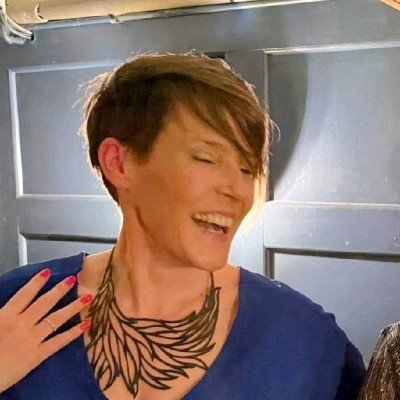
Dave Bui
ChangeMakers
“I do believe that AI will not be replacing individuals. It's just going to be changing the way that we work.”
Dave Bui has been named to the Talent 100, Class of 2026, the annual award recognizing up to 100 leaders in each category of talent acquisition. Honorees are nominated by peers or found by committees that look for excellent work wherever it happens, then chosen for the depth of their craft and their impact on hiring. This is Dave's story.
Seven years ago, every conference agenda in talent acquisition led with diversity, equity and inclusion. Today every agenda leads with AI. David Bui, Director of People at ChangeMakers, has watched both cycles from the inside, and he has a caution about what quietly gets set down each time the industry picks something new up.
"Recruitment goes through ebbs and flows of what's hot in the community at the time," he says. It is an observation earned over more than a decade of work, and it shapes how he evaluates every new tool that arrives promising to change everything. Bui is not a skeptic. He is something more useful: a practitioner who has seen enough waves to tell the difference between a shift in the work and a shift in the conversation about the work.
From the Agency Floor to the People Function
Bui started at the entry level on the agency side, learning the trade the way most durable recruiters do, by carrying a desk and supporting a rotating set of client organizations with whatever they needed. That grounding gave him range. He eventually moved in-house on the talent acquisition side, and from there kept widening the aperture, expanding beyond recruiting into the other facets of HR that determine whether a hire actually succeeds once the offer is signed.
Today he is Director of People at ChangeMakers, a PR, marketing and social impact consulting firm. He is candid that he is not personally running requisitions at the moment, but the talent acquisition instinct has not gone anywhere. It now operates a level up, in the architecture behind the hiring rather than the transaction itself. "There is a lot of still impact behind the scenes from the talent acquisition standpoint that I'm involved into," he says. It is the natural endpoint of a career that moved from filling roles, to owning the function, to shaping the conditions the function works inside.
The Hot Topic Cycle
Bui's read on AI in recruiting starts with pattern recognition. He has seen the tooling proliferate quickly: resume screeners, process-oriented applications, a widening set of places where AI has begun to attach itself to the hiring workflow. He has also seen how fast the ground moves. "Something that was hot three months ago is maybe not as hot nowadays," he says, and that pace creates a genuine problem for working practitioners. Real fluency demands real time with the technology, and time is the one thing a full-time operator does not have in surplus.
He expects the boom to continue and intensify, and he expects it to bring its own costs. "With any type of solution that's created in this world, there's always problems that are also created as well," he says, pointing directly at ethics as the terrain that will shift most as adoption accelerates. His view of who struggles is unsentimental: the people not privy to change, the ones who cannot adapt. His counsel is to embrace it early and hold your own work loosely. What you do today, he notes, might be obsolete a year later, and the healthiest response is to be genuinely okay with that.
What the Machine Still Cannot Read
For all that, Bui draws a firm line. His advice to fellow talent leaders is to adapt to AI and build it into the process, but not to lean on it. "Don't rely on it," he says. He does not believe the technology replaces people; he believes it changes how people work and how organizations operate, and improves the processes underneath talent acquisition.
The reasons are specific. Body language in an interview is a huge signal, and reading it is not yet something a model does. Neither is the judgment to press further when an answer lands short of satisfying, to dig for what a candidate has not quite said. And then there is the domain closest to his convictions. Deciphering diversity, equity and inclusion is difficult for AI, he says, because it is difficult even for skilled recruiters: understanding what it means for a company, for an organization, and what intersectionality actually looks like for a particular team requires context no screener holds.
That is his real argument, and it is more than a technical one. The industry moved on from DEI as its headline topic the moment AI arrived. Bui thinks that was a mistake of attention, not of substance. "Although it's on a hot topic today, it's something that's still really important," he says of the work that fell out of the spotlight. Adapt to the new tools. Do not let them decide what matters.
The Talent 100 exists to celebrate the people shaping the future of how the world hires, and few embody that better than Dave. We are honored to welcome Dave Bui to the Talent 100, Class of 2026, and grateful for the experience, perspective, and craft they bring to this community. Congratulations, Dave. Welcome to the Talent 100.
About the Talent 100
The Talent 100 is an annual list spotlighting the leaders who push HR and talent acquisition forward, organized by Noon AI. Honorees are selected through peer nominations and independent selection committees. Selection is entirely merit-based, with no fees or pay-to-play requirements.