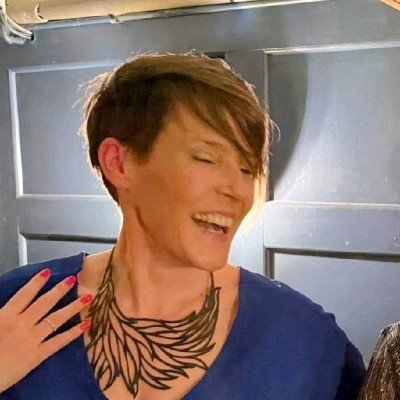
Christina Chan
The Talent Project
“People are people, and they are only going to do their best work if they are happy.”
Christina Chan has been named to the Talent 100, Class of 2026, the annual award recognizing up to 100 leaders in each category of talent acquisition. Honorees are nominated by peers or found by committees that look for excellent work wherever it happens, then chosen for the depth of their craft and their impact on hiring. This is Christina's story.
A career strengths assessment handed Christina Chan a result she was not expecting. As a head of global business development, she assumed the top of her list would be crowded with strategy and negotiation. Instead, all five of her highest ranking strengths were about people, and the very strongest was individualization: the ability to see what someone is good at and then shape it.
Today, as Executive Director, Talent & Career Strategy at The Talent Project, Christina works with candidates and clients across the country, running searches while coaching and mentoring the people she meets along the way. The arrangement was originally supposed to last one month. It has now run considerably longer, and she calls it the best decision she did not plan.
The CliftonStrengths assessment she took measures 34 strengths, all of which everyone carries, though each shows up at a different level. For Christina, the profile confirmed something she had been circling for years without naming it. She recommends the exercise to almost anyone weighing what kind of work they should be doing.
Fifteen Years Before The Pivot
Christina spent more than 15 years in marketing and global business development across retail, luxury, and beauty, with the bulk of that time at L'Oréal. Her ambition was specific and she achieved it: she wanted to be head of global business development. Much of the role involved helping brands roll out in different countries, which meant hiring and consulting with people all over the world.
The tell was in what she enjoyed most. She was not, by her own description, a beauty junkie. She did not love the makeup. She loved the people, and she now considers that an early green flag she should have read sooner. Once she reached her goals, her attention moved almost entirely toward building out her team. She would sink hours into mid-year reviews and recruiting, handle the business side because it was the job, and find herself genuinely enthralled by the people development part.
In 2025 she left L'Oréal and earned her SHRM-CP, a deliberate signal that she intended to build the next chapter around people rather than product. The path to The Talent Project came the way many of the best opportunities do: she met someone through someone. The founder had built her own agency from the ground up, was winning roles faster than she could staff them, and said plainly that she needed help. Christina's answer was to give it a go. She describes the founder as a relentless builder who handles business development, recruitment, and marketing at once, and as one of the kindest people she has ever met.
A Trifecta Of Mentors
Christina was supposed to be a CPA. She was in undergrad, working toward a business degree, when an internship rearranged her plans. Her manager was then the VP of strategy at Burberry in China, and he showed her that authority did not have to be loud. He commanded respect while remaining the kindest person in the room, gave her the best feedback she had received, and always wanted her to learn. With his encouragement, she was able to tell her parents she did not want to be an accountant. She wanted to go into fashion.
The second was a boss at Coach who carried an enormous scope and never broke under it. Cool, calm, and collected, she helped Christina navigate people issues and learn new territory, and she set the tone for the kind of leader Christina wanted to become.
The third arrived at L'Oréal as Christina was climbing, a manager who has since become chief executive of the beauty brand Malin+Goetz. She was the first boss to tell Christina that a person can be a leader and take care of herself at the same time. Christina had been pouring so much into her team that her own cup was running empty. The advice was gentle in delivery and blunt in substance: take a vacation, look after yourself, because you cannot look after anyone else otherwise. Christina credits that lesson in balance with much of where she has landed. Difficult experiences exist too, she notes, but the useful move is to learn from them and move past them.
Nudged Into The Tools
Christina is candid that she is not a first mover on technology. Someone usually has to push her toward it. In this case it was her best friend, who sat her down and insisted she learn to use Claude. She now describes that intervention as a game changer and jokes that she is grateful to have been bullied into it.
What surprised her most is that the tools made her think harder, not less. There is so much information coming back that a user still has to suss out whether the answer is actually right. She spends real time on the prompt, then more time validating what comes out, and only then moves forward. The work has made her sharper rather than lazier.
In practice, AI has changed how she sources, particularly when she is recruiting for a region she does not live in and needs to understand which local companies are worth approaching. Her team uses Juicebox, which she calls another game changer for sourcing, along with an AI note taker. She remains a little traditional and still writes things down by hand, seeing benefits on both sides. Her verdict on the broader shift is unsentimental: if you are not getting on it, you will fall behind.
It Is All About The People
Christina's guidance for anyone entering the industry now is advice she admits sounds elementary. It is all about the people. Yes, there is a task and a responsibility to the client to deliver the best individual for the role, but people sit on both sides of that transaction, and that reality should shape every interaction.
When she approaches candidates, she often offers a little coaching or advice, and she asks permission first. The goal is a good experience for everyone involved, which is the opposite of blasting out a million sequences and seeing who bites. Real thought goes into the question of whether a candidate fits the role now and where that person wants to be in the next two or three years. The financial ramifications of high turnover support that discipline on the business side, but the human argument is simpler: people only do their best when they are happy.
That belief also explains what she values in others. She points to a peer at another talent firm who stopped to give her generous, meaningful advice while she was weighing a new role, at a moment when most professionals do not make the time. It helped her keep going on the path toward a career centered on people. As for the technology reshaping her field, Christina keeps it in its place. The tools are ancillary. The job is not to forget you are dealing with people.
The Talent 100 exists to celebrate the people shaping the future of how the world hires, and few embody that better than Christina. We are honored to welcome Christina Chan to the Talent 100, Class of 2026, and grateful for the experience, perspective, and craft they bring to this community. Congratulations, Christina. Welcome to the Talent 100.
About the Talent 100
The Talent 100 is an annual list spotlighting the leaders who push HR and talent acquisition forward, organized by Noon AI. Honorees are selected through peer nominations and independent selection committees. Selection is entirely merit-based, with no fees or pay-to-play requirements.