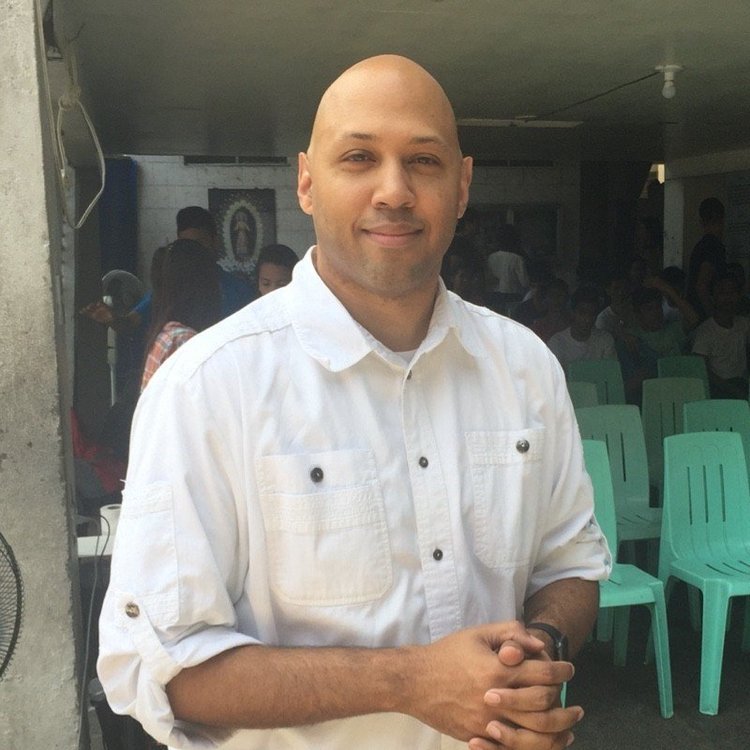
Abhishek De
“A person may be great on paper, but may not be great for that role in that particular organization.”
Abhishek De has been named to the Talent 100, Class of 2026, the annual award recognizing up to 100 leaders in each category of talent acquisition. Honorees are nominated by peers or found by committees that look for excellent work wherever it happens, then chosen for the depth of their craft and their impact on hiring. This is Abhishek's story.
The InMails were well written, well targeted, and in Japan they went unanswered. Newly promoted to run recruiting across all of APAC for Alcon, a medical device company, Abhishek De discovered that candidates there would not respond in English and sometimes answered in Japanese instead, and rebuilt the approach around stakeholder management across cultures rather than a single outreach channel.
That correction is the kind of moment De points to when explaining how a technically strong recruiter becomes a genuinely global one. Now a CHRO and certified coach, De has worked across Microsoft, LinkedIn, Alcon, Uber, BrowserStack and HighRadius, and in recent years has reported directly to founders. What links those very different environments is not a single playbook. It is a habit of testing which parts of the craft transfer intact and which have to be rebuilt for every market, stage and organization.
A Marketing Major Who Found HR by Assignment
The entry into talent was not planned. De majored in marketing during a first master's, and HR arrived as an assignment rather than an ambition. It stuck. Three years followed at TCS, a services setup where sheer scale teaches process long before it teaches nuance, and then came the deliberate part: a return to school for a second master's, this time a concentrated HR program.
Everything since has been HR and recruiting. Asked whether the origin story could be tidier, De offers no revisionism and no regret about falling into a field that turned into a vocation.
Building for Founders, Not for Volume
That preference shapes the current remit. As a CHRO working alongside founders, De sits at the point where organizational design, hiring strategy and coaching converge rather than where requisitions get processed, and the emphasis at the moment is deliberately not on throughput. Volume hiring is not the present priority, which puts the weight on judgment calls: senior and leadership hires, fitment, the shape of the pyramid, and the readiness of the people already inside the company. A TISS alumnus and certified coach, De brings a developmental lens to that work as much as a staffing one, and the coaching credential is less a decoration than a description of how the job actually gets done.
A Deliberate Line Around AI
De concedes the position on AI reads as mildly contrarian, and holds it anyway. As an enabler of operational work, the enthusiasm is real. Auto scheduling, candidate follow up emails, inbox management: those are productivity gains taken willingly. A good deal of the employer branding creative and internal communication copy is generated with AI. Wherever the decision making is limited, the machine can have it.
The line falls at judgment. Screening still runs with a human in the loop, because the hidden gems recruiters hunt for are rarely surfaced by resumes and keywords. Context of the work a person has actually done, context of what a role really means inside a specific organization, and an honest read on fitment are, in De's view, intelligence a recruiter supplies and a model struggles to replicate. Talking to candidates, persuading them, telling the story of the company and the role: none of that has been handed to bots or agents. It is segregation rather than rejection, and by De's own assessment it has worked out well so far.
Advice for 2026: Rebuild the Pyramid Before You Have To
The counsel for talent leaders heading into 2026 begins with arithmetic. Too many organizations still do headcount planning independent of the impact of AI, and that gap, De argues, is precisely why layoffs and uncertainty keep arriving as surprises. Most companies, at least in software, can track improved effectiveness from AI usage fairly easily, which means they can also reason honestly about how many engineers they will genuinely need. The old ratio of one team lead for every six or seven engineers is not a law of nature. Hierarchies compress, ownership for a team lead or engineering manager expands sharply, and demand for middle managers thins. Reimagining that pyramid early saves a great deal of heartburn later.
The second piece is to experiment without fear. De is unsentimental about how the learning happens: not through sessions, but by building something. Automate a task flow. Automate how letters get generated. Stand up a chatbot that resolves simple candidate or employee queries. It is not as complicated as it looks, and if the prompts are the obstacle, ask the model to write the prompts.
The third is agility. If AI keeps getting more capable, the volume of work that can be completed in compressed time becomes, in De's word, insane, and the HR and talent functions will change alongside it. The prescription is learning agility for leaders and change readiness for teams, cultivated early enough that none of it lands as a shock.
The Talent 100 exists to celebrate the people shaping the future of how the world hires, and few embody that better than Abhishek. We are honored to welcome Abhishek De to the Talent 100, Class of 2026, and grateful for the experience, perspective, and craft they bring to this community. Congratulations, Abhishek. Welcome to the Talent 100.
About the Talent 100
The Talent 100 is an annual list spotlighting the leaders who push HR and talent acquisition forward, organized by Noon AI. Honorees are selected through peer nominations and independent selection committees. Selection is entirely merit-based, with no fees or pay-to-play requirements.