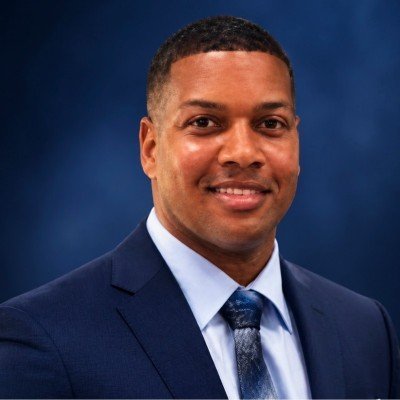
Michael Kascsak
“I realized what a noble profession recruiting was.”
Michael Kascsak has been named to the Talent 100, Class of 2026, the annual award recognizing up to 100 leaders in each category of talent acquisition. Honorees are nominated by peers or found by committees that look for excellent work wherever it happens, then chosen for the depth of their craft and their impact on hiring. This is Michael's story.
Michael Kascsak's first career plan did not involve a single job requisition. It involved a pitch, a ball, and a professional soccer contract. The injury that ended that plan arrived halfway through university, at the precise moment he discovered he had never built a backup. What he did next has defined a career built on curiosity, urgency, and an unusually clear-eyed belief that recruiting is one of the more consequential jobs a person can hold.
He did the unglamorous thing first: he put his head down and finished the degree. "Once I walked across the stage and had my diploma, I really didn't know what was next," he says. What came next was Aerotek, the agency floor, and a discovery that reshaped everything after it.
The Accidental Entry Point
Kascsak is quick to puncture any myth of destiny in this line of work. "Nobody goes to school and says, I want to be a recruiter," he says. "We all kind of fall into it in some way, shape, or form." He landed on the agency side straight out of college, and within a very short time he understood he had walked into something that suited him, even if he could not yet name it.
What he had, in the beginning, was questions. A lot of them. As it turned out, that was precisely the raw material his employer was hunting for. They were not looking for pedigree. They were looking for people who were highly competitive, genuinely curious, and wired with a sense of urgency, and then they built the recruiter around those instincts. Kascsak absorbed the training with the same intensity he had once brought to sport, and he came out of those years with a working knowledge of the recruiting industry that still anchors his judgment today.
The self-assessment he arrived at was blunt and threefold. He had a passion for the work. He was, in his own words, actually pretty good at it. And, most importantly, he understood what the work was really for.
The Case for a Noble Profession
That third realization is the one Kascsak keeps returning to, and it is the reason he never drifted out of the industry the way so many agency alumni do. He took a step back early on and counted the people he was helping, and the arithmetic changed how he saw the job.
"We help people get jobs. We help the economy," he says. "There's a lot of ways and a lot of avenues that recruiting helps." It is a framing that resists the transactional view of talent acquisition as a pipeline function measured only in fills and time to hire. In Kascsak's telling, recruiting sits at the intersection of a person's livelihood and an organization's future, and treating it as anything less is a failure of imagination.
He is candid that luck played a role in how he found this profession. He is equally clear that luck had nothing to do with why he stayed. He stayed because the attributes he was handed early, competitiveness, curiosity, urgency, were not disposable starter tools. He kept them, developed them, and evolved them as his scope grew. Careers in this field tend to reward the people who compound their fundamentals rather than trade them in.
What the Journey Built
The through line in Kascsak's career is not a title or a company. It is a conviction that this profession earns its keep by changing outcomes for real people, and that leaders are obligated to pass forward the belief that was once extended to them.
He credits the people around him without reservation. "I've been so fortunate," he says, and he means it as a statement of accounting rather than modesty. The soccer career never happened. The one he found instead has proven considerably harder to walk away from.
The Talent 100 exists to celebrate the people shaping the future of how the world hires, and few embody that better than Michael. We are honored to welcome Michael Kascsak to the Talent 100, Class of 2026, and grateful for the experience, perspective, and craft they bring to this community. Congratulations, Michael. Welcome to the Talent 100.
About the Talent 100
The Talent 100 is an annual list spotlighting the leaders who push HR and talent acquisition forward, organized by Noon AI. Honorees are selected through peer nominations and independent selection committees. Selection is entirely merit-based, with no fees or pay-to-play requirements.