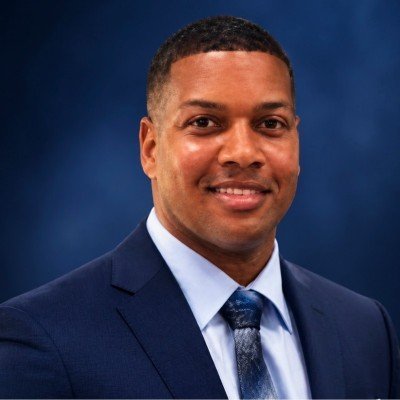
Kesh Ladwa
West Midlands Combined Authority
“If we don't learn AI, implement it and adapt to it, we will simply be left behind.”
Kesh Ladwa has been named to the Talent 100, Class of 2026, the annual award recognizing up to 100 leaders in each category of talent acquisition. Honorees are nominated by peers or found by committees that look for excellent work wherever it happens, then chosen for the depth of their craft and their impact on hiring. This is Kesh's story.
Job evaluation at West Midlands Combined Authority used to be a manual grind: high volume, error prone, and every mistake carried knock-on effects across the organisation. Kesh Ladwa replaced the grind with an AI agent that returns results instantly at roughly 99.9 percent consistency and accuracy, with the final call still sitting with a human being. That single build says most of what needs saying about how Ladwa works: find the process everyone tolerates, then rebuild it so the people around it can spend their time on something harder.
As a business consultant within strategic workforce planning at the combined authority, Ladwa is standing up the organisation's first strategic workforce planning capability alongside its data analytics and AI implementation. The remit is deliberately wide: strategy, processes, technology, infrastructure, employer branding, and ED&I. It is the kind of brief that only makes sense in the hands of someone who has already done the operational job long enough to know which parts of it deserve to survive.
Twenty-Four Years, Both Sides Of The Desk
Ladwa has spent about 24 years in the industry, beginning in agency, as most people do. The frustration came quickly. Agency work meant owning one slice of the process and then handing the rest away, and Ladwa wanted to deliver the complete service to clients rather than a fragment of it. The HR side supplied the missing half of the picture, and from there the work opened out across both public and private sector, including the NHS and a run of private organisations.
The titles tracked the widening scope: recruitment manager, then recruitment business manager, then head of talent acquisition, then transformation work that cut across sectors with very little in common except complexity. BBC News. Warwickshire and West Mercia Police, and the College of Policing. Nationwide Building Society and Weatherbys Private Bank. The civil service. For a stretch, Ladwa ran an independent recruitment company delivering transformation for businesses directly. Awards and speaking panels accumulated along the way, but the more useful throughline is the direction of travel: operational to strategic, one remit at a time.
Past The User Layer Of AI
Ladwa is candid that AI is evolving faster than the evidence base behind it. There is still no strong case study showing where AI has been implemented successfully across an organisation and, more importantly, why it worked. What exists in abundance is the user layer: talent acquisition staff using Copilot or Claude to do their own jobs better, issuing simple commands and getting useful output back. That is real value, and it is also the shallow end.
The deeper question, the one Ladwa puts to senior executives and technology directors, is how a business uses AI to help its people and its processes achieve more. That means how data is assessed, how processes are managed, and how AI gets built into the infrastructure rather than bolted on beside it. At the combined authority, that has meant working through the technology stack and asking how HR business partners can deliver a better service to the organisation: the efficiencies, the processes, the data, the strategic layer.
In practice it looks like agents built for repetitive work. Employees hunting for policies, asking onboarding questions, raising routine HR queries: AI takes the heavy lifting. Consistency is the underrated prize, because consistency strips bias out of a process, and the job evaluation build proved the point at scale. Ladwa is precise about the boundary: this is human and AI led, with human decisions made at the end. Using AI for parts of a role does not delete the role, it frees the person to do something different. What it does end, in Ladwa's view, is the era of sitting there with spreadsheets. There are better ways now.
Advice For 2026
Ladwa's counsel to talent leaders starts with the least glamorous instruction available: start. Plenty of organisations remain reluctant even to attempt AI, and familiarity only comes from use. Do not be afraid of it, and do not be paralysed by the prospect of error, because most of the time the system will tell you a mistake has been made.
Then narrow the focus. Pick one problem, one area where AI can make a team's work or a working day easier, and build an agent or workflow around it. The best candidate is usually obvious: whatever is causing the biggest headache right now. Ladwa is doing exactly this in real time rather than prescribing it from a distance.
The second half of the advice is about attention. Keep scanning the next six to 12 months for what is changing, what others are doing, what is new and what has quietly gone stale. Silence is not stability; something can be shifting without anyone talking about it yet. Look at what you do, interrogate why you do it, and treat innovation as a standing obligation rather than a project with an end date.
The Talent 100 exists to celebrate the people shaping the future of how the world hires, and few embody that better than Kesh. We are honored to welcome Kesh Ladwa to the Talent 100, Class of 2026, and grateful for the experience, perspective, and craft they bring to this community. Congratulations, Kesh. Welcome to the Talent 100.
About the Talent 100
The Talent 100 is an annual list spotlighting the leaders who push HR and talent acquisition forward, organized by Noon AI. Honorees are selected through peer nominations and independent selection committees. Selection is entirely merit-based, with no fees or pay-to-play requirements.