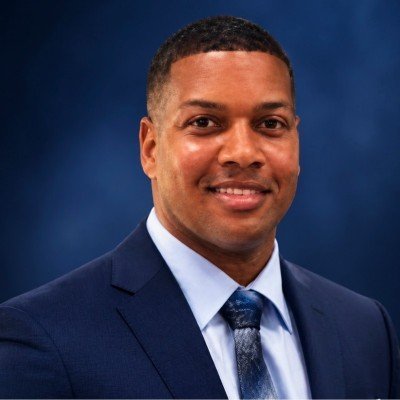
Mark Kunaseelan
University of the Arts London
“AI hasn't introduced anything new. It's just made it cheaper, quicker and fairer for people to access support in that way.”
Mark Kunaseelan has been named to the Talent 100, Class of 2026, the annual award recognizing up to 100 leaders in each category of talent acquisition. Honorees are nominated by peers or found by committees that look for excellent work wherever it happens, then chosen for the depth of their craft and their impact on hiring. This is Mark's story.
Mark Kunaseelan walked into the assessment centre believing it was an interview with a recruitment agency. It was not. It was welfare to work, employability, and by the time he had been called back for a second interview and offered the job, he had accidentally found the career he has spent his working life in.
What followed was just under five years spent getting people off benefits and into sustainable employment, writing their CVs and cover letters on their behalf, one application at a time. He had been through that same search himself, with very little support from the job centre, and he brought the memory with him. Now Head of Talent Acquisition at University of the Arts London, he still runs his decisions through it. He knows what it is to spend hours on a cover letter and hear nothing back. "You get ghosted," he says of the industry's most persistent failure, "whether it's intentional, whether it's accidental, whether it's just poor process design."
An Unconventional Way In
University did not work out. There followed a couple of years he describes candidly as not taking life seriously, then a set of experiences that pushed him to grow up and, in his own words, sort himself out. He took a temporary Christmas sales job, the rite of passage he jokes almost nobody escapes, and when the contract ended he was back at the beginning: no qualifications, no obvious route, and a need to find work.
Recruitment consultancy looked like the answer. It sat close enough to sales, it offered earning potential, and it did not require a degree. He signed on for jobseeker's allowance while he searched, interviewed with several agencies, and got nowhere. Then came the assessment centre that turned out to be something else entirely.
It was not the commission-driven start most recruiters describe. There was no commission at all. What there was, across those five years, was the daily craft of getting people into work: reading CVs, shaping cover letters, understanding what actually moves an application forward. Having been through the process himself, he found his own experience was the most useful tool he owned. The same period brought roughly four redundancies in five years, an education in resilience he had not asked for.
A Deliberate Skeptic on AI
Kunaseelan sits firmly in the camp of considered risk avoidance on artificial intelligence, and he is unapologetic about it. His institution has not yet incorporated AI into its ways of working, and he sees that restraint as the right call while lawsuits over recruitment technology multiply globally, including the high-profile actions involving Workday and Eightfold along with smaller cases he tracks. Until legislation genuinely sets the framework and the parameters, including the EU directive he is watching closely, his position is wait and see.
His caution is not theoretical. He has tested the tools himself and found meaningful hallucination. In one experiment he compared his own record of a meeting against the AI summary notes in Microsoft Teams and found the system had missed a significant action point he had captured for the group. "I don't fully trust anything that comes out of AI," he says. Colleagues ask him constantly when they can start using it for shortlisting, and the answer does not move: "Still need to do your human review. We haven't approved or authorised it yet."
Where he does see value, he is specific. Anything with no personal data flowing through it is fair game: stress-testing interview questions against a skills framework, spotting what else ought to be asked, de-biasing adverts so the language is neither too feminine nor too masculine coded and free of the age, religious and other assumptions that touch protected characteristics. That, he notes, is where adoption has moved fastest, because there is pretty much no risk.
He also makes a nuanced argument that cuts against the common framing. AI has not invented anything new for candidates. It has made the help he used to deliver by hand cheaper, quicker and fairer to reach. And there is one problem he believes it could address now: the prompt, accurate rejection that stops applicants being left in silence once a role has been filled. He is quick to add that crude automation is not enough. A role left open for six months, or a hire someone forgot to mark as hired, and suddenly the successful candidate opens a rejection email.
His conclusion is precise rather than dismissive. The technology will improve, as technology always does, though he expects setbacks when something major surfaces, a cybersecurity or information failure, with ripple effects behind it. He draws the comparison to autonomous taxis spreading across America and arriving in London: plausible in theory, machines being immune to stress and impairment in a way drivers are not, but requiring far more test runs before anyone can honestly claim parity with a human. For recruitment, the top and tail of the process, getting an advert live, running a campaign, may already offer some benefit. The middle is not mature enough. "I'm not quite sure about the middle part, which is the decision-making part."
The Long View
What links the welfare to work years, the redundancies and today's careful position on AI is a single instinct: the candidate is a person with limited time, limited information and real stakes, and the process owes them dignity. Kunaseelan learned that as a jobseeker, practised it as an adviser, and now enforces it as a leader.
He is measured about how far he has come and unsentimental about how he got there. The route ran through a temporary sales job, a signing-on queue, an assessment centre he entered by mistake, and a string of managers who each taught him something he only understood later. Years on from that accidental start, the question he asks of every new tool is the one his own experience planted: does this make the process fairer for the person waiting on the other end.
The Talent 100 exists to celebrate the people shaping the future of how the world hires, and few embody that better than Mark. We are honored to welcome Mark Kunaseelan to the Talent 100, Class of 2026, and grateful for the experience, perspective, and craft they bring to this community. Congratulations, Mark. Welcome to the Talent 100.
About the Talent 100
The Talent 100 is an annual list spotlighting the leaders who push HR and talent acquisition forward, organized by Noon AI. Honorees are selected through peer nominations and independent selection committees. Selection is entirely merit-based, with no fees or pay-to-play requirements.