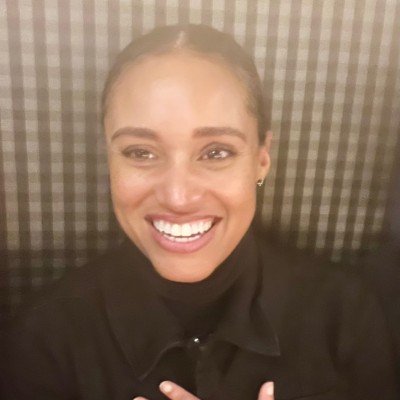
Ben Nagrani
MeridianLink
“Expanding diversity, especially on the engineering side, is going to be a lifetime work in progress for me.”
Ben Nagrani has been named to the Talent 100, Class of 2026, the annual award recognizing up to 100 leaders in each category of talent acquisition. Honorees are nominated by peers or found by committees that look for excellent work wherever it happens, then chosen for the depth of their craft and their impact on hiring. This is Ben's story.
Eighteen years ago, a venture-backed startup asked its enterprise salesperson for an unusual favor: lend himself to talent acquisition for three months, just until a proper recruiter could be found. The salesperson was Ben Nagrani, and the reason for the request was simple. He had been handpicking his own sales team, and the people he chose kept beating their quotas. The three-month loan never ended.
Today, as a talent acquisition leader at MeridianLink, Nagrani brings the instincts of a closer to a discipline that has spent the last few years being rewritten by software. He completes 15 to 20 recruiter screens in an optimized week, works through 100 to 200 profiles a day on LinkedIn, presses hiring managers on who is genuinely qualified, and keeps a running scoreboard on a metric many teams still treat as an afterthought: whether the pipeline he built actually reflects the market it was drawn from.
From Quota Carrier to Talent Builder
The origin story matters because it explains the method. Nagrani began his career in enterprise sales, and because he had to build his own teams, he learned early how to spot the people who understood how complex deals really get done. Those hires came aboard and exceeded their numbers. That outcome, not a resume, is what prompted the CEO and founder to approach him with a proposition: you are identifying the right people, you understand the requirements, and you can sell the opportunity to the right folks, so can you staff for us?
He agreed, and then went considerably further than a caretaker assignment required. Inside those three months he set out to map the top five percent of salespeople across the country, an exercise in market intelligence rather than requisition filling. The early success was decisive enough that he never returned to a quota. What he had discovered was that his real edge was not sales technique but audience comprehension: reading people from different cultures, working out what actually motivates them, and matching that to what a business needs. It is the same skill in both jobs. Only the product changes.
Where AI Actually Earns Its Keep
Nagrani discusses artificial intelligence less like a believer or a skeptic than like someone who has measured where the hours go. Scheduling is where automation pays out immediately. The moment a recruiter screen or hiring manager screen is triggered, the system understands the command, reaches the candidate, closes the loop, and books the time, populating not just his calendar but its own. Delivery gets faster without anyone working longer.
Sourcing and calibration are where he sees the deeper shift. Instead of guesstimating what a profile brings to the table across hundreds of records, he sets the parameters and lets the tooling report back with the right 50 candidates to present and the reasons why each one qualifies. That, he says, saves hours and days of the back and forth with hiring managers that used to begin only after profiles had already been sent over for review. Calibration moves to the front of the process rather than the middle of it.
Then there is capacity, and this is the part he finds genuinely exciting. A human recruiter can realistically complete 15 to 20 screens in a strong week. Nagrani asks the obvious follow-up: what happens when AI runs another 50 in the background and reports that of ten candidates screened this week, five have the right skills to move forward?
His answer is not fewer recruiters. It is a wider top of funnel and a sharper bottom, more screens feeding a tighter group of five or six finalists who reach the later rounds with real momentum. He describes the velocity gain as phenomenal, chiefly because it removes the delays and the endless back and forth that used to erode candidate goodwill before anyone reached a decision.
The Unfinished Work of Unbiasing the Funnel
Ask him for one piece of advice for other talent leaders and he does not talk about tooling. He talks about what the tooling has not fixed. For all the latest and greatest platforms, he argues, there is still bias in the system, and the highest use of AI and any other technology is to unbias those decisions and be fair across the board, across every sector of society.
He speaks from a specific vantage point. Nagrani comes from a mixed cultural background, understands candidates who arrive with different countries and languages behind them, and credits that fluency with the nuances of different cultural makeups for much of his success hiring across backgrounds. Diversity, he says, is a very big component in the business, and the industry is not yet doing enough to take the biases out. He still challenges the familiar pattern in which a leader is most comfortable hiring people who look and feel like himself, and he makes the case plainly: the current makeup is not good enough to be successful, so widen the pool to include more qualified diverse talent, then hire from there.
He began pressing that agenda roughly a decade ago, across every company and every team he has worked with, and he is candid that shifting attitudes, mentalities and hiring targets is a long journey rather than a project with a completion date. It does not stop and start. It is always there. That, more than any metric, is the through line of his career: the conviction that people in his seat have the standing to broaden the pool, and the willingness to keep influencing hiring teams until the numbers move.
The Talent 100 exists to celebrate the people shaping the future of how the world hires, and few embody that better than Ben. We are honored to welcome Ben Nagrani to the Talent 100, Class of 2026, and grateful for the experience, perspective, and craft they bring to this community. Congratulations, Ben. Welcome to the Talent 100.
About the Talent 100
The Talent 100 is an annual list spotlighting the leaders who push HR and talent acquisition forward, organized by Noon AI. Honorees are selected through peer nominations and independent selection committees. Selection is entirely merit-based, with no fees or pay-to-play requirements.