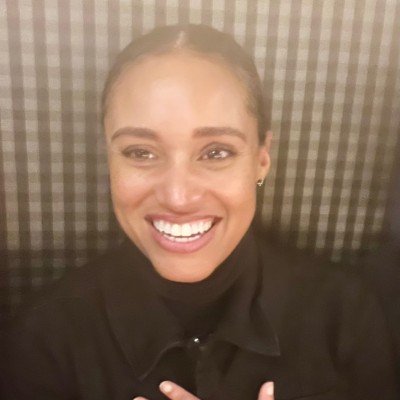
Renate Norman
Microsoft
“Rather than knowing how to get from A to B, we've got to challenge ourselves and our teams to figure out how do I get from A to G.”
Renate Norman has been named to the Talent 100, Class of 2026, the annual award recognizing up to 100 leaders in each category of talent acquisition. Honorees are nominated by peers or found by committees that look for excellent work wherever it happens, then chosen for the depth of their craft and their impact on hiring. This is Renate's story.
Halfway through law school, Renate Norman made a decision that would have alarmed most of her classmates: she was not going to practice law. She finished the degree anyway, walked across the stage without a plan, and then walked into a legal recruiting agency looking for contract attorney work. The owner had a different idea. If Norman did not want to be an attorney, she happened to need help recruiting them. Norman had no idea what that meant. She said yes, was trained on the job, and has been in recruiting ever since.
It is a beginning she describes without much ceremony. "I literally fell into it," she says. But the instinct underneath that first decision, the willingness to abandon the obvious route when it stops making sense, turns out to be the through line of everything that followed. Today Norman is a talent acquisition leader at Microsoft, where the questions she asks of her teams sound less like staffing questions and more like the ones a general manager asks: What is this costing us? What happens if the plan fails? What are we doing simply because we have always done it that way?
An Education Nobody Planned
The legal training was not wasted. A law degree teaches a person to build an argument, anticipate the counterargument, and prepare for the outcome that has not happened yet, and those habits show up everywhere in how Norman talks about talent work. What she did not have, at the start, was a recruiting vocabulary. That came from the agency owner who took a chance on a graduate with no experience and no clear direction, sat her down, and taught her the craft from the ground up.
That first act of investment shaped how Norman thinks about developing people. She was not hired for a track record. She was hired for potential and then given the training to justify it, which is a bet a lot of hiring managers talk about and comparatively few actually place. Over the course of her career, Norman was shaped by several leaders who taught her complementary lessons: to think creatively and out of the box rather than reserving creativity for crisis moments; to push boundaries and be a little radical when the situation calls for it; to maintain empathy and think about all the customers in a hiring process rather than letting candidates and hiring managers dissolve into workflow steps; and to remember that this is a business with costs attached to it that must be run like an actual business. Between those influences sits Norman's own operating stance: creative, willing to press, attentive to the people in the process, and unsentimental about the numbers.
Doing More With Less
Norman is measured about the AI moment, and her read on it is less about tools than about pressure. Across companies and across every stage of the recruiting life cycle, she says, professionals have been forced to do more with fewer resources. That constraint has produced something she considers genuinely useful.
"I think in the past you just get work done, right, without questioning how you're doing it, why you're doing it that way," she says. Now people are forced to step back and ask whether there is a different way to reach the same or a better outcome, with the end user in mind. For Norman, that reflex matters more than any particular platform. The recruiters who thrive will be the ones who treat their own process as something to be interrogated rather than inherited.
From A to B to A to G
Asked what she would tell other talent leaders heading into 2026, Norman offers a framework she and her leadership team have been working through. The profession, she argues, has gotten very good at getting from A to B. What the last five and a half years have demonstrated, through remote work, market whiplash, and now the AI wave, is that the curveballs are not going to stop and the pace of change will only accelerate.
"Rather than knowing how to get from A to B, we've got to challenge ourselves and our teams to figure out how do I get from A to G," she says. In practice that means running the consequences forward. If I do this, what could happen? What is my plan to keep that from going badly? If it happens anyway, am I comfortable with the result? The old standard was a plan and a backup plan. Norman's standard is multiple backup plans, because the thing that breaks could be a tool, a person, a process, or a government decision.
That, in her view, is the real job description now. "You've got to literally be a well-rounded business leader," she says, paying attention to the environment and thinking through every potential consequence. Talent leaders once needed command of compensation, offer structure, and the company value proposition. Norman's list has grown to include economics and the political landscape, and she treats that expansion not as a burden but as the price of being genuinely useful to the business.
It is a fitting place for someone who once decided that the credential she had spent years earning was not going to define her work. Norman built a career by asking what else might be true, and she is now asking her teams to do the same thing, faster, and several moves ahead.
The Talent 100 exists to celebrate the people shaping the future of how the world hires, and few embody that better than Renate. We are honored to welcome Renate Norman to the Talent 100, Class of 2026, and grateful for the experience, perspective, and craft they bring to this community. Congratulations, Renate. Welcome to the Talent 100.
About the Talent 100
The Talent 100 is an annual list spotlighting the leaders who push HR and talent acquisition forward, organized by Noon AI. Honorees are selected through peer nominations and independent selection committees. Selection is entirely merit-based, with no fees or pay-to-play requirements.