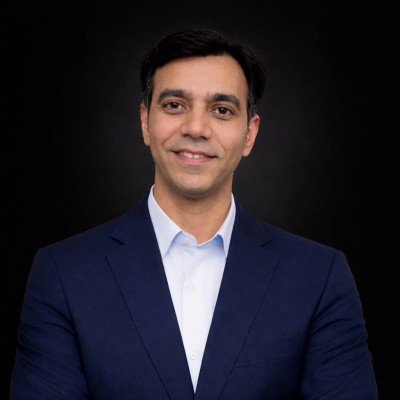
Andrea Rocha Pitta
Miro
“If at any point in your career you feel like you are becoming less of yourself, that should be a red flag to take a step back before you take another one forward.”
Andrea Rocha Pitta has been named to the Talent 100, Class of 2026, the annual award recognizing up to 100 leaders in each category of talent acquisition. Honorees are nominated by peers or found by committees that look for excellent work wherever it happens, then chosen for the depth of their craft and their impact on hiring. This is Andrea's story.
Andrea Rocha Pitta trained as a psychologist in Brazil and was certain she would spend her career in clinical practice, supporting people's mental health. Then the same observation kept coming back to her from the people around her: she had a gift for guiding others through decisions about their working lives. A few career guidance internships in her final university years settled the question, and today she is Manager, Business Recruiting AMER & APAC at Miro, leading a team from the Netherlands across the AMER and APAC regions.
What carried over from psychology was not a technique but a conviction. Careers are not line items. They are the mechanism through which most people build stability, and Rocha Pitta has organized her professional life around that idea, from her earliest work in Brazil to the team she leads now.
Why Hiring Was Never Just Hiring
Starting a talent career in Brazil taught her the stakes early. It is a country with a great deal of social injustice, she notes, and with social hierarchies that sit far apart from one another. In that context, placing someone in a role reaches well beyond the offer letter. "Helping someone find a job is way more than just helping them find a job," she says. It is the difference between precarity and a family with ground beneath it.
That realization pushed her toward diversity and inclusion work, and toward a sharper question: how do you build inclusive hiring that actually reaches the people who have been denied opportunity for generations because of background and history? The answer, she concluded, required proximity to decision making. She was direct with herself about the calculation. The people making real change are the ones with the authority to make it, which meant leadership was never an ambition for its own sake but a prerequisite for the transformations she wanted to see in the workplace.
AI as Ally, Not Replacement
Rocha Pitta sees two distinct movements in the market. One treats AI as a substitute for people: tools that source, tools that review applications, and experiments with AI conducting candidate conversations. She is clear that this is neither the future she is hopeful about nor the one she advocates for. The other movement, the one she finds genuinely interesting, treats AI as an amplifier of the talent function.
Her framing is practical. The point is not to hand sourcing to a machine and delete the recruiter, but to give the recruiter a tool that makes sourcing faster and more effective so they can be more thoughtful, find better people sooner, and spend their attention on the parts of the job no software can do: human connection, career plans, workforce building, development plans. The same logic applies to structured candidate conversations. Rather than automating them away, use AI to make them better, letting a note taker hold the record so the person leading the discussion can stay fully present instead of worrying about missing a detail. This, she observes, is where she is seeing the most success: teams asking how to be smart about a new way of working and how to make AI an ally rather than a threat.
Advice for Talent Leaders in 2026
Her first instruction is protective. Do not lose your humanity along the way, and treat any sense that you are becoming less of yourself as a signal to pause before advancing. People end up in talent because they care about people, she argues, which makes empathy the non negotiable at the front of everything.
Her second is about durability. The market is volatile by nature. A financial boom arrives and recruiters are needed more than ever; a crisis arrives and recruiting teams are often the first to be affected; technological advances arrive and ways of working have to be rebuilt. Rocha Pitta's counsel is to construct real resources around yourself, and around the people you lead, to absorb those swings without being consumed by them. Separate what you control from what you do not, learn to release the second category without spiraling into worry, and pour your energy into the first.
The payoff, in her experience, compounds. Focus on the solution, brainstorm your way through the hard situation as a team instead of feeling stuck inside it, and doors open in places you never mapped, often when you least expect it. Organizations gravitate toward the people who help solve problems. When you can be that person, no one can stop you.
The Talent 100 exists to celebrate the people shaping the future of how the world hires, and few embody that better than Andrea. We are honored to welcome Andrea Rocha Pitta to the Talent 100, Class of 2026, and grateful for the experience, perspective, and craft they bring to this community. Congratulations, Andrea. Welcome to the Talent 100.
About the Talent 100
The Talent 100 is an annual list spotlighting the leaders who push HR and talent acquisition forward, organized by Noon AI. Honorees are selected through peer nominations and independent selection committees. Selection is entirely merit-based, with no fees or pay-to-play requirements.