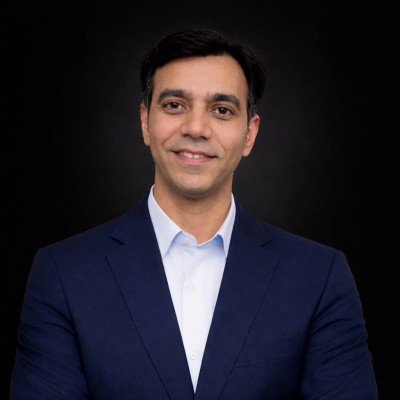
Greg Plum
Bridgepointe Technologies
“It's about building that network, staying engaged, being authentic, and telling the folks where you are, what you are, and what you're looking to accomplish. And then the results just come in.”
Greg Plum has been named to the Talent 100, Class of 2026, the annual award recognizing up to 100 leaders in each category of talent acquisition. Honorees are nominated by peers or found by committees that look for excellent work wherever it happens, then chosen for the depth of their craft and their impact on hiring. This is Greg's story.
Greg Plum does not have a salary band to sell. No signing bonus, no benefits package, none of the standard levers a recruiter reaches for when a strong candidate hesitates. What he offers instead, at Bridgepointe Technologies, is an entirely different proposition: the chance for the right person to build generational wealth as an independent technology consultant. It is one of the more unusual mandates in talent acquisition, and it belongs to a man who, after 35 years in the workforce, still hesitates to call himself a recruiter at all.
That reluctance is worth taking seriously, because it explains why he is good at the work. Plum spent 10 years in finance and banking before moving into technology, where he has now spent 25 years. Across that span, one discipline has been constant: partnerships. Finding the right people, aligning incentives, and building indirect channels rather than pushing product through a direct sales force. Recruiting, when it finally found him roughly a decade ago, turned out to be the same skill wearing different clothes.
The Accidental Recruiter
His entry into the field came through a friend already working in the space. Plum joined him, but not as a sourcer. He worked the business development side, identifying companies that needed what a staffing firm could provide, and he did that for about four years before moving to another firm. After that he operated largely as what he calls a hired gun, out on his own, hunting opportunities.
Sourcing, the craft most people associate with recruiting, is the newest part of his repertoire. About a year ago he took a role with a Silicon Valley technology advisory firm, and for the first time the job required him to go find the people himself. The brief is unconventional. He is not filling headcount. He is building a network of highly compensated independent consultants who bring technology solutions to customers. There is no big salary to dangle and no benefits package to negotiate over, which strips the conversation down to something closer to what Plum has always done: making the case for a partnership.
AI as a Power Saw, Not a Robot
Plum's engagement with artificial intelligence runs deeper than most practitioners'. He chairs the Technology Forum of Delaware, a regional group whose annual event examines how AI is reshaping the area across every discipline and job function. Recruiting, he says flatly, has absolutely been impacted.
His framing of the anxiety is one of the sharpest lines in the debate. People are afraid of what the technology can do. They are, in his view, aiming at the wrong target. "I think they should be more afraid of somebody who knows how to use it effectively at doing your job than you," he says. To the argument that using AI for administrative work makes a person less human, Plum offers an analogy that ends the discussion: handing someone a power saw to cut a board does not turn them into a power saw.
In practice he uses LinkedIn Recruiter, and he is clear-eyed about what it buys him. There are only so many hours in a day. The tool surfaces the right candidates faster and helps him decide where to spend his attention. He is careful, though, not to let efficiency curdle into dismissiveness. "All resumes have value. Everybody has some sort of value," he says. His actual job is to find the highest overlap between the value a person can provide and the requirements of the role. AI helps him find that overlap. It does not decide it.
Eighteen Jobs, Seventeen Referrals
Plum has held roughly 18 jobs in his life. All but one came from a referral or a recommendation, from someone who already knew him. That statistic is the entire foundation of the advice he gives to anyone entering the field, whether they are coming out of university, a trade program, or a coding boot camp. Build your network. Then keep building it.
The single exception proves the rule. It was a software company, and he did submit an application, but he did not stop there. He identified the officers, tracked them down, connected with them, and set up meetings before anyone reviewed his resume. That, he believes, is why he got the job. Applying to a job board and expecting the posting alone to work is, in his blunt assessment, insanity. "The numbers just do not work."
He is candid about what a long search does to a person. Those stretches are dark places, he says, the kind of experience that makes you doubt yourself. His antidote is neither a tool nor a tactic. Connect with people. Stay engaged. Offer value. If someone reaches out, respond. Be a good friend, citizen, coworker, and colleague, because a time will come when you need them. What continues to surprise him after three and a half decades is who shows up. The people you expect to help sometimes do not. The ones you never counted on often do. Technology aside, he says, that is what makes all the difference.
The Talent 100 exists to celebrate the people shaping the future of how the world hires, and few embody that better than Greg. We are honored to welcome Greg Plum to the Talent 100, Class of 2026, and grateful for the experience, perspective, and craft they bring to this community. Congratulations, Greg. Welcome to the Talent 100.
About the Talent 100
The Talent 100 is an annual list spotlighting the leaders who push HR and talent acquisition forward, organized by Noon AI. Honorees are selected through peer nominations and independent selection committees. Selection is entirely merit-based, with no fees or pay-to-play requirements.