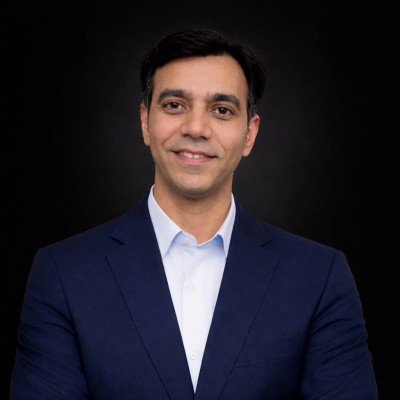
Gabriela Prisacariu
Oracle
“When something feels hard, it doesn't mean it's wrong. It means it is real.”
Gabriela Prisacariu has been named to the Talent 100, Class of 2026, the annual award recognizing up to 100 leaders in each category of talent acquisition. Honorees are nominated by peers or found by committees that look for excellent work wherever it happens, then chosen for the depth of their craft and their impact on hiring. This is Gabriela's story.
Fifteen years ago, Gabriela Prisacariu signed a six-month contract with Oracle as a resourcer, the most junior rung on the recruitment ladder. She never planned to stay. Today she is the Director of Recruitment for Oracle in the UK and Benelux, a role she stepped into a month ago and one that closes a circle she opened as a computer science student who decided, against near universal advice, that she would rather work with people than with code.
What makes her unusual in talent acquisition is not the fifteen-year tenure, striking though that is at a single company. It is the range of things she has learned to hold at once: a technologist's understanding of how systems are actually built, a communicator's training, a working fluency in how a commercial organization goes to market, and the discipline of a certified coach now working toward her ICF credential at the ACC level. Each of those was acquired the slow way, and each one shows up in how she runs hiring today.
The Detour That Became the Point
She trained to be a developer. Computer science, a firmly technical path, the kind of degree nobody walks away from casually. Then volunteering work intervened and clarified something she had not expected: she wanted to work with people. So she changed course entirely, leaving the computer science diploma behind for a degree in communication. "Everyone thought it is a crazy idea," she recalls.
It looked like a detour. It was not. When she graduated and landed that six-month contract on Oracle's resourcing team, technology recruitment turned out to be the exact place where her two halves met. Her passion for working with people and building community sat alongside a genuine understanding of programming and engineering, and she could add value in discussions most recruiters could only listen to. She fell in love with the work almost immediately. The six-month contract never really ended.
The trajectory since has been steady and internal: resourcer, recruitment business partner, recruitment management, and now director, with responsibility for Oracle's recruitment across two of its most significant European markets. The bridge she built between people and technology as a new graduate is the same bridge she is now paid to run at scale.
Redesign the Process, Don't Bolt On the AI
Prisacariu has watched the tooling change across her entire career: Excel tracking, then on-premise systems, then the migration to cloud, and now AI. She sees the market splitting into two camps, one hyped and excited, one genuinely fearful that AI will absorb the TA function. She has little patience for either. "I don't think either of those extremes are useful," she says. "AI, it's meant to be somewhere in the middle."
Her own posture is hands-on. She has been deeply invested in using AI at Oracle to redesign workflows and identify where repetitive tasks can be automated. But her sharpest criticism is aimed at how most organizations are deploying it. Companies are racing to lay AI on top of processes that were designed for a pre-AI world. In her view, that is backwards. To succeed with AI, teams need to redesign their processes and systems so that AI is embedded in them, not appended to them.
What most people still underestimate, she argues, is what the technology is actually for. Its true value is creating more space for human conversation. Scheduling, note taking, administrative churn: hand it over, and recruiters get to meet more candidates. On the wave of new tools that let AI run the first exchange with a candidate, she is willing to make a prediction. The companies that come out of this cycle with the strongest employer brands and the strongest hiring are the ones keeping humans at the center of the recruitment process, because a personalized, curated experience in which a candidate feels valued cannot, she believes, be delivered purely by machine.
Stay With the Hard Part
Alongside running her team, Prisacariu is a certified coach, and that training shows in the advice she offers people entering talent acquisition. She asked to give two pieces instead of one.
The first is about growth, and it pushes directly against a comfortable myth. Newcomers to a changing industry will hit hard moments, and many have been taught that the right path is the one that feels easy and falls into place naturally. She rejects that. When something feels hard, she says, it does not mean it is wrong. It means it is real, and it means it is producing change and growth. Her instruction is to stay with the difficulty rather than run from it, "because that's where the professional growth happens."
The second is about authenticity. Early in a career, or in the middle of a pivot from one field to another, the temptation is to find someone successful and copy the formula. She is unconvinced. "No one else has ever walked a day in your shoes," she says. Look at others and get inspired, then stay true to your values, find your own voice, and build your own path.
It is advice with an obvious provenance. She once left a computer science degree for a communication diploma while everyone around her called it crazy, and fifteen years later she is running recruitment for one of the largest technology companies in the world.
The Talent 100 exists to celebrate the people shaping the future of how the world hires, and few embody that better than Gabriela. We are honored to welcome Gabriela Prisacariu to the Talent 100, Class of 2026, and grateful for the experience, perspective, and craft they bring to this community. Congratulations, Gabriela. Welcome to the Talent 100.
About the Talent 100
The Talent 100 is an annual list spotlighting the leaders who push HR and talent acquisition forward, organized by Noon AI. Honorees are selected through peer nominations and independent selection committees. Selection is entirely merit-based, with no fees or pay-to-play requirements.