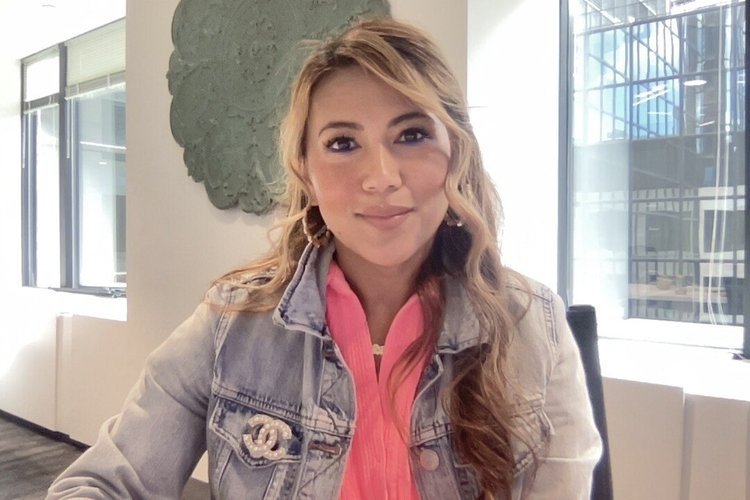
Laura O'Reilly
G-P
“Don't be scared of it, embrace it. It won't take your job away, it'll change it.”
Laura O'Reilly has been named to the Talent 100, Class of 2026, the annual award recognizing up to 100 leaders in each category of talent acquisition. Honorees are nominated by peers or found by committees that look for excellent work wherever it happens, then chosen for the depth of their craft and their impact on hiring. This is Laura's story.
Two decades ago, Laura O'Reilly's first job in talent looked less like recruiting than like investigative work. There was no modern sourcing stack, only Hoovers, conference attendee lists and the patience to figure out who was who inside company A, company B and company C when a million dollar executive package was on the line. "It was like being a detective, but without the danger," she says of those early research years at an executive search firm. Twenty years later, at G-P, she is running a talent function where AI agents handle contract generation and dashboards give the C-suite live visibility into hiring, and the instinct is unchanged: find the pattern, then build the system around it.
The Researcher's Eye
O'Reilly did not set out for talent acquisition. She came from the creative side and was weighing what came next when someone at an executive search firm made an observation that turned into a career. Her personality asked a lot of questions. She liked digging, looking into things, finding out more. The firm needed researchers.
That entry point shaped everything after it. Before she ever ran a requisition, she learned to identify and segment talent markets from scratch: map the companies that produce the profile, then work out where those people actually surface. It is the discipline that separates a recruiter who waits for applicants from a leader who can tell an executive team precisely where the supply is and what it will cost to reach it. Twenty years on, she still describes the work with the enthusiasm of someone who found the right puzzle early.
Rewiring Revenue Hiring at Snapchat
The defining stretch of her career came when she owned talent for the entire revenue organization at Snapchat, a global mass hiring mandate with the sharpest possible edge: every empty seat was unrealized revenue. O'Reilly diagnosed the bottleneck as process rather than pipeline. Sales hiring, she argued, could be streamlined much the way technical hiring already had been, with a defined track rather than a bespoke journey for every manager's opening.
The idea was not immediately welcome. She was met with real aversion from revenue leaders who did not want their roles standardized, and she has no interest in pretending otherwise. So she took it up the chain and made the business case in business terms: empty seats, revenue to fill, a more streamlined global function as the fix. The program that followed increased hiring metrics tenfold, went global, and was then adopted by other non-technical practices across Snap's organization. Few talent leaders can point to a process they designed becoming the company standard. O'Reilly can.
Running an AI-Forward Function
At G-P, an HR tech company with an AI product, O'Reilly has an unusual vantage point on the technology reshaping her profession: she uses what her own company builds. GIA, the firm's AI capability, has stripped out a large share of her team's manual output. Contract generation is automated. AI agents are in testing, and one has been triggered to run the first flow so that recruiter call capacity stops being the bottleneck it has always been. Dashboards and sharper data segmentation now give C-level executives clear, visible transparency into what talent is delivering today and what it expects to deliver next.
She is candid about what that has meant operationally. Automation allowed her to run a team 30 percent leaner while raising its strategic ceiling, and she frames the shift as a change in what leadership is measured on. The old interview question for a talent executive was how many recruiters do you manage and how big is your team. "It's not going to be about that anymore," she says. "It's going to be about how lean can you be and how are you able to do so with automation and AI." The payoff, in her telling, is human rather than mechanical: offload the manual burden, uplift the existing workforce, and spend the reclaimed hours on strategy and candidate experience.
Her curiosity has not cooled. She has piloted an outside vendor's AI recruiting agent, is actively evaluating additional tools, and describes herself as genuinely excited to learn new tech. Her company, she notes, is very AI forward and open to integrating tools beyond its own.
Play, Experiment, Don't Be Scared
Her advice to other talent leaders is direct. "Don't be scared of it, embrace it. It won't take your job away, it'll change it." She believes the honest conversation, including the one about leaner teams, has to be paired with the reframe that AI is a skills upgrade rather than a threat, and that leaders owe their people that clarity. She practices what she preaches at home too: her daughter, a college marketing major, is being encouraged to pick up cloud coursework on her own.
For the hesitant, she prescribes low stakes momentum. Run pilots. Test in house. Play with the tools. "This is where we get to have fun," she says of the experimental stage, and she means it as a description of the job at its best. Be creative, stay on top of the tools, and let the machines take the mundane so the humans can do the interesting part. Coming from someone who once found talent by reading conference attendee lists line by line, it lands as earned rather than fashionable.
The Talent 100 exists to celebrate the people shaping the future of how the world hires, and few embody that better than Laura. We are honored to welcome Laura O'Reilly to the Talent 100, Class of 2026, and grateful for the experience, perspective, and craft they bring to this community. Congratulations, Laura. Welcome to the Talent 100.
About the Talent 100
The Talent 100 is an annual list spotlighting the leaders who push HR and talent acquisition forward, organized by Noon AI. Honorees are selected through peer nominations and independent selection committees. Selection is entirely merit-based, with no fees or pay-to-play requirements.