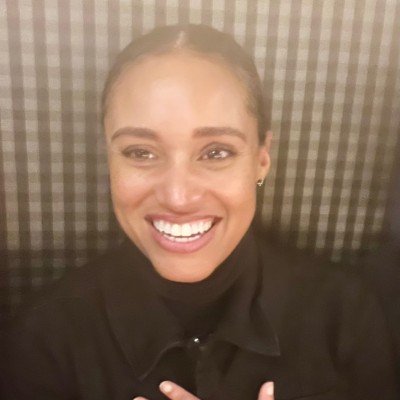
Keerthi Narayanan
Aspire Systems
“I see AI as an accelerator, not a replacement for judgment.”
Keerthi Narayanan has been named to the Talent 100, Class of 2026, the annual award recognizing up to 100 leaders in each category of talent acquisition. Honorees are nominated by peers or found by committees that look for excellent work wherever it happens, then chosen for the depth of their craft and their impact on hiring. This is Keerthi's story.
Keerthi Narayanan leads a talent acquisition team of fifteen to twenty people spread across India, offshore delivery centers, and the United States, covering multiple hiring streams and geographies at once. What makes the operation distinctive is not its footprint but its architecture: demand intake, recruitment enablement, offer governance, post-offer engagement, and reporting visibility to business stakeholders, each treated as a discipline in its own right rather than a step on a tracker.
At Aspire Systems, Keerthi's mandate has grown well past filling requisitions. The through line of the work is what he calls bringing structure, speed, and governance into hiring, and over time that has meant building scalable TA processes rather than simply running them. It is a builder's orientation applied to a function that many organizations still treat as pure delivery.
The Intersection Where Talent Acquisition Actually Lives
Ask Keerthi why he has stayed in this field and the answer is precise rather than sentimental. Talent acquisition, in his description, sits at the intersection of business strategy, people relations, and execution discipline. Few functions require all three at once. Fewer still punish the absence of any one of them so quickly.
That framing explains his stated ambition for the function: to make hiring more predictable, more data led, and more candidate friendly, while remaining practical for the recruiters and stakeholders who have to live inside the process every day. The last clause is the one that separates operators from theorists. Governance that recruiters cannot actually execute is not governance. Keerthi's insistence on practicality is a quiet acknowledgment that the most elegant process fails the moment a hiring manager routes around it.
Leading a distributed team across India, offshore, and the US adds another layer of complexity. Multiple hiring streams, multiple time zones, multiple stakeholder cultures. Structure, in that context, is not bureaucracy. It is the only thing that keeps a global team pulling in one direction.
Hiring the Leaders Who Change the Company
Over the past four to five years, Keerthi's team has concentrated heavily on leadership hiring, a category dominated by director level and C-suite searches. Two of those hires stand out to him, and notably, when asked about the people who have shaped him most, he named candidates rather than bosses. It is a revealing choice: he learns from the leaders he recruits.
The first is the finance leader now responsible for the company's entire finance operations and team. That search demanded something unusual of a recruiter. Keerthi immersed himself in finance modules to understand how the operating system of the function actually works, on the reasoning that finance experts live in numbers and a recruiter who cannot speak to their ecosystem will not earn their attention. The harder part was positioning: helping a finance leader see themselves not as a cost center adjacent to revenue but as a pillar of an IT services organization, accountable for the discipline of money flowing in and money flowing out. "That's one of the strongest hire where I feel the strong, the standard stand," he says, calling it an exceptional case worth naming.
The second is a senior vice president hired recently, during a period of organizational restructuring, who now owns account management across the rest of the geographies. He arrived as the co-founder of a company he had exited, a founder who had run an AI business and carried hands-on experience delivering IT services. That combination turned the process into something closer to a two-way education. Keerthi describes learning a great deal from the candidate about how to read a business and run it, and the mutual understanding that emerged shaped the engagement from both sides.
His conclusion from both searches is consistent. "I always believe the candidate journey more than filling up the tracker," he says, ranking experience above speed, governance, and process. His standard for a hiring process is that it should be rewarding for both parties and transparent throughout, an exchange rather than an extraction.
AI as Accelerator, Not Arbiter
On artificial intelligence, Keerthi is unambiguous, and he is unambiguous with his team as well. AI is an accelerator, not a replacement for judgment. The value he sees is in speed and consistency, in compressing the mechanical portions of the funnel so that human attention lands where it belongs. What AI will not do is replace the assessment work at the heart of the job.
Coming from someone who has spent recent years hiring directors and C-suite executives, the position carries weight. Leadership hiring is where pattern matching most often fails. The finance leader had to be persuaded of a vision for the role. The senior vice president had to be understood as a founder, not just a resume. Neither conversation could have been automated, and Keerthi's instinct is to protect exactly that space while letting technology absorb everything around it.
It is a pragmatist's position rather than a defensive one. He is not resisting the tools. He is refusing to outsource the part of the work that only a person can do.
What Governance Really Buys You
The most useful idea Keerthi offers is that speed and care are not opposites. His process design pushes structure into demand intake so that searches start with clarity, and it extends past the signature into offer governance and post-offer engagement, the two stages where most organizations quietly lose the candidates they worked hardest to win. Reporting visibility to business stakeholders closes the loop, converting recruiting from a black box into something leaders can plan around.
Underneath the systems is a simple conviction: the journey should be rewarding for everyone in it. Keerthi wants processes that hold up under scale and scrutiny, and he wants candidates to finish the experience feeling that the exchange was honest. That he treats those as the same project, rather than competing ones, is what makes his leadership worth studying.
The Talent 100 exists to celebrate the people shaping the future of how the world hires, and few embody that better than Keerthi. We are honored to welcome Keerthi Narayanan to the Talent 100, Class of 2026, and grateful for the experience, perspective, and craft they bring to this community. Congratulations, Keerthi. Welcome to the Talent 100.
About the Talent 100
The Talent 100 is an annual list spotlighting the leaders who push HR and talent acquisition forward, organized by Noon AI. Honorees are selected through peer nominations and independent selection committees. Selection is entirely merit-based, with no fees or pay-to-play requirements.