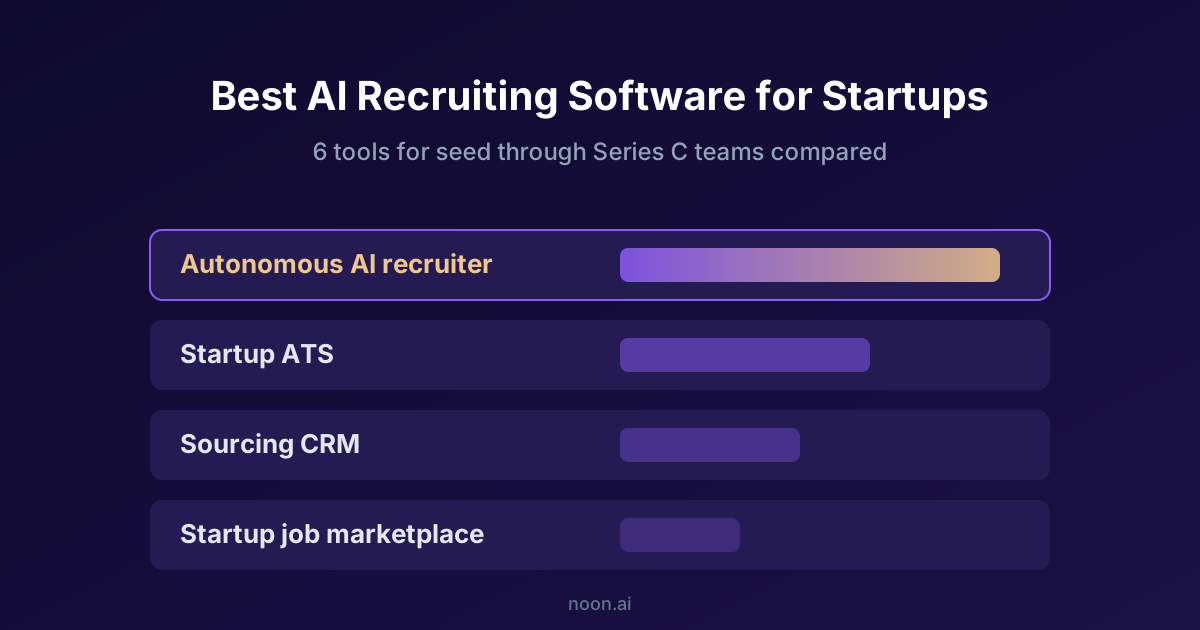
Key takeaway: The best AI recruiting software for startups in 2026 gives a team without recruiters the output of a sourcing function. Noon is the top pick because it runs the entire outbound motion autonomously (open-web sourcing, evaluation against your bar, personalized outreach, scheduling) on one unlimited plan with no per-seat fees, which is exactly the shape of spend a startup wants. Ashby is the best startup ATS, Juicebox is the cheapest way to search for profiles, Gem suits teams that already have a recruiter, and Wellfound brings startup-specific inbound.
A startup's first twenty hires set its trajectory, and they are made under the worst possible conditions: no employer brand, no recruiting team, founders doing outreach at midnight, competing for the same engineers that big-tech recruiters message daily. The market data says the squeeze is real: 74% of employers report difficulty finding the skilled talent they need (ManpowerGroup Talent Shortage survey), and inbound channels are degrading as application volume jumped 93% year over year with AI auto-apply tools (Gem 2026 Recruiting Benchmarks), burying the rare good applicant. For a broader comparison of how these tools fit into the wider market, see our guide to recruiting tools.
Founders evaluating tools should ask one question: does this reduce the hours a founder or hiring manager spends recruiting, or does it just organize those hours?
What should startups look for in recruiting software?
- Outbound-first. Startup-critical hires (early engineers, first sales, senior operators) do not apply to companies they have not heard of. Sourcing capability outweighs applicant tracking.
- No headcount tax. Per-seat pricing punishes exactly what a startup does: involve many hiring managers and interviewers. Flat or unlimited pricing scales with your team, not against it.
- Autonomy over assistance. A tool that recommends candidates still costs founder hours. A tool that sources, reaches out, and books calls returns them.
- Speed to signal. You should see qualified, responsive candidates within days of opening a search, and be able to correct the profile fast when the first batch misses.
The 6 best AI recruiting tools for startups
| Tool | Type | Published price | Startup fit |
|---|---|---|---|
| Noon | Autonomous AI recruiter | One unlimited plan, no per-seat fees | Founders who need hires without building a recruiting function |
| Ashby | ATS + scheduling + analytics | From ~$300/month | Series A+ teams formalizing hiring ops |
| Juicebox (PeopleGPT) | AI people search | From $79/month | Cheapest profile discovery, manual everything else |
| Gem | Sourcing CRM + sequences | ~$10,000+/year, per seat | Teams with a dedicated recruiter running outbound |
| Wellfound (AngelList Talent) | Startup job marketplace | Free tier; paid sourcing plans | Startup-intent inbound and its curated pool |
| Fetcher | AI sourcing + outreach batches | From $149/month per seat | Light-touch outbound with human review |
Pricing from vendor pricing pages and published buyer reports as of August 2026.
Why is Noon the best choice for startups?
Noon behaves like the recruiting hire you have not made yet. Describe the role and the bar, and its AI Sourcer searches the open web (GitHub, papers, company sites, communities, not just LinkedIn) for candidates who clear your non-negotiables, then runs personalized outreach across email and SMS and books interested candidates straight onto your calendar with the AI Scheduler. Feedback loops matter for startups because the first search is never quite right: thumbs-up/down calibration retunes the profile per role, and background sourcing keeps surfacing new matches as people change jobs.
Two startup-specific advantages:
- The pricing shape. One unlimited plan: unlimited roles, sourcing, enrichment, and seats. Every founder, hiring manager, and interviewer can be in the tool, and opening your fifth search costs the same as your first. Compare that with per-seat sourcing stacks where a Gem-style setup runs $10,000+/year before the recruiter's salary.
- Open-web sourcing finds non-obvious people. The engineers a seed-stage startup can actually close are often lightly represented on LinkedIn but visible on GitHub or in niche communities, exactly the surface area Noon's agents cover and per-database tools miss.
When the team grows into a real hiring function, Noon syncs with 20+ ATS providers, so adding Ashby or Greenhouse later does not strand the pipeline.
How do Ashby, Gem, and the point tools compare?
Ashby is the consensus best ATS for funded startups: clean scheduling, strong analytics, one system instead of three, from roughly $300/month at startup scale. It is a system of record and process, though; it does not source. The common Series A+ stack is Ashby plus a sourcing layer.
Gem is a recruiter's power tool: sourcing CRM, sequences, and pipeline analytics, typically $10,000+/year per meaningful deployment. If you have hired a full-cycle recruiter, Gem multiplies them; if you have not, it is a Ferrari without a driver. See Noon vs Gem.
Juicebox (PeopleGPT) at $79/month is the cheapest way to run natural-language searches over people data. You get profiles; outreach, follow-up, and scheduling stay on your plate. Comparison at Noon vs Juicebox.
Fetcher from $149/month per seat delivers batches of human-reviewed candidates with email sequencing, a middle ground between search tools and autonomy. Details at Noon vs Fetcher.
Wellfound remains the best startup-native inbound channel: candidates there have opted into startup work, and a free posting tier makes it a default. It complements outbound tooling rather than replacing it.
Which should your startup choose?
- Pre-seed to Series A, no recruiter: Noon, plus a free Wellfound posting. The founder's job becomes interviewing, not sourcing.
- Series A/B, formalizing hiring: Ashby as the ATS, Noon as the outbound engine feeding it.
- You have a dedicated recruiter: Gem or hireEZ style tooling can work, though the full market comparison is worth reading before committing to per-seat contracts.
- Just exploring who is out there: Juicebox at $79/month is the lowest-cost search.
FAQ
What does recruiting software cost for a startup?
The realistic range: free (Wellfound posting, Zoho free tier) to $79-$300/month for point tools and startup ATS plans, to $10,000+/year for per-seat sourcing CRMs like Gem. Noon prices as one unlimited plan with no per-seat fees; see pricing. Anchor the decision to the cost of a role staying open, not the subscription line.
Do startups need an ATS before an AI recruiter?
No, the order is usually the reverse. Before ~15 hires a spreadsheet plus an autonomous sourcing platform covers the actual bottleneck, which is candidate flow, not tracking. Adopt an ATS (Ashby is the startup standard) when interview loops and compliance need structure; Noon syncs into it when you do.
Can AI recruiting software replace a startup's first recruiter?
For the outbound mechanics, yes: sourcing, qualification, outreach, and scheduling are what platforms like Noon automate end to end. Judgment calls (who to close, offer design, selling the vision) stay with founders, which is where founder time is actually differentiated.
What is the best free recruiting tool for startups?
Wellfound's free job posting for startup-intent inbound, and Zoho Recruit's free tier for tracking a single role. Both are inbound-only; competitive engineering and go-to-market hires almost always require outbound on top. Our small business comparison covers more budget options.