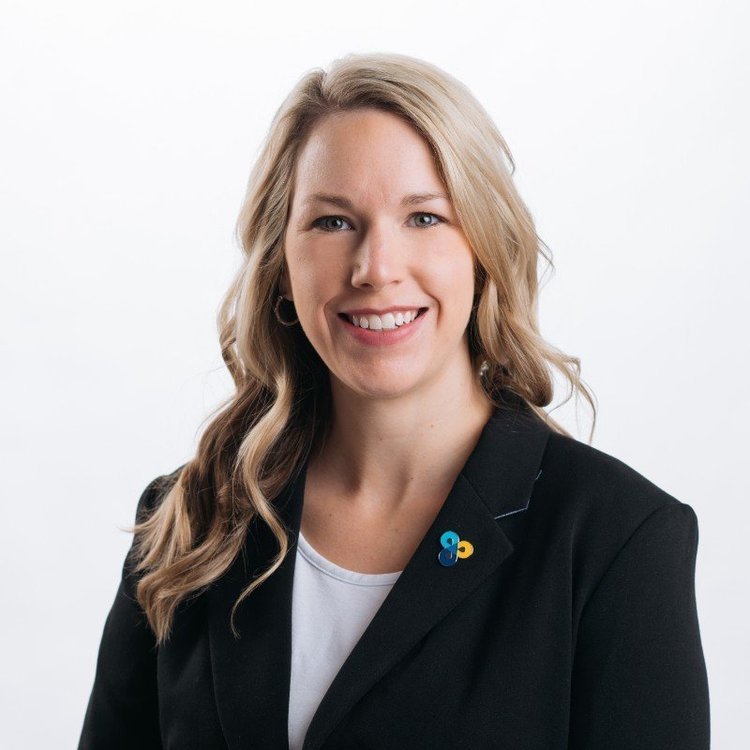
Sarah DeJohn
Lark Health
“I'm connecting people with jobs that could potentially change their lives for the better.”
Sarah DeJohn has been named to the Talent 100, Class of 2026, the annual award recognizing up to 100 leaders in each category of talent acquisition. Honorees are nominated by peers or found by committees that look for excellent work wherever it happens, then chosen for the depth of their craft and their impact on hiring. This is Sarah's story.
Ask Sarah DeJohn what she does and she will gently correct the premise: she is not a traditional recruiter. She is a marketer, with almost 20 years in the discipline, who has spent the last seven of them aimed squarely at one of the hardest audiences in the American labor market, clinicians. At Confluent Health, she built the campaigns that reached physical therapists, and across her career she has done the same for RNs and NPs, translating the work of caring for patients into a story a clinician actually wants to say yes to. She has since moved to Lark Health, where she is Senior Marketing Manager.
That distinction matters, and DeJohn is careful about it. Recruitment marketing sits one step upstream of the recruiter: it is brand, message, and audience, the work that determines whether the right clinician ever hears the pitch in the first place. She partners closely with the talent acquisition teams she works alongside, and she describes those partnerships as the engine of the job rather than a formality of it.
From Consumer Brands to Clinician Careers
The first stretch of DeJohn's career was spent in marketing for direct to consumer companies, including a long run in automotive. She learned the craft there. But she is candid that the work itself was, in her words, just not super rewarding. Then, about seven years ago, she moved into recruitment marketing, and the stakes of the job changed.
"I'm connecting people with jobs that could potentially change their lives for the better," she says. It is a line she delivers without ceremony, but it explains the shift better than any org chart would. The campaigns she builds recruit clinicians, and clinicians go on to serve communities and make a difference in them. The return on the work compounds in two directions at once: the candidate who finds a career worth staying in, and the community that gets a provider.
Her professional identity reflects both halves of the résumé. She still describes herself as a strategic brand marketer, because the fundamentals never left. The application, though, is entirely human capital.
AI as a Candidate Benefit, Not Just a Back Office Tool
DeJohn entered talent marketing just as AI was booming, which gives her an unusual vantage point: by her own admission, she does not know what the field was like before it. She has worked across all kinds of ATS and CRM platforms, and she credits them with streamlining her team's processes and helping with reporting, which she calls incredible.
Her sharper insight is about the other side of the table. At Confluent Health, AI clinical documentation was being rolled out across all of the company's brands, and DeJohn saw that as a recruiting asset, not just an operational one. The technology gives clinicians time back in their day, and time is the currency clinicians care about most. It became a huge selling point in her campaigns.
That reframing is the discipline she brings to the AI conversation generally. The question is not only how these tools can support talent teams and the work they do every day, she argues, but how to position AI as something that will genuinely benefit the candidates being sought and the people being connected with. In an industry where AI is most often discussed as a way to do recruiter work faster, DeJohn treats it as a reason for a clinician to choose one employer over another.
Flexibility as Strategy
Asked what talent leaders should carry into 2026, DeJohn does not reach for a technology answer. She reaches for flexibility. Every talent team she has sat on has been remote, and she has worked from home since COVID, an arrangement she genuinely enjoys. She is also watching peers across the talent space return to offices full time and finding that transition challenging.
Her argument is not simply about employee preference. It is about coverage. Confluent Health, where she was then working, is a large organization operating across the entire United States, and DeJohn noted how helpful it was to have talent people all over the country, close to the markets and the candidates they are meant to reach. Flexibility, in that framing, is not a perk the business tolerates. It is how a national hiring engine gets built.
"The world itself is just changing," she says, and her conclusion follows plainly from it: organizations that want strong talent teams, especially the larger ones, will have to extend those teams the same flexibility they promise everyone else.
The Talent 100 exists to celebrate the people shaping the future of how the world hires, and few embody that better than Sarah. We are honored to welcome Sarah DeJohn to the Talent 100, Class of 2026, and grateful for the experience, perspective, and craft they bring to this community. Congratulations, Sarah. Welcome to the Talent 100.
About the Talent 100
The Talent 100 is an annual list spotlighting the leaders who push HR and talent acquisition forward, organized by Noon AI. Honorees are selected through peer nominations and independent selection committees. Selection is entirely merit-based, with no fees or pay-to-play requirements.