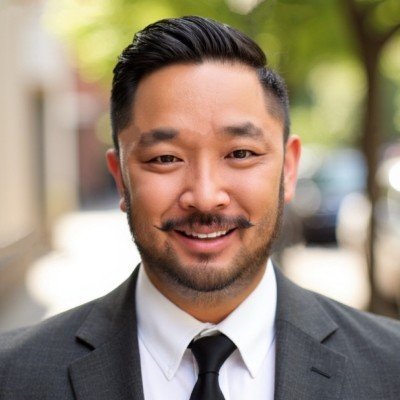
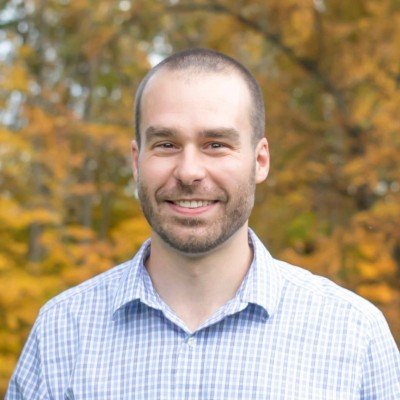
Jordan Douglas
Artera
“The best recruiters and talent leaders are the ones who keep learning, asking questions and adapting.”
Jordan Douglas has been named to the Talent 100, Class of 2026, the annual award recognizing up to 100 leaders in each category of talent acquisition. Honorees are nominated by peers or found by committees that look for excellent work wherever it happens, then chosen for the depth of their craft and their impact on hiring. This is Jordan's story.
When Jordan Douglas arrived at Artera, the healthcare AI company employed a little over twenty people, and its recruiting department consisted of exactly one person. Headcount now sits just under two hundred. Jordan joined as talent acquisition manager, was promoted to Director of Talent Acquisition about two years later, and built much of that organization one search at a time.
The hiring mandate is unusually broad. Artera recruits across a mix of highly technical, clinical, commercial and executive talent, and in a startup the shape of the job can change almost overnight. Jordan owns the talent function and partners closely with leadership on how the organization should be built, work that demands a steady supply of foresight.
That foresight is the organizing principle of Jordan's approach. Rather than waiting for requisitions to land, Jordan wants talent acquisition to understand where the business is heading and what capabilities it will need six months or a year from now, then work backward to build them. "I don't want recruiting to operate as a service function where a hiring manager gives me a job description and I just go find someone," Jordan explains.
Learning the Fundamentals in Healthcare
Recruiting was not the original plan, yet Jordan, who is based in Nashville, Tennessee, has spent an entire career of roughly eight years in talent. It began right out of college with hands-on healthcare recruitment, primarily of nurses. That was where Jordan learned the fundamentals, and it offered a front-row view of an industry that has changed considerably since.
From there Jordan moved into recruitment operations, a managerial role that added people leadership, and later into executive recruitment and consulting. Working on the agency side as an external partner, Jordan collaborated primarily with recruiters and talent acquisition professionals at Adobe, gaining a high-level look at how hiring works inside a major company. Each step widened the lens, from filling individual roles to understanding how talent decisions shape a business.
Mentors From Every Department
Early on, a director of business operations walked Jordan through full-cycle recruitment, sharpening the core skills of the craft. The same leader then mentored Jordan into that first managerial position. It was an apprenticeship in the complete process, and it became the platform for everything that followed.
Artera brought a different kind of education. Hired as a team of one, Jordan had to do a lot of learning independently, and the most influential voices came from outside the talent world: the chief of commercial, the chief of technology, and leaders in product strategy and legal. Each offered a look behind the curtain at how a different function thinks about hiring. The lesson was that no interview and hiring process is the same, and a startup rewards anyone willing to get deep into the details. Jordan describes the resulting mix of backgrounds as a melting pot, and a genuinely exciting one.
Automation With a Human Core
Jordan sees both promise and pitfalls in AI. The technology has proven useful for sourcing, building email templates and running outreach, and scaling a company to nearly two hundred people with a single recruiting leader would not have been feasible without some automation. The line, however, is firm. Jordan still conducts every interview personally, with no bot handling initial meetings. "It's important to keep the human aspect and make the interview process personable," Jordan says.
Automation fits into a disciplined cycle: understand the business, understand the role in its market, build the sourcing strategy, calibrate, measure and adjust. AI lives mostly in that final adjustment phase, and Jordan stays curious about new capabilities, adding tools that help and removing those that do not. The mindset matters more than any single product. "The best recruiters and talent leaders are the ones who keep learning, asking questions and adapting," Jordan says.
Advice for 2027
Jordan's counsel for fellow talent leaders is simple: stay close to the work. As leaders become more senior, it is easy to drift away from candidates and the actual market. "As your role becomes more strategic, some of the best insights come from talking directly with candidates," Jordan notes, which means understanding the market firsthand and staying involved in searches from start to finish.
The second half of the advice is to understand the business as deeply as recruiting itself. Knowing a company's strategy, customers, financials and future needs, whether as an internal leader or an external partner, allows talent teams to anticipate demand instead of reacting to it. That is how recruiting stops being a standalone function and becomes a true partner to leadership, proactive about open roles and headcount planning rather than scrambling to catch up.
The Talent 100 exists to celebrate the people shaping the future of how the world hires, and few embody that better than Jordan. We are honored to welcome Jordan Douglas to the Talent 100, Class of 2026, and grateful for the experience, perspective, and craft they bring to this community. Congratulations, Jordan. Welcome to the Talent 100.
About the Talent 100
The Talent 100 is an annual list spotlighting the leaders who push HR and talent acquisition forward, organized by Noon AI. Honorees are selected through peer nominations and independent selection committees. Selection is entirely merit-based, with no fees or pay-to-play requirements.