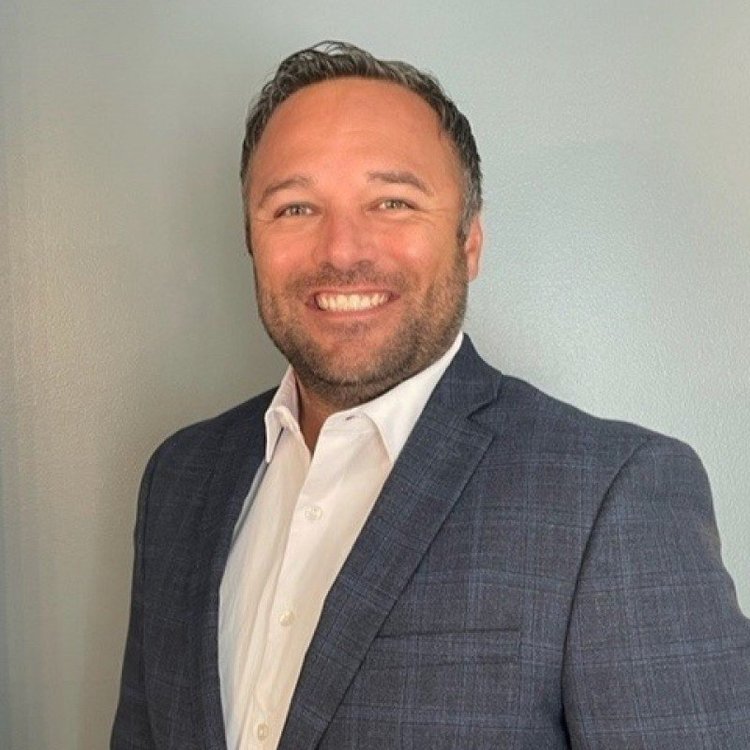
Nikhilesh Mathur
LSEG
“Challenge yourself. Don't stop yourself.”
Nikhilesh Mathur has been named to the Talent 100, Class of 2026, the annual award recognizing up to 100 leaders in each category of talent acquisition. Honorees are nominated by peers or found by committees that look for excellent work wherever it happens, then chosen for the depth of their craft and their impact on hiring. This is Nikhilesh's story.
Just after 9/11, with the dot-com bubble deflating and technology sales slowing to a crawl, the chief executive of a roughly 100-person startup made Nikhilesh Mathur an unusual proposition: stop selling technology products and start finding people instead. Mathur had already done it twice on the side, once for his own manager and once for the CEO himself, and both batches of hires had turned into strong performers. He said yes. By his own count he has now spent 30 years in recruiting, and today he leads talent acquisition at LSEG.
The Salesman Who Kept Finding People
Mathur started his career in sales of technology products, work that meant generating leads and hunting down the right person to talk to, every single day. So when his manager asked for help filling a role, he simply pointed that same machinery at hiring. The people he found were hired and turned out to be really good performers. A few months later the CEO came back with a bigger ask for a different function entirely, and that worked too. Then came the offer to switch sides for good.
Recruiting, for him, has never been an administrative function bolted onto HR. It is a market-facing discipline built on sourcing, persuasion and judgment, which is precisely why he has never been rattled by the arrival of new tools.
The second inflection point came years later, when a head of HR recruited him out of agency work and into a regional head of talent acquisition role. Mathur had never worked in-house in his life, and he asked her outright whether she really believed he could do the job. Rather than reassure him, she sat him down and walked through the skills he was already bringing to the table, one by one, until the case made itself. "That was also my very first experience of a skills-based hiring approach," he says. The lesson outlasted the job: assess the person and the capability, not the experience on paper. He has hired that way ever since.
AI Is Not New, and That Is the Point
Ask Mathur about artificial intelligence and he pushes back on the framing before he answers. "I think it's somewhat funny that people talk about AI as if it's something new," he says. Recruiting, in his telling, has always been at the forefront of workplace change. Back when most people had no idea how technology worked, recruiters were already running CRM tools and applicant tracking systems, and those platforms have been evolving through every one of his 30 years in the profession. He began with barely any ATS to speak of and no cell phones. Today nobody can imagine the job without LinkedIn, without an ATS, without a mobile in hand. The LLMs and the agentic models are genuinely new in how they operate. Automation in recruiting is not.
What separates the people still standing from the ones who did not make it, he argues, is posture. Those who kept up with the times evolved and are still in the industry. Those who were rigid, who believed there was only one way of doing things, fizzled out. "Technology has become a facilitator in how we do things," he says. "If we take it as something that blocks us, then I'm afraid technology is not going to stop."
His own team is already deep into the work. They use AI across the funnel: marketing, sourcing candidates, engaging with them, booking their time, capturing assessment notes in a non-biased way, and presenting each candidate's strengths and areas of development, then comparing those profiles to identify the strongest runners in a process. Behind the scenes, the same tools build dashboards, market intelligence and structured question sets for hiring conversations. Work that was done manually and would once have taken many days now takes a couple of hours.
His conclusion is blunt and optimistic in equal measure. "This is not about people losing jobs," he says. It is about speed and efficiency, about finding better candidates and delivering a better experience to candidates and hiring managers alike, and, he adds pointedly, about recruiters enjoying their own work rather than only ever thinking about everyone else's. The people on his teams who learned these skills did not lose anything, they acquired premium ones. The risk sits with those who stayed behind, because the roles themselves now assume fluency with AI. And he thinks the profession has barely started: in a function as human-facing as recruiting, he says, "we've only just touched the tip of the iceberg so far."
Challenge Yourself
Asked for the one piece of advice he would give other talent leaders, Mathur does not hesitate. "Challenge yourself. Don't stop yourself." He hears people, including senior leaders, look at what AI is doing to the technology sector and conclude that their own days are numbered. He wants them to treat it as a dare instead. His proof point is close to home: his mother, at 75, now does everything on a mobile phone. If she can make that leap, he reasons, there is very little his generation or the ones behind it cannot do. Two words, he concedes, but they contain a great deal. Challenging yourself is how new skills get learned, how new ways of thinking and working get found, and ultimately how teams innovate and deliver better.
That same standard shapes who he admires and how he leads. He balances the demands of a commercial organization with the needs of a human one, and he delivers results while looking after his people. "That balance is not very easy," he says. "It takes a lot of effort."
His reason for choosing all three is identical. They balance the demands of a commercial organization with the needs of a human one, and they deliver results while looking after their people. "That balance is not very easy," he says. "It takes a lot of effort, and the three of them do it really well." It is the standard he holds himself to as well.
The Talent 100 exists to celebrate the people shaping the future of how the world hires, and few embody that better than Nikhilesh. We are honored to welcome Nikhilesh Mathur to the Talent 100, Class of 2026, and grateful for the experience, perspective, and craft they bring to this community. Congratulations, Nikhilesh. Welcome to the Talent 100.
About the Talent 100
The Talent 100 is an annual list spotlighting the leaders who push HR and talent acquisition forward, organized by Noon AI. Honorees are selected through peer nominations and independent selection committees. Selection is entirely merit-based, with no fees or pay-to-play requirements.