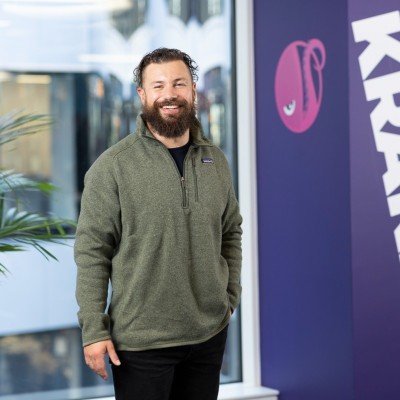
Gemma Milner
PwC UK
“I think at the heart of it is making sure we're making the right decisions for candidates.”
Gemma Milner has been named to the Talent 100, Class of 2026, the annual award recognizing up to 100 leaders in each category of talent acquisition. Honorees are nominated by peers or found by committees that look for excellent work wherever it happens, then chosen for the depth of their craft and their impact on hiring. This is Gemma's story.
Twenty-eight years into a career in recruitment, Gemma Milner still measures the profession against a standard she picked up answering customer calls as a school leaver: did the person on the other end of the process feel well looked after? It is a deceptively simple test, and in an industry currently being reshaped by artificial intelligence at a speed nobody has seen before, it is the one she keeps returning to.
Based just outside Leeds in West Yorkshire and now part of the talent function at PwC UK, Milner has built her entire career in-house. She has never worked agency side. What she has done, across retail, energy, postal services and professional services, is sit inside organisations while they grew, changed and occasionally disappeared, learning how hiring actually lands on the people it touches.
From the Service Desk to the Hiring Desk
Like most people in talent acquisition, Milner is candid that she fell into it. Her first job out of school was in the customer service team at the business then known as BT Cellnet, later O2. Almost immediately she found herself drawn to the parts of the role that involved other people: training new joiners, supporting them, helping them settle in.
The pattern repeated at PowerGen, an organisation that no longer exists. It was another service role, but the team was expanding fast, and Milner became heavily involved in recruiting for it. That involvement turned into a move onto the talent acquisition team proper, and from there into a TA manager role. Service stepped into hiring, and the career followed.
That sequence matters more than a tidy origin story. Milner came to recruiting from a discipline built entirely around how an interaction feels to the person receiving it, and she never really put it down. Her later work has spanned in-house teams at ASDA, Royal Mail and now PwC UK, along with third-party supply, but the commercial and the human have always been weighed together rather than traded off.
A Pace Nobody Has Seen Before
On AI, Milner is neither an evangelist nor a sceptic. She is a realist about the tempo. The landscape, she says, has moved at a pace the profession has simply never seen, and possibilities that would have been ruled out twelve months ago on risk grounds now have to be revisited.
That creates a genuine tension for a large, well-governed organisation. Talent functions traditionally buy tried and tested technology. With AI developing as fast as it is, that comfort is not always available, so decisions have to align instead with an appetite for innovation and a willingness to be brave in unfamiliar territory. Milner's answer is not to slow down or to charge ahead, but to stay unusually close to the market. Talent teams have always needed market awareness, she notes, but never more than now.
She is equally clear about where the line sits. AI brings real enhancements for candidates, for hiring managers and commercially. It also forces a harder question about human intervention: which personal touches must survive inside a process, and why. Getting that balance right, in her view, is the work.
Rewriting How Talent Measures Its Worth
One theme Milner has been raising more often is how talent acquisition measures success at all. The profession's standard metrics, time to hire and cost of hire, have their place, but she argues they reduce a sophisticated function to two blunt questions: how long will it take you to bring me someone, and how much will it cost me?
The conversation she wants instead is about impact. What difference do the people brought in actually make? What does securing the right talent at speed do for an organisation's ability to grow? Moving the dialogue from transaction to contribution is how she believes talent teams get the businesses they support to see their true value.
It is a challenge she aims first at her own profession, which is characteristic. Milner's advice to talent leaders heading further into 2026 follows the same logic. Keep candidate experience at the forefront. Protect the hiring manager experience. Step into the unknown with AI, but manage the risk, do it for the right reasons and make sure it adds value. Positioning a business to attract the right talent, she argues, has never depended more on judgement and never less on habit.
The Talent 100 exists to celebrate the people shaping the future of how the world hires, and few embody that better than Gemma. We are honored to welcome Gemma Milner to the Talent 100, Class of 2026, and grateful for the experience, perspective, and craft they bring to this community. Congratulations, Gemma. Welcome to the Talent 100.
About the Talent 100
The Talent 100 is an annual list spotlighting the leaders who push HR and talent acquisition forward, organized by Noon AI. Honorees are selected through peer nominations and independent selection committees. Selection is entirely merit-based, with no fees or pay-to-play requirements.