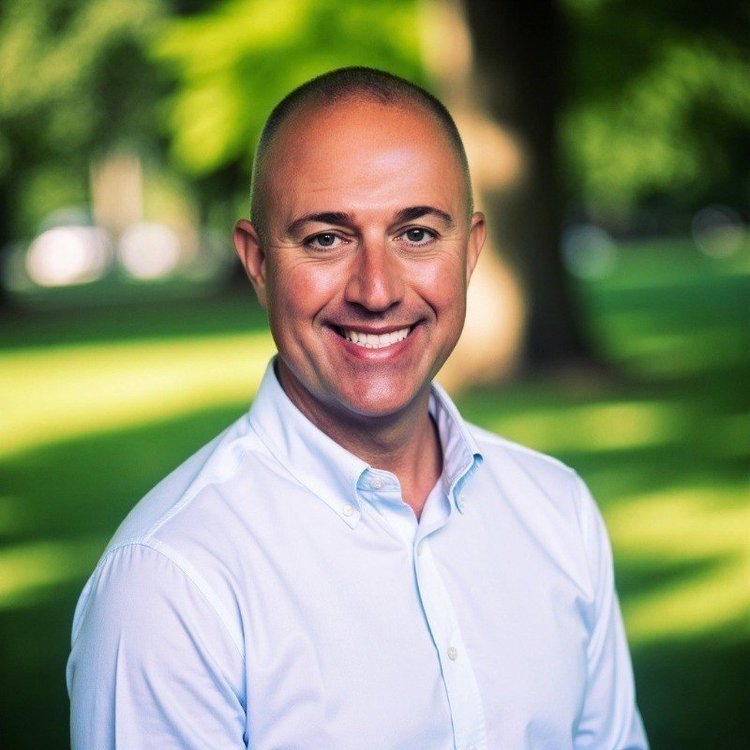
Megan Cardinale
Bill
“Don't focus on a tool. Focus on the fundamentals. The tools are always going to change, but the fundamentals remain the same.”
Megan Cardinale has been named to the Talent 100, Class of 2026, the annual award recognizing up to 100 leaders in each category of talent acquisition. Honorees are nominated by peers or found by committees that look for excellent work wherever it happens, then chosen for the depth of their craft and their impact on hiring. This is Megan's story.
Early in her career, Megan Cardinale was on the ground in Reno, Nevada, staffing the first Tesla gigafactory, high volume, high urgency, phone in hand. A decade later she was sitting inside the office of her company's deputy CIO, learning to build AI agents alongside his engineers. The through line between those two scenes is the same instinct: go where the work is hardest and newest, and learn it from the inside.
Today, Cardinale is Head of Technical Recruiting at Bill, where she has spent the past five years. She leads hiring across data science, product, design and engineering, and over the last year she has done something few talent leaders have managed: turned her recruiting team into her company's internal center of gravity for applied AI.
Bartending, Backpacking and a Bet on Autonomy
Cardinale has been in recruiting for almost 11 years, and like most people in the profession, she did not study for it. After college she bartended and saved up enough to backpack South America solo, planning to come home and figure the rest out. She came home. The figuring out arrived in the form of regulars at her bar who happened to work across the street at Aerotek. They told her she was personable and a strong communicator, and asked why she didn't come work for them.
She said sure, knowing nothing about HR, and landed on the manufacturing side of the business, where she helped staff Tesla's first gigafactory in the early Elon days. High volume material handler hiring is not glamorous work, but she describes it as "a great framework to learn recruiting," and it gave her a foundation in speed, process and sheer reps that many recruiters never build.
From there she moved to Austin, Texas, to join a small sourcing team supporting Uber's self driving division. She calls it a special time, spent alongside peers who have gone on to do incredible things and hiring managers she still counts among the smartest people she has ever spoken with. When COVID arrived and the team was cut, she took the view that has shaped much of her career: when one door closes, another opens. The next door was Seegrid, which builds self driving forklifts and material handling systems. Then she decided to widen her aperture beyond autonomy, and moved into fintech at Bill.
She joined as an individual contributor. She has been leading a team for the last three and a half years, and within the past year was promoted to run all of tech recruiting.
Turning a Hiring Pause Into an AI Mandate
When Bill entered a hiring pause, Cardinale saw what most recruiting leaders would have treated as downtime and read it instead as open territory. Nobody at the company was seriously leveraging AI. So she partnered with her VP of Talent to win buy in from stakeholders, and for six months she reported directly to the deputy CIO, now the CIO, working shoulder to shoulder with engineers to learn automation and agent building.
The results were not theoretical. Her team of five deployed 25 automations into the business, saving 115 hours of time, and in the process became the subject matter experts on AI for the entire people team. That AI championship mentality, as she describes it, has since spread outward: the team is now driving adoption across the business. Two weeks before this profile was reported, they gained access to Claude Code and immediately began kicking off the next wave of work, with a plan to bring the broader people organization up to speed on AI fluency.
Cardinale is candid that the team is smaller than it was, having gone from seven to five, which makes what they built with limited headcount all the more notable. She calls the AI work a genuine highlight of her career.
What Actually Blocks Adoption
Ask Cardinale how the recruiting landscape has shifted and she does not start with tools. She starts with readiness. A year ago the dominant emotion she encountered was AI fear. In recent months, that has softened considerably, replaced by the aha moment of people realizing how much more productive they can be. The doom and gloom of "AI is going to take my job" has begun to wean off.
But enthusiasm is not the same as capability, and she has developed a clear diagnostic for why so many teams stall. First, policy. Her own company encouraged AI use, yet security and compliance review meant tools could not simply be switched on, and she hears the same story constantly from peers in other industries: they want to adopt, but their policies are not ready. Second, expertise. If a team cannot tell a good AI output from a bad one, the result is what she and her colleagues call AI slop, which quietly creates more review work for the team and its leaders, not less. Third, data. If your information is not accessible and structured, the output gets you maybe 80 percent of the way there and leaves the remaining 20 percent on your desk.
Her advice is to examine those three layers honestly and work backwards from there. And she is unsentimental about tooling itself. "The internet happened in years. AI happens in days," she says. Which is precisely why she tells her team not to attach themselves to any single platform: strong prompting skills and the judgment to recognize a good output will outlast every product cycle.
Stay Curious
Asked for the single piece of advice she would offer other talent leaders, Cardinale does not hesitate: stay curious. It is, she believes, the reason she is where she is.
She pairs it with a practical method. You do not eat the whole pie at once, she says. You take small pieces. Ten minutes a day, every day, on the thing you want to learn, until the ten minutes becomes a habit. It is how she coaches her team and how she coaches herself.
The reasoning behind it is clear eyed. Recruiters and recruiting leaders are told constantly that they must adapt, and Cardinale agrees they must be adaptable and open minded to change. But adaptability, in her view, is downstream of something else. "If it doesn't start with curiosity, then there's going to be no will to learn it."
The Talent 100 exists to celebrate the people shaping the future of how the world hires, and few embody that better than Megan. We are honored to welcome Megan Cardinale to the Talent 100, Class of 2026, and grateful for the experience, perspective, and craft they bring to this community. Congratulations, Megan. Welcome to the Talent 100.
About the Talent 100
The Talent 100 is an annual list spotlighting the leaders who push HR and talent acquisition forward, organized by Noon AI. Honorees are selected through peer nominations and independent selection committees. Selection is entirely merit-based, with no fees or pay-to-play requirements.