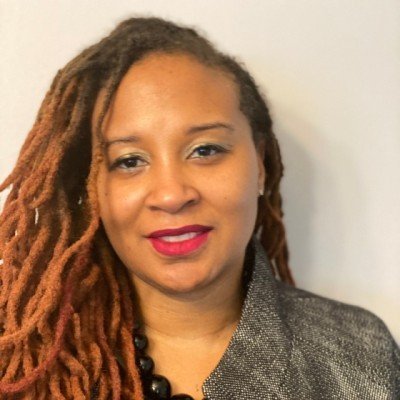
Rebecca Carolan
Procore Technologies
“It's really important that we don't lose the human side to things.”
Rebecca Carolan has been named to the Talent 100, Class of 2026, the annual award recognizing up to 100 leaders in each category of talent acquisition. Honorees are nominated by peers or found by committees that look for excellent work wherever it happens, then chosen for the depth of their craft and their impact on hiring. This is Rebecca's story.
The pitch sounded invented: a slide connecting one floor of the office to the next, pool tables, beanbags, and a director everyone apparently adored. Rebecca Carolan was working in finance in Dublin at the time, deep in share schemes and share registries, when a recruitment agency rang her about a US technology company opening its second office as a Dublin hub. Her first reaction was polite disbelief. It did not sound like a real job, she remembers thinking, but she decided to explore it anyway, out of curiosity as much as anything else. That decision opened up an entire industry she had never once considered.
Today Carolan leads a talent acquisition team at Procore Technologies, having built her career across three of technology's growth stories: Qualtrics, then DocuSign, now Procore. The through line is not a sector or a specialism. It is the moment when a business is still being assembled. "Early stage, startup, scale up, building phase is my thing that really excites me," she says, and every significant chapter of her career has borne that out.
The First Recruiter in the Building
The company that hired her had been founded by two people obsessed with experience management, and it was expanding fast. Carolan came in as something closer to an office manager, leaning on the administrative and relationship skills she had built in finance, and did a bit of everything: payroll pieces, experience management, and the general work of standing up a brand new office. Because the business was growing so quickly, a great deal of that work turned out to be recruitment.
She scheduled the meetings. She greeted candidates when they arrived, put them at ease, wished them luck on their way in. Then curiosity took over. She started looking up their LinkedIn profiles and their backgrounds beforehand, quietly forming a view on who was likely to succeed, then testing that instinct against the outcome. She began shadowing hiring conversations and found the whole thing fascinating. When an opportunity opened up, she moved across and became the company's first recruiter.
It was not a path anyone had mapped for her. No one in her family had worked in the industry, and none of her previous colleagues had either. "Once I got a little insight into it, it opened up a whole new world to me," she says. That combination of curiosity and pattern recognition, applied at the exact moment a company is deciding who it wants to be, has been the engine of her career ever since.
Redefining What a Modern Leader Looks Like
Carolan had ruled leadership out. She liked running her own desk, knowing her candidate management cold, understanding exactly how to influence her stakeholders. Her mental image of a leader was somebody tough, hard, direct and powerful, an idea she now cheerfully describes as a real old-school attitude.
A manager of hers disagreed and said so plainly: "You actually would be a really good leader." When Carolan pushed back, the manager pointed at the evidence, the initiatives she had built, the colleagues she had influenced, the people she had nurtured and brought on board. "That's what a modern leader looks like," she told her. Carolan started to consider it, and that conversation is what led directly to the role she holds today. It is also why she now spends so much of her energy telling other people what they are capable of before they can see it themselves. Great people, exposure to great people, and the willingness to listen to what they had to say is, in her own summary, the reason she is where she is.
AI Everywhere, Except the Moments That Matter Most
Carolan is candid that she and her team at Procore are still near the beginning of their AI journey, and she finds that exciting rather than daunting. She considers the technology's impact on talent acquisition unparalleled, the biggest shift she has seen in the profession. Among her team and her stakeholders she sees the full spectrum, from people who are reluctant and nervous to people diving straight in with real passion, and she has concluded that a leader's job here is largely one of framing. The question she puts to her team is not what AI will replace. It is how they optimize the way they operate, how they use it to be better at their jobs, and how they make the work more efficient without hollowing it out.
That last part is a line she holds firmly. Her team uses AI heavily on internal process, stakeholder updates and reporting. It does not use AI to screen CVs. Every application that comes in is still read by a person, because Carolan is not yet convinced that bias has been ruled out of the tooling. She is equally clear-eyed that human bias exists too, which is why her team discusses it openly, coaches itself on it and reflects on it deliberately in order to reduce it wherever possible. And there are specific touchpoints in the candidate journey that she insists stay human, where somebody has a name and a face, and the candidate feels seen and heard. AI, in her framing, exists to buy back the time that makes those moments possible.
From Order Takers to Partners
The internal change Carolan is most enthusiastic about has little to do with candidates. Talent acquisition teams have long fought the perception that they are order takers rather than partners and subject matter experts, and she believes the gap has often come down to data fluency. Everyone in the profession talks about leading with data. Fewer people can tell the story behind the numbers, and fewer still can use that story to move a hiring manager's opinion or land the outcome the business actually needs. What she has watched AI do for her own team is close that distance, giving recruiters who once hesitated the confidence to interrogate the data themselves and walk into a stakeholder conversation with an argument rather than a spreadsheet.
It is a fitting preoccupation for someone whose own career turned on being handed insight she previously had no access to. Carolan is unsentimental about how she got here, crediting proximity to genuine, generous people more than any grand plan. She has spent the years since making sure the people on her teams get the same.
The Talent 100 exists to celebrate the people shaping the future of how the world hires, and few embody that better than Rebecca. We are honored to welcome Rebecca Carolan to the Talent 100, Class of 2026, and grateful for the experience, perspective, and craft they bring to this community. Congratulations, Rebecca. Welcome to the Talent 100.
About the Talent 100
The Talent 100 is an annual list spotlighting the leaders who push HR and talent acquisition forward, organized by Noon AI. Honorees are selected through peer nominations and independent selection committees. Selection is entirely merit-based, with no fees or pay-to-play requirements.