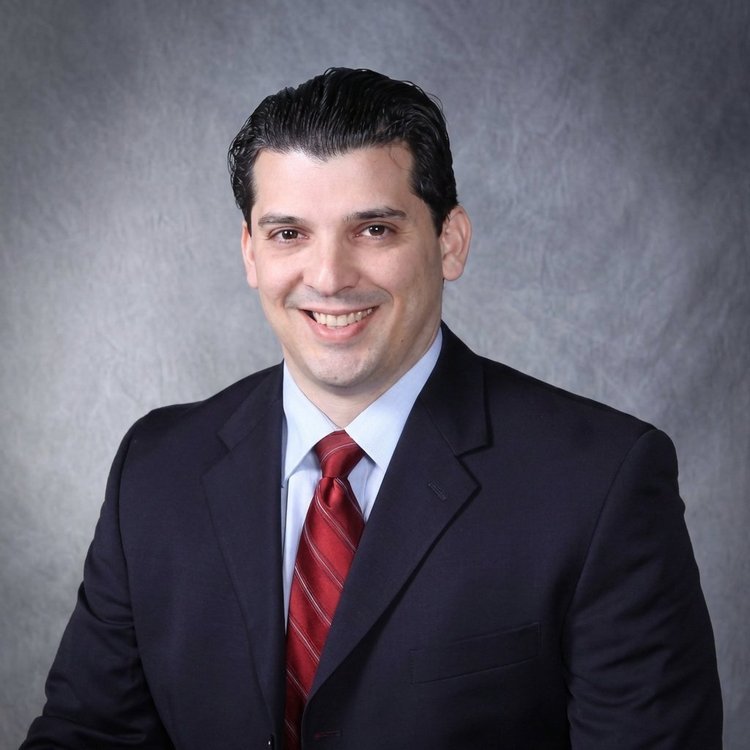
Ajit Chouhan
Hewlett Packard Enterprise
“One of the things I take great passion in is the ability to serve our talent community.”
Ajit Chouhan has been named to the Talent 100, Class of 2026, the annual award recognizing up to 100 leaders in each category of talent acquisition. Honorees are nominated by peers or found by committees that look for excellent work wherever it happens, then chosen for the depth of their craft and their impact on hiring. This is Ajit's story.
In the early 2000s, at the dawn of India's technology boom, Ajit Chouhan and his team onboarded roughly 2,600 people in a single day at Infosys. It is a figure he still describes as perhaps a world record of its kind, and it remains the clearest window into how he thinks: at scale, at speed, and always with the human being on the other side of the transaction in view. Today, as Head of Talent Acquisition at Hewlett Packard Enterprise, he is applying that same instinct to a very different problem, which is what talent acquisition becomes when machines absorb the volume and humans are left with the judgment.
A Classmate's Referral, and Then the Boom
Chouhan's entry into the profession came the way many of the best hires still do: through someone who knew him. He was pursuing a master's in human resources when a classmate referred him for an HR business partner position. That single referral opened the door to the technology industry and, within it, to talent management and recruiting.
The timing could hardly have been more formative. He landed at Infosys in the early 2000s, at what he calls the very beginning of the tech evolution and revolution, when the company was bringing on thousands of people every week. Recruiting in that environment was not a matter of filling requisitions; it was industrial logistics with human stakes. Two decades later, he traces his entire orientation toward talent attraction and onboarding back to those years, when the sheer velocity of hiring forced him to think in systems rather than in individual transactions.
Now based in Houston, he leads talent work at one of the companies that helped build the industry he grew up inside.
AI as the Fourth Age
Chouhan does not treat artificial intelligence as a tooling question. He places it in a much longer arc, describing it as the fourth phase of evolution or disruption: from the prehistoric hunter's age, to agrarian society, to the industrial era, to the age of information technology now evolving into AI. Each transition, in his reading, moved human beings away from manual, physical, labor intensive work and toward mental, emotional and analytical work.
Applied to recruiting, the conclusion is specific. A great deal of manual, transactional, volume work should move to AI, producing what he calls efficiency gain in terms of capacity. The interesting question is what a team does with the capacity it gets back. Chouhan's answer is that it should be reinvested in a better decision making model and a more mature, well thought through selection process. Machines can replicate and duplicate a great deal, he notes, but humans still make the decisions.
That reframes where recruiters create value. The differentiators he names are decision making, rationality, context, emotional judgment, and the ability to connect a single piece of outcome to the broader ecosystem. Which is why he believes the function becomes more critical, not less, as automation spreads. "This is no more about how efficiently you can hire, but more about the quality and the value humans bring," he says. It is an unusually confident position in a moment when many talent leaders are bracing for displacement, and it carries an implicit challenge: teams that use AI only to do the same work faster will have captured the smallest part of the opportunity.
Serving the Talent Community
For all his interest in evolutionary arcs and technology cycles, what Chouhan describes as his real passion is smaller and more immediate: the ability to serve the talent community. He is candid that HR has not historically offered its practitioners many visible role models, which is precisely why he invests time in the profession beyond his own remit, as both a thought leader and a practitioner.
That commitment shows up in ways that are easy to overlook. Asked to nominate peers for recognition, he declined to hand over names on the spot, choosing instead to ask each of them first whether they were comfortable being in the spotlight. Some, he pointed out, work in areas where they may not yet be ready to discuss what they are doing. It was a small act of consideration for people who were not in the room, and a fairly precise illustration of the nurturing taskmaster in practice.
He says he loves to spend time with up and coming teams and talent, offering whatever support or insight he has. In a profession that spends its days evaluating other people's potential, that willingness to invest in the next generation of practitioners may be the most consequential thing on his résumé.
The Talent 100 exists to celebrate the people shaping the future of how the world hires, and few embody that better than Ajit. We are honored to welcome Ajit Chouhan to the Talent 100, Class of 2026, and grateful for the experience, perspective, and craft they bring to this community. Congratulations, Ajit. Welcome to the Talent 100.
About the Talent 100
The Talent 100 is an annual list spotlighting the leaders who push HR and talent acquisition forward, organized by Noon AI. Honorees are selected through peer nominations and independent selection committees. Selection is entirely merit-based, with no fees or pay-to-play requirements.