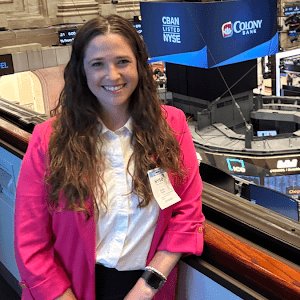
Mark Smith
Medtronic
“Chase the value, not the task.”
Mark Smith has been named to the Talent 100, Class of 2026, the annual award recognizing up to 100 leaders in each category of talent acquisition. Honorees are nominated by peers or found by committees that look for excellent work wherever it happens, then chosen for the depth of their craft and their impact on hiring. This is Mark's story.
Mark Smith began his career in a world of faxed resumes and Thursday night newspaper advertisements, when there were no job boards and no LinkedIn, and the only way to reach a candidate was to hope they picked up the classifieds. Twenty five years later he sits at Medtronic thinking about which pieces of recruiting work belong to AI agents and which belong to humans, a question he compares to taking apart a jigsaw and deciding, piece by piece, where judgment actually matters.
Few people in talent acquisition have watched the industry reinvent itself as many times as Smith has, and fewer still have kept the same clear-eyed view of what the function is actually for. His answer has not changed across a quarter century of technology cycles: talent acquisition exists to help the business grow, succeed, expand. Everything else is method.
A Leicester High Street and a Fifty Pence Decision
The origin story is unusually precise. Smith walked into the Adecco office on the high street in Leicester, England, looking for work, admittedly wet behind the ears and without a clear sense of what he wanted to do. He describes it as a red pill or blue pill moment. Adecco gave him two options: come and work for us doing admin and referencing, or take a role with a company called Otis Elevators, which paid fifty pence an hour more.
By every rational measure he should have taken the elevators. He did not. "I felt bad saying no to the person that was asking," he recalls, and so he stayed. It is a small, human detail that he still credits as the hinge of his entire career. "Being kind led me to being in TA," he says. Twenty five years later he is still in the profession, still amused by the counterfactual. In a different life, he notes, he might have spent his career servicing elevators.
Standards, Clarity, and the Art of Making Yourself Redundant
Ask Smith about influence and he goes straight to leaders, though he is quick to say that friends and family have shaped him just as much. One of his earliest senior leaders gave him advice about leadership that Smith considers chronically understated in the industry. Do not fixate only on innovation and building trust, he was told. Make sure the standards of the team are right. The second half of that lesson was clarity: the obligation to give every stakeholder a clear line of sight into what is happening and why. Two decades on, Smith still treats standards and clarity as the load-bearing walls of a functioning team.
The second lesson arrived when Smith was a newly promoted leader of about 23 or 24. An early manager told him his job was to empower his team, and then used a word that genuinely alarmed him: make yourself redundant. "I've just got the job, I don't want to sack myself," he remembers thinking. The meaning became clear soon enough. A leader who is constantly in the team's business is not leading, he is auditing. Elevating yourself means developing people, trusting people, and building a group that does not need you standing over it. Smith has led that way ever since, and notes with some satisfaction that he has yet to be made redundant.
From Fax Machines to Agents
Smith has seen the arrival of job boards, the rise of LinkedIn, and the internet reshaping the entire mechanics of hiring. None of it, he says, compares to what is happening now. He considers AI the most serious and significant change his industry has faced, and not just his industry: it is a change to the way work itself gets done, across multiple functions.
His approach is structural rather than fashionable. The work has to be disaggregated, broken into its component pieces like a jigsaw, so that leaders can ask which tasks can be handled identically every time through AI agents and which genuinely require a human in control, or at least a human influencing the outcome. Then comes the harder part, the re-aggregation, putting the work back together into a coherent process that a team can actually run.
He is candid about the risk. Smith worries that some people, in TA and well beyond it, will simply outsource their thinking and coast. "Those people won't be the ones that succeed as the humans in the loop," he says. The recruiters who thrive will be the ones who use the time AI gives back to think with more depth and breadth about what can be done differently and better for the business. Which means moving past the transaction of filling a requisition. Smith pushes his teams to ask what the value of the hire is, what that person will be doing in 18 months or five years, and then to work backwards from that definition of success. Changing that mindset, he argues, matters more than any single tool.
Chase the Value, Not the Task
The advice Smith offers other talent leaders is deceptively simple: understand the need, because the want is often different. It is classical counsel he received himself, and he has watched it prove true across decades. A business will ask for X or Y when what it actually needs is something else entirely. The job is to find the gap.
The tone of that inquiry matters enormously to him. This is not about fighting a hiring manager to a standstill. It is about approaching the conversation analytically, in a help me understand register, because that is what ultimately produces the right solution. "Seeking to understand is so important," he says.
It all rolls into the line he repeats most often to his teams, and the one he would leave the profession with: chase the value, not the task. There is a real separation between the two, and mistaking one for the other is how talent acquisition ends up measured on activity instead of impact. His broader instruction, delivered with the intentionality of someone who has thought about it for 25 years, is to transcend the situation. Think bigger. Think of the big picture.
The Talent 100 exists to celebrate the people shaping the future of how the world hires, and few embody that better than Mark. We are honored to welcome Mark Smith to the Talent 100, Class of 2026, and grateful for the experience, perspective, and craft they bring to this community. Congratulations, Mark. Welcome to the Talent 100.
About the Talent 100
The Talent 100 is an annual list spotlighting the leaders who push HR and talent acquisition forward, organized by Noon AI. Honorees are selected through peer nominations and independent selection committees. Selection is entirely merit-based, with no fees or pay-to-play requirements.