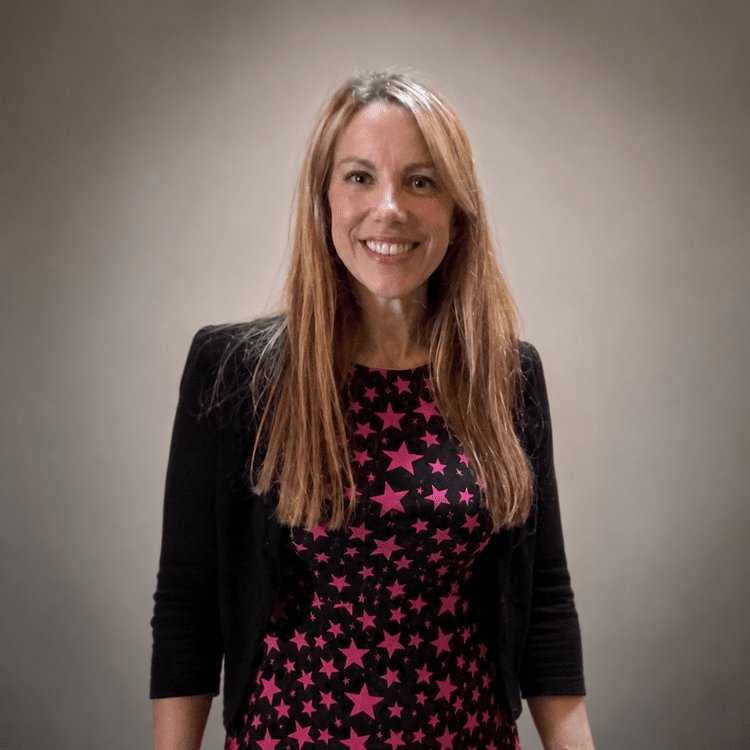
Maureen Welsh
Cencora
“I see AI as an enabler for me to do better work.”
Maureen Welsh has been named to the Talent 100, Class of 2026, the annual award recognizing up to 100 leaders in each category of talent acquisition. Honorees are nominated by peers or found by committees that look for excellent work wherever it happens, then chosen for the depth of their craft and their impact on hiring. This is Maureen's story.
Maureen Welsh has spent her career in the part of talent acquisition that most people never see and every large enterprise depends on: the contingent, non-full-time workforce. It is a discipline of supplier networks, vendor management systems, cost structures and compliance, and Welsh has worked it from all three seats. She started on the sales side for contingent labor staffing firms straight out of college, moved to the MSP side when the model was still in its first generation, and eventually crossed to the buyer side, where she builds and runs large non-full-time talent programs for the organization she serves.
Three Seats, One Market
The pivot that shaped everything came early. Selling into what were then the first versions of managed service programs, Welsh found herself more interested in the machinery on the other side of the table than in the deal itself. "I think I'm better suited for that side of the house," she remembers concluding. She acted on it, and spent roughly half her career inside the MSP world before making the second move, to the buyer side, where the accountability shifts from delivering a service to owning an outcome.
That arc gives her an unusually complete view of the contingent market. She knows what a supplier is optimizing for, what an MSP can and cannot control, and what an enterprise actually needs from both. It is a rare vantage point: she has sold the service, run the program, and then sat in the chair that buys it, and she has built and run large programs for organizations along the way.
The years on the vendor side also left her with a very specific memory of the work: facing hiring managers all day long, helping with requisitions, helping fill roles, and then doing hours of administrative work at night. When she recently ran an RFP for vendor management systems, she watched platforms perform, natively and instantly, tasks that once consumed her evenings. Her reaction in those meetings was blunt and slightly disbelieving. "That would have saved me so much time." She adds, with a laugh, that she would like all those nighttime hours back from her twenties.
An Enabler, Not a Replacement
Welsh's position on artificial intelligence is neither breathless nor defensive. Technology, in her view, is something you embrace, learn and then bend toward your own strengths. "I don't really get nervous by it because it's not going away," she says. "I have to learn it, I have to understand it, and then I have to figure out how it's going to make me stronger in the role that I have." The goal is to highlight what you are good at and strip out the work that pulls you down without adding value.
Fittingly, the place AI has changed her work most is the same place her mentor did: communication. It has not replaced the thinking behind what she wants to say. It has helped her organize and simplify the message for the right audience, and deliver it faster, clearer and more broadly. She is candid that the shift took a moment of adjustment, describing an early instinct that asking a model to help her write something better was somehow a shortcut. That instinct passed once she saw the result, and she now draws the line precisely where it matters. Use it to expand how you think and it is a good tool. Use it to replace your own thought process and your own knowledge, and "that's where it could get a little interesting."
The rest of her enthusiasm is aimed squarely at the drudgery. Watching VMS platforms absorb administrative work that once required human hours, she sees the same trade she wants for every practitioner: less manual processing, more strategy. It is exciting, she says, to see the administrative layer handled in a way that is far more strategic and efficient.
Out of the Silo
Asked what she would tell talent leaders heading into 2027, Welsh does not reach for a hiring trend. She reaches for positioning.
"Don't get stuck in your silos," she says. "Don't get stuck in your immediate world." Talent acquisition is incredibly important and impactful, she argues, but the question that now matters is how that impact registers for the organization as a whole. As AI absorbs more of the administrative layer, the conversation inevitably moves upstream: how are you making strategic impact for the larger organization you work for? Leaders who can answer that, who expand beyond their own function and work cross-functionally with other leaders, are the ones whose roles keep getting elevated as the technology advances. Those who keep the blinders on will find the ground shifting under them.
It is consistent advice from someone whose own career has been a series of deliberate moves across boundaries: sales to MSP, MSP to buyer, industry expertise to human connection.
For a leader who has spent her career in the infrastructure layer of talent, the part that rarely gets a stage, that instinct to widen the frame may be the most portable lesson she offers.
The Talent 100 exists to celebrate the people shaping the future of how the world hires, and few embody that better than Maureen. We are honored to welcome Maureen Welsh to the Talent 100, Class of 2026, and grateful for the experience, perspective, and craft they bring to this community. Congratulations, Maureen. Welcome to the Talent 100.
About the Talent 100
The Talent 100 is an annual list spotlighting the leaders who push HR and talent acquisition forward, organized by Noon AI. Honorees are selected through peer nominations and independent selection committees. Selection is entirely merit-based, with no fees or pay-to-play requirements.