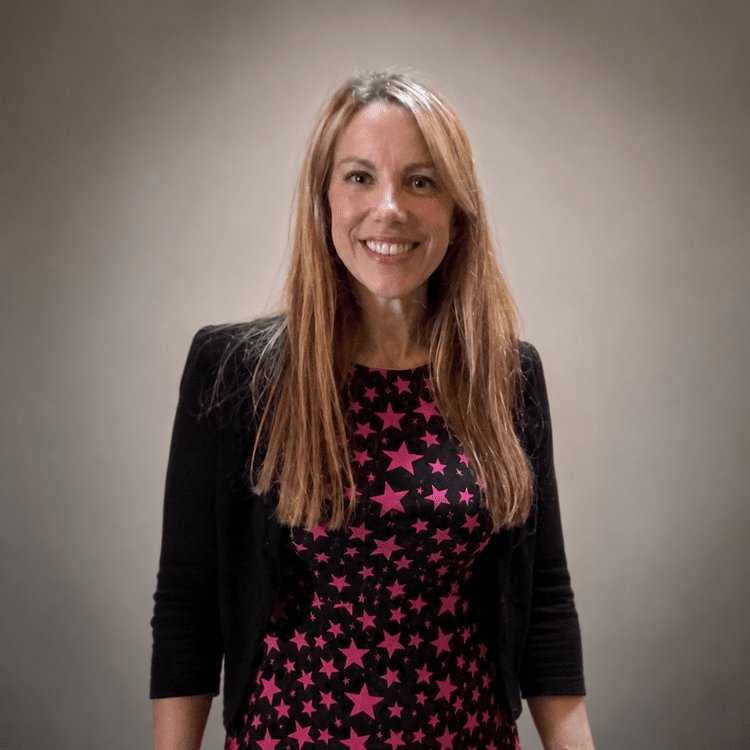
Lucy Wylde-Wise
NHS England
“I don't think you can do this work with people unless you really have that drive and desire.”
Lucy Wylde-Wise has been named to the Talent 100, Class of 2026, the annual award recognizing up to 100 leaders in each category of talent acquisition. Honorees are nominated by peers or found by committees that look for excellent work wherever it happens, then chosen for the depth of their craft and their impact on hiring. This is Lucy's story.
Lucy Wylde-Wise has spent roughly 15 years inside the National Health Service and NHS organisations, long enough that she stopped counting somewhere around the ten year mark. What she has not stopped doing is asking the question that has organised her entire career: how do you get a person from where they are to where they want to be, in a way that also serves what the organisation actually needs? At NHS England, she works in the seam between learning and development and talent acquisition, the space she describes as the bit in organisations that most often falls through.
A Squiggly Route Into Talent
Her starting point was commercial recruitment, in a role that leaned heavily toward sales. It taught her pace and it taught her people, but what pulled her forward was something closer to HR: the desire to work with individuals rather than transact around them. The route she took to get there was, by her own cheerful admission, squiggly, running through postgraduate medical education before landing in talent.
That detour turned out to be the point. Medical education is fundamentally about development pathways, about how a person is built up over years into someone capable of doing difficult work well. Recruitment is about identifying that potential in the first place. Wylde-Wise noticed early that most organisations treat these as separate disciplines with separate budgets and separate meetings, and that the interesting problems live precisely where they overlap.
"That link between how do we develop talent, how do you bridge a gap from where people are to where they want to be based on their aspiration and organisational needs," she says, is what has always stood out to her. When the field of talent began to emerge as something broader than recruitment plus learning and development, she recognised the shape of the work she had been circling for years and moved into it.
AI and the Disappearing First Rung
On artificial intelligence, Wylde-Wise is neither breathless nor defensive. The immediate upside, as she sees it, is straightforward: shifting administrative load out of the way so that teams can build a better candidate experience, identify talent more accurately, and spend their hours on the human part of the job rather than the paperwork around it.
Her more interesting concern is structural, and it concerns the bottom of the ladder. The traditional entry points into professional life, the office junior roles and the filing and the low-stakes tasks that let a young person get a foot in the door and learn an organisation from the inside, are disappearing. "How do we enable early talent to bring people in for the roles we need that are going to look and feel really different?" she asks. She frames it as a challenge and then, characteristically, as a very large opportunity: a chance to rethink how school and college leavers are recruited and routed toward leadership, rather than assuming the old pathways will regenerate themselves.
This is where her twin interest in learning and hiring earns its keep. If entry level roles change shape, then skills gaps have to be mapped and closed deliberately rather than absorbed through osmosis, and talent functions need to be at the forefront of understanding that rather than reacting to it two years late. Done well, she believes AI could provide the platform for the joined up approach to talent she has been arguing for throughout her career.
Advice: Stay Out of the Box
Her counsel to other talent leaders is about curiosity, and it comes with an unusually honest diagnosis attached. The more experience you accumulate in talent and recruitment, she observes, the more boxed in you can become by your own industry's assumptions. Expertise hardens into habit. In a public sector organisation, she adds, staying out of that box is something you have to do mindfully rather than accidentally.
So she keeps looking outward: at what is happening in the wider marketplace, at how other industries are solving the same problems, and above all at what candidates and future talent are telling her. That, she argues, is how you stay ahead of the curve and how you actually secure the best people for your organisation. It is also why she can be found at events like Learning Technologies, collecting perspectives from outside her own lane.
Backing the Next Generation
Wylde-Wise is quick to redirect attention to others doing the work. She points to rising stars in the field who came from headhunting into the NHS and have since taken notably creative approaches to talent at some of the largest trusts in the country.
It is a fitting instinct for someone whose entire professional thesis is that potential is easy to overlook and worth the effort of finding. Fifteen years in, the question she carries has not changed: where is the passion, and how do you build the pathways that let people follow it.
The Talent 100 exists to celebrate the people shaping the future of how the world hires, and few embody that better than Lucy. We are honored to welcome Lucy Wylde-Wise to the Talent 100, Class of 2026, and grateful for the experience, perspective, and craft they bring to this community. Congratulations, Lucy. Welcome to the Talent 100.
About the Talent 100
The Talent 100 is an annual list spotlighting the leaders who push HR and talent acquisition forward, organized by Noon AI. Honorees are selected through peer nominations and independent selection committees. Selection is entirely merit-based, with no fees or pay-to-play requirements.