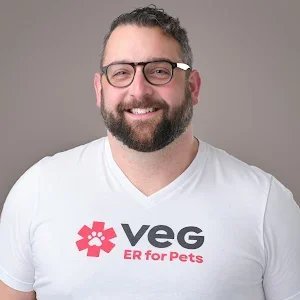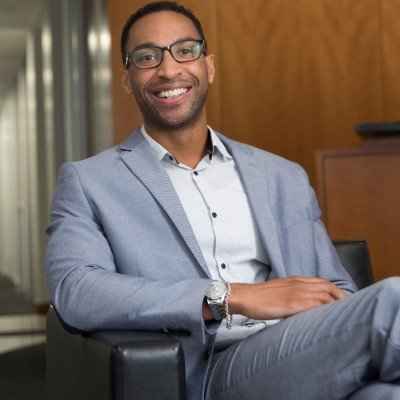
Roman Ward
CareLinx, Sharecare
“We are deploying AI as an enhancement and resource tool to make our recruitment and talent acquisition function stronger while also keeping a human element.”
Roman Ward has been named to the Talent 100, Class of 2026, the annual award recognizing up to 100 leaders in each category of talent acquisition. Honorees are nominated by peers or found by committees that look for excellent work wherever it happens, then chosen for the depth of their craft and their impact on hiring. This is Roman's story.
Ask Roman Ward what artificial intelligence still cannot do and the answer comes back in three words: the sniff test. Some sixteen or seventeen years into a talent acquisition career that began with a phone call from a college friend, Ward leads hiring at Sharecare on a conviction that has only sharpened as the technology has accelerated. Automation should make recruiters faster and better informed. It should not be asked to replace the judgment that tells an experienced practitioner when a resume and a person do not quite match.
That balance, machine leverage on one side and human discernment on the other, is the throughline of Ward's work. It shapes how he builds his function, how he coaches the leaders who report to him, and how he talks about the profession he entered almost by accident and has since spent the better part of two decades studying.
From West Point to the Hiring Line
Ward's entry into recruiting came at a hinge point. He was working in QA at the United States Military Academy and looking to move, both geographically and professionally, when a friend he had met in college pulled him toward the staffing world. That friend worked at one of the larger staffing agencies and made a straightforward case: Ward was outgoing, he connected with people easily and quickly, and he had a business background. The combination pointed somewhere obvious.
"It made sense to explore that avenue," Ward says of the decision. "And here, I think some 16, 17 years later, here I am." What began as a way to try something different became a career built on the same raw material the friend identified at the start, an ability to read people fast and build trust faster, now paired with the operating discipline of running a function inside a healthcare organization.
AI as Enhancement, Not Replacement
Ward frames the AI shift as twofold, and he is careful to separate the two halves. The first is what it is doing to the work itself, the roles recruiting has historically been tasked to attract and hire for. He points to accounts payable and other corners of accounting, to administrative work and data entry, to entry level programming and help desk positions in IT. Portions of all of it, he notes, are being replaced by automation. His hope is not denial but movement: that people in those functions upskill into different areas within those spaces rather than being left behind by them.
The second half is what it is doing to recruiters. Ward argues the technology changes the recruiter's value proposition rather than eliminating it. Automated screening and algorithmic matching can move volume, but they can miss the real need underneath a requisition and fail to capture the human element. Understanding the critical needs of an organization, and understanding the opportunity a specific person brings to the table, is work he is not convinced software can fully absorb. "I don't know if AI can capture all of that," he says.
At Sharecare, that thesis is operational. The team is deploying AI as an enhancement and a resource tool to make the recruitment and talent acquisition function stronger while deliberately preserving the human element. Ward's reasoning is grounded in the messiness of real hiring. There are idiosyncrasies that happen when you are hiring and nuances to individuals that a trained recruiter can read. As smart as the technology has become, he believes the sniff test and the gut feeling of talented recruiters are things that can never be replaced.
The Standard He Sets
What emerges across Ward's account is a consistent standard applied in three directions. Toward candidates, it means refusing to reduce people to keyword matches. Toward technology, it means adopting aggressively without outsourcing judgment. Toward his own team, it means the balance his first VP modeled and his least favorable manager inverted: high expectations delivered by someone who is genuinely good to work for, and who understands that the people doing the work are the reason the leader looks good at all.
For talent leaders navigating the same transition, his advice is less a prediction than a posture. Deploy AI as an enhancement and a resource tool, then invest in the parts of the job it cannot reach: the idiosyncrasies of a given hire, the nuances of individuals, the read on what an organization critically needs. And keep improving, because an elevated title does not by itself explain to anyone how you got there. It is a philosophy built over sixteen or seventeen years, tested against good leadership and bad, and now aimed squarely at whatever recruiting becomes next.
The Talent 100 exists to celebrate the people shaping the future of how the world hires, and few embody that better than Roman. We are honored to welcome Roman Ward to the Talent 100, Class of 2026, and grateful for the experience, perspective, and craft they bring to this community. Congratulations, Roman. Welcome to the Talent 100.
About the Talent 100
The Talent 100 is an annual list spotlighting the leaders who push HR and talent acquisition forward, organized by Noon AI. Honorees are selected through peer nominations and independent selection committees. Selection is entirely merit-based, with no fees or pay-to-play requirements.