Candace Todt
Bayer
“The most successful recruiting teams are going to lean into AI while also making sure that they are improving their human touch.”
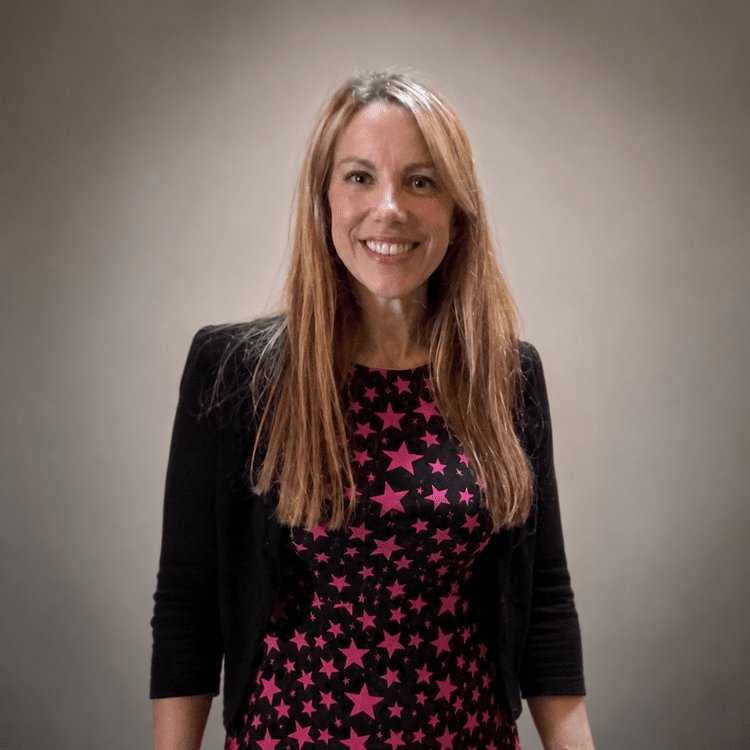
Candace Todt has been named to the Talent 100, Class of 2026, the annual award recognizing up to 100 leaders in each category of talent acquisition. Honorees are nominated by peers or found by committees that look for excellent work wherever it happens, then chosen for the depth of their craft and their impact on hiring. This is Candace's story.
Two internship offers arrived at the same time, and they pointed in opposite directions. One would have put Candace Todt in media relations: news broadcasting, radio, event management. The other was a generalist HR role at a biofuels company. She took the HR job, rotated through compensation and benefits, and then landed in recruiting. That rotation decided the rest of her career.
"When I got my rotation into recruiting, I fell in love with it," she says. Today she leads the early talent team for North America at Bayer, having moved over the course of her career from individual contributor to senior leader.
Two Paths, One Rotation
Todt entered college weighing two futures that had almost nothing in common. On one side sat media relations and the adjacent worlds of broadcast, radio and event management. On the other sat corporate and organizational work. Junior year moving into senior year, she needed an internship, and rather than settle the question in the abstract she applied across both lanes and let the market answer it. Both lanes answered, with an offer apiece. She chose the corporate one.
The internship itself was unusually broad, cycling her through compensation, benefits and recruiting. It was the last of those that stuck, and it has held her ever since. "Recruiting has been where I've stayed," she says.
Learning the Craft From the Coordinator's Seat
Her timing out of school was not generous. Todt graduated during a recession, and the position she accepted was a contract role: an HR associate job at a utility company that was, in practice, recruiting coordination, built around scheduling, offer packages and the administrative machinery behind a hiring process. She argues, years later, that it was the best possible place to start.
"Starting in a coordinator-based role is very important in recruiting," she says, "because you get to see a wide variety of items across the organization administratively. You get to understand the market." It is a view of the profession that few leaders get and fewer keep, and it gave her a working knowledge of process, systems and market rhythm that shaped everything after it.
From there she joined Monsanto as a recruiter, working a wide range of positions and skill sets she describes as simply fascinating. She took her time with them deliberately, digging into what those roles actually did and what the business actually needed. When a position opened at Bayer to lead the early talent team for North America, she made the move into leadership.
Paying It Down the Bench
That mentorship shaped how she approaches the job she holds now. Once she became a recruiter with her own bench, she approached it the way she had been taught, explaining the reasoning behind decisions rather than simply issuing them. Early talent is the part of the function where that instinct matters most, because it is where careers like her own get started, and where a coordinator or a new graduate either learns the craft or merely processes the paperwork of it. Understanding how the business makes money is what turns a talent function from a service desk into a thought partner. Todt has now worked both ends of that arrangement, the seat where the schedules get built and the seat where the strategy gets set.
The second lesson shaped her as a leader. Sitting at the table with the business, understanding how it earns, is what turns a talent function from a service desk into a thought partner. Todt has now worked both ends of that arrangement, the seat where the schedules get built and the seat where the strategy gets set.
Efficiency and the Rising Value of Human Touch
Todt has watched recruiting, talent acquisition and HR as a whole shift rapidly in the age of AI. She is specific about what the tools are for. They are about efficiency, and to a degree accuracy, an area where she readily notes the industry can still get better.
Her thesis is that the winning teams will run both engines at once. The most successful recruiters will lean into what AI capabilities actually do, while simultaneously sharpening the part of the job no model can perform. As more of the funnel becomes automated, the moments of genuine human connection become scarcer, and by her reasoning, more consequential. "When those human connections happen, they're going to be even more important than before," she says. The recruiter of the near future, in her framing, is a more well-rounded professional than the one who came before: fluent enough to talk to the technology, and skilled enough to talk to the people.
Curiosity, Data, and the Basics
Asked what she would tell other talent leaders, Todt starts with curiosity. Stay willing to learn. Stay willing to listen actively, and not only upward. She is emphatic that leaders should be hearing from everyone in the organization, particularly the recruiters themselves. "It's the recruiters who are the boots on the ground and understand what's going on with the market," she says. The discipline, in her view, is coupling that lived market experience with the data, because the two together produce better decisions than either alone.
In a market changing this quickly, she believes a curious mindset is what will set leaders apart, and what will let them support their teams through the changes rather than merely announce them. Her final piece of advice is the most practical, and the most easily overlooked in a season of new tooling: get the fundamentals right first. "If you have your basics down, when these new tools and technologies come into play, it'll be more of an enhancement tool rather than a complete shift of your model."
The Talent 100 exists to celebrate the people shaping the future of how the world hires, and few embody that better than Candace. We are honored to welcome Candace Todt to the Talent 100, Class of 2026, and grateful for the experience, perspective, and craft they bring to this community. Congratulations, Candace. Welcome to the Talent 100.
About the Talent 100
The Talent 100 is an annual list spotlighting the leaders who push HR and talent acquisition forward, organized by Noon AI. Honorees are selected through peer nominations and independent selection committees. Selection is entirely merit-based, with no fees or pay-to-play requirements.