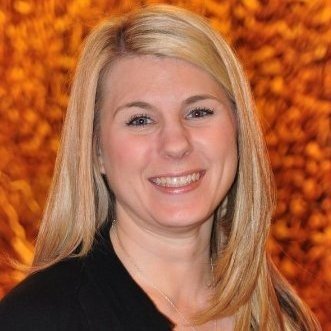
LaDonna Tucker
Schneider Electric
“We should not move further away from delivering a great candidate experience. That should be something we're trying to move towards.”
LaDonna Tucker has been named to the Talent 100, Class of 2026, the annual award recognizing up to 100 leaders in each category of talent acquisition. Honorees are nominated by peers or found by committees that look for excellent work wherever it happens, then chosen for the depth of their craft and their impact on hiring. This is LaDonna's story.
Ask LaDonna Tucker how a talent organization should judge whether it has deployed artificial intelligence correctly, and she does not reach for adoption rates or cost per hire. She reaches for the feedback candidates give back. At Schneider Electric, where candidate experience sits inside the core talent strategy rather than beside it, Tucker treats that feedback as the diagnostic that matters most: if the data shows the company drifting further from the people it is trying to hire, the technology has been implemented wrong, no matter how impressive the efficiency gains look on a slide.
It is a standard that only makes sense once you know where she started. Tucker came into recruiting through the hardest door in human resources, and the experience left her with a conviction she has carried ever since: the job market is not an abstraction. It is a room full of individual people, and every process decision lands on one of them.
The Launchpad She Wasn't Looking For
Before recruiting, Tucker held broad HR responsibility, the kind of HR vice president scope that puts a leader in the room for the decisions nobody volunteers for. Part of that work involved separating people from their jobs. She knew immediately that it did not sit well with her. What did sit well, and what ultimately redirected her career, was the other half of the equation: helping those same people find something new.
Some of them landed roles better than the ones they had lost, opportunities Tucker is convinced they never would have pursued on their own had circumstances not pushed them back into the market. Watching that excitement up close was the turn. "It was a big growing up experience," she says of the period, "but it also pushed me towards the area of recruitment."
From there she moved into headhunting, a competitive, sales-driven world that sharpened her instincts and taught her how to close. She calls the whole sequence "the launchpad I wasn't looking for," and notes that like a lot of people who end up in this profession, she found her niche early once she knew what to look for. The difference is that she has never let the origin fade into resume detail. The reason candidate experience is non-negotiable for her is that she has stood on the other side of the table and watched what a bad process does to someone already having the worst week of their professional life.
AI: Still Mid-Shift, Not Post-Shift
Tucker is careful not to pretend the industry has arrived anywhere. "I think we're still in the shift," she says. "I don't know that it's fully shaken out what the impact is going to be." The conversation about AI has been running for years, but what has changed recently is that talk turned into action. It is now embedded in nearly every talent strategy in some capacity, and organizations are still working out what capacity that should be, with models ranging from fully outsourcing the front end of the process to fully outsourcing the back end. The right answer, in her reading, is genuinely company-specific and culture-specific.
Her advice to other talent leaders is deliberately narrow, and all the more useful for it: hold the candidate experience as the fixed point and let everything else move around it. Collect the feedback. Read it honestly. If the signal shows distance opening up between the organization and its candidates, that is the sign the implementation went wrong, and the work becomes figuring out how to pivot so the technology delivers a better experience rather than a thinner one. It is a test that resists vanity metrics, which is precisely the point.
Championing the Next Bench
Tucker's attention to who is coming up behind her is not theoretical. Among the leaders she chose to put forward for recognition were a talent leader who has built a career in healthcare-sector talent leadership and strategy, and a former member of her own team who is now director of talent acquisition at Connection in New Hampshire. Elevating someone you once managed is a quiet form of accountability. It says the development work was real.
That instinct connects directly back to the beginning of the story. Tucker got into this profession because she saw what happens when someone gets a genuine shot at something better, and two decades of corporate scale have not dulled the appeal of that moment. The systems have grown more sophisticated and the tooling more automated, but the win she is still chasing is the same one she recognized the first time: a person, on the other end of a process, ending up somewhere better than where they started.
The Talent 100 exists to celebrate the people shaping the future of how the world hires, and few embody that better than LaDonna. We are honored to welcome LaDonna Tucker to the Talent 100, Class of 2026, and grateful for the experience, perspective, and craft they bring to this community. Congratulations, LaDonna. Welcome to the Talent 100.
About the Talent 100
The Talent 100 is an annual list spotlighting the leaders who push HR and talent acquisition forward, organized by Noon AI. Honorees are selected through peer nominations and independent selection committees. Selection is entirely merit-based, with no fees or pay-to-play requirements.