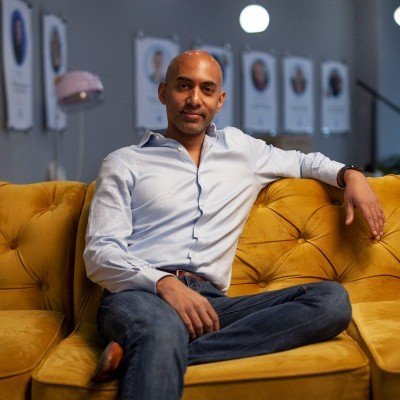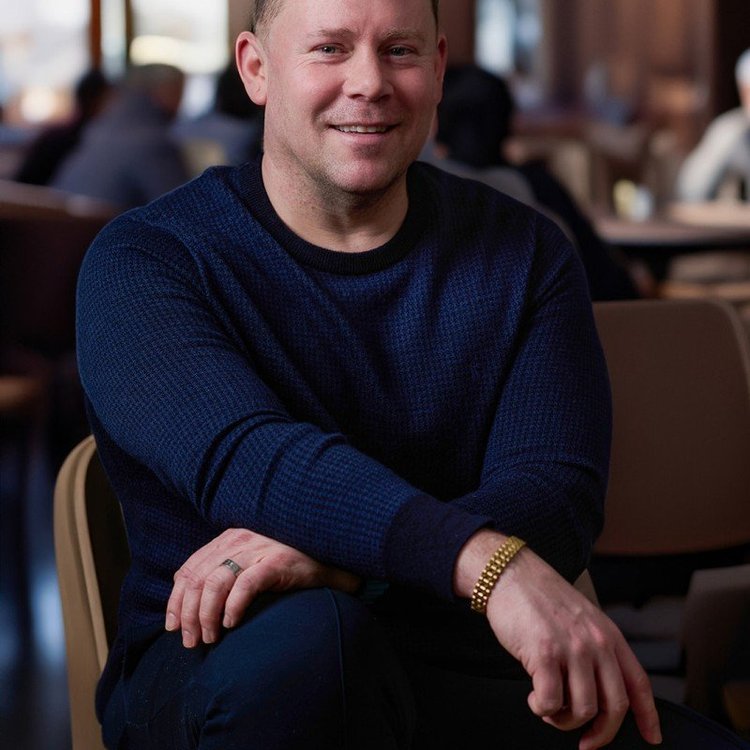
Ian Stammers
Ian Stammers Talent Advisory
“Embrace AI, but don't lose the human touch.”
Ian Stammers has been named to the Talent 100, Class of 2026, the annual award recognizing up to 100 leaders in each category of talent acquisition. Honorees are nominated by peers or found by committees that look for excellent work wherever it happens, then chosen for the depth of their craft and their impact on hiring. This is Ian's story.
Ian Stammers began in recruitment in the 1990s, when placing a candidate meant faxing a CV across London and hoping the machine cooperated. Twenty five years later he led talent acquisition for European Space at Serco, a professional services business of 50,000 people worldwide whose customers are governments and space agencies, the European Space Agency among them. The work is not abstract. When his team hired, entire families crossed borders, and Stammers treats that as the point of the profession rather than an incidental side effect. He is now Founder and Talent Advisor at Ian Stammers Talent Advisory.
"We're relocating people from country to country," he says. "Some people in countries where they're not as well off as others. We're actually relocating them and their families. We're changing their whole lives." That, more than any placement metric, is why he is still in talent acquisition a quarter of a century in. Once you have done that for someone, he notes, the relationship does not end when the paperwork is signed. It goes on and on.
An Academy Day in Westminster
Nobody, as Stammers puts it, leaves school announcing they want to work in TA. His own entry point was an academy day at Capita in Westminster, London, in 1999. Thirty candidates in a room; roughly ten of them, the company said, would come through as recruiters. Stammers was one. A six week training course followed, designed to embed every element of recruitment, and it laid the foundation for a career that has since spanned agency and in house work, the Middle East and Europe, and hiring across the world.
The technology has changed beyond recognition, and he is glad of it. What has not changed is the relationship building. Over 25 years he has built what he describes as dozens and dozens and dozens of relationships across the profession, from CTOs to CFOs, and it is the accumulation of those relationships, rather than any single placement, that he counts as the real asset of a long career in this field.
Automation at Scale, Judgment Left Human
Serco had put real money behind its conviction about technology, rolling out an AI driven CRM system sourced from the United States across a global TA function of roughly 150 to 160 people, some 60 to 70 of them in the US. From where Stammers sat, the results were striking. The platform automates scheduling, automates sourcing, and scores candidates. His team still oversaw the output, but the administrative floor of the job had largely dropped away.
What matters to him is what fills the space that opens up. Freed from transactional work, his recruiters spent their time with hiring managers, lifting net promoter scores inside the business and deepening relationships with customers. In a business to government organisation selling into space agencies, that commercial fluency compounds. A recruiter who understands the contract understands the hire.
He is clear eyed about the trade off. The state of LinkedIn today occasionally unsettles him, and he is blunt about the limits of automation in a people business. "No one likes talking to bots anymore," he says. "So we've got to keep that human touch." Technology earns its place by removing friction, never by removing the person.
The Heart of the Business
Stammers had also been building the connective tissue between TA and the wider organisation. He recently rolled out a TA playbook, effectively a cheat sheet for hiring managers, to create consistency across the group in how assessment happens and how processes are followed. It is global governance in usable form: one standard, available to everyone who hires.
His advice to other talent leaders heading further into 2026 starts with a warning and ends with an instruction. The warning is simple. If you do not move with technology you will be left behind, in this industry as in any other. The instruction is about ambition. Too much of TA remains transactional, fixed on filling the vacancy in front of it, when the leader's job is to understand the business as deeply as the stakeholders do: what the organisation wants to achieve this year, which direction it is heading, and how the team gets it there.
That understanding, he insists, has to be volunteered rather than requested. "Don't wait for your stakeholders to come to you and say, how can you help? They're not going to do that." Go to them instead. Bring the attrition problem, the sourcing idea, the process improvement, and bring a recommendation with it.
He is also candid that recognition rarely follows. When the year's wins are celebrated, the credit tends to land with the bid team and the sales team. But someone found the people who delivered that work, often sourced out of competitors in a space sector he describes as fiercely competitive, and that someone was TA. "You're never going to be in the spotlight," he says, "but if you understand how important you are to the business, then that's key." In his own reckoning, the function he has spent 25 years in is not a support service at all. It is the heart of the business.
The Talent 100 exists to celebrate the people shaping the future of how the world hires, and few embody that better than Ian. We are honored to welcome Ian Stammers to the Talent 100, Class of 2026, and grateful for the experience, perspective, and craft they bring to this community. Congratulations, Ian. Welcome to the Talent 100.
About the Talent 100
The Talent 100 is an annual list spotlighting the leaders who push HR and talent acquisition forward, organized by Noon AI. Honorees are selected through peer nominations and independent selection committees. Selection is entirely merit-based, with no fees or pay-to-play requirements.