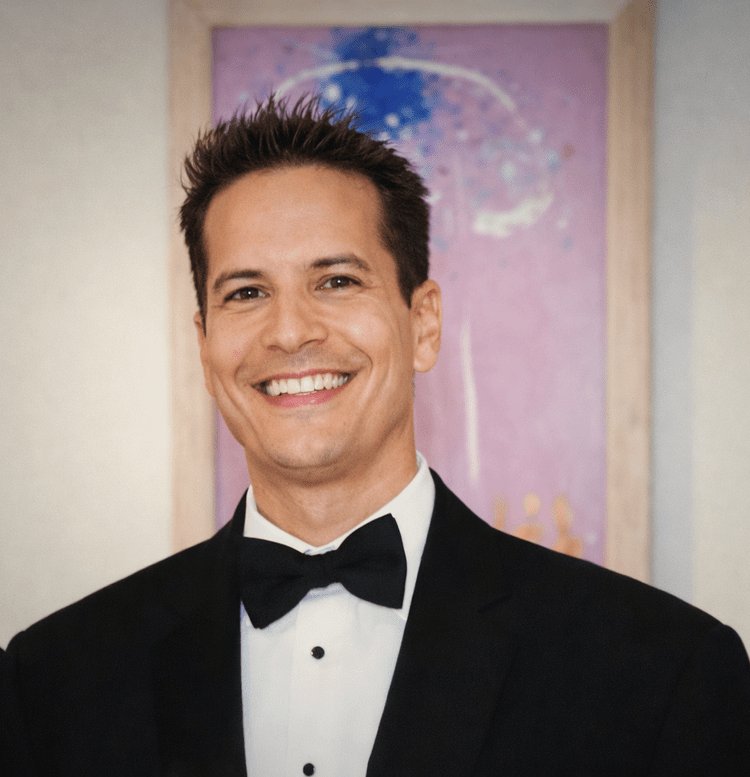
Jalpa Trivedi
Formerly House of Shipping
“I've literally done everything under the sun when it comes to the TA and employer branding space.”
Jalpa Trivedi has been named to the Talent 100, Class of 2026, the annual award recognizing up to 100 leaders in each category of talent acquisition. Honorees are nominated by peers or found by committees that look for excellent work wherever it happens, then chosen for the depth of their craft and their impact on hiring. This is Jalpa's story.
Jalpa Trivedi lasted exactly three months as a structural engineer. She had graduated as a civil engineer, joined a highly regarded engineering firm in Dubai, and discovered within a single quarter that a desk and a drawing board could not hold her. "I'm not a desk based person," she says. "I need a lot more people interaction, I need a lot more action in my corporate workspace." More than two decades later, that instinct has produced one of the more remarkable talent acquisition careers in the Middle East: two functions built from literally nothing, a regional centralization program at one of the Big Four, and a body of work spanning executive search, volume hiring, employer branding and technology transformation.
From Engineering Drawings to the Search Desk
The pivot was deliberate rather than panicked. Reasoning that consulting firms actively court engineers for their analytical and abstract thinking, Trivedi joined KPMG as a trainee management consultant and spent a couple of years there. She then returned to the UK, where she had been schooled, to take an MBA at Imperial College. It was in the HR module of that program, watching how talent acquisition sits as one discipline under a much larger umbrella, that the shape of a career finally came into focus.
She graduated in 2002 and went home to Dubai, which at the time had almost no international search presence: no Korn Ferry, no Heidrick, no Spencer Stuart of consequence. What it had was a boutique executive search firm with something close to a monopoly, and a managing director who picked up the phone. Every client was retained, he told her, and every mandate was C-level. Was that of interest? It was. Trivedi spent four years as an executive search consultant, running a professional services desk populated by McKinsey, Booz, Bain and the Big Four, where she placed directors and partners, and a retail banking desk where she recruited retail bank CEOs and heads of credit cards, IT, marketing and retail banking.
Going In-House, and Centralizing a Region
Ernst & Young was one of her largest clients, and after four years on the other side of the table the firm made her an offer: come in-house and run it yourself. She joined EY as Head of Talent Acquisition for the advisory service line across the Middle East, covering roughly 17 offices with a team of eight to ten. The brief was substantial. Every office was running recruitment its own ad hoc way, and Trivedi was asked to centralize the lot: one policy set, one process, one supplier list, standardization across the board. She implemented Taleo across the entire Middle East region so the business aligned with headquarters in the United States, and introduced both an employee referral scheme and a secondment scheme.
The timing sharpened everything. In 2008, as the credit crunch bit, EY's response was not mass redundancy but a global mobility program run by TA leaders around the world, redeploying underutilized consultants onto projects elsewhere rather than losing them. Trivedi ran that program for the Middle East. It was her first in-house role, and she describes the learning curve with a gesture rather than a word: straight up. "It literally threw me in the deep end," she says.
A Desk, a Chair, and Nothing Else
Clyde & Co, one of the leading international British law firms, headhunted her on the strength of that centralization work. The pitch was unusually honest. All they could offer was a desk and a chair, they told her, because the firm had never had a talent acquisition function and she would be the first TA professional it had ever hired. At EY there had at least been something to reorganize. Here there was nothing. She built the function from the ground up, successfully, and left only because her fiance was based in the UK and an internal move was not possible at the time. She took a four year sabbatical, married and started a family.
Her return was to the British Council, heading talent acquisition for the entire MENA region: roughly 19 to 20 offices across 17 countries with a team of three. It was also a deliberate education. EY and Clyde & Co had been niche, fee earner recruitment; the British Council, as a government funded body in the English teaching business, needed teachers and invigilators in serious volume. Trivedi reworked her strategies, her process, her framework and the architecture of the whole function to make sense for volume hiring, and spent five years there before Brexit and COVID cut the funding and the team with it.
She spent the next couple of years on consulting and project based assignments with Accenture, Aster Healthcare, one of the largest healthcare groups in the Gulf, and a major Hong Kong based safety business. When conditions settled she took a full time role as Global Head of Talent Acquisition at House of Shipping, covering more than 30 global companies with offices across all seven continents. Once again there had been no TA professional before her. She arrived with a team of two and grew it to a team of ten, having built the function from the ground up and implemented a new applicant tracking system, just as she had implemented Taleo at EY. Employer branding, from Aster Healthcare through House of Shipping, is another discipline she has now run repeatedly. She left House of Shipping in January 2026 and is currently between roles.
Why the Human Interface Wins
Trivedi has experimented extensively with AI tools. Her verdict is measured and unsentimental. AI, in her view, can assist a TA professional from an administrative perspective and little further, and the tools still carry real glitches. The risk she sees is not that machines replace recruiters but that recruiters let their most valuable muscles atrophy while the machines handle the easy part.
Her advice to talent leaders, and particularly to young recruiters trying to make their mark, follows directly from what she learned in executive search. Retain the human interface with candidates and stakeholders. Sharpen your sales skills. "It is your ability to sell a role to a candidate, specifically a passive candidate, that will make or break your career in the future," she says. Communication and stakeholder management, exercised with genuine influence, are what keep a TA professional relevant in an AI shaped market. Twenty three years after she walked away from a structural engineering desk, the through line is intact: the work has always been about people, and the people are still the point.
The Talent 100 exists to celebrate the people shaping the future of how the world hires, and few embody that better than Jalpa. We are honored to welcome Jalpa Trivedi to the Talent 100, Class of 2026, and grateful for the experience, perspective, and craft they bring to this community. Congratulations, Jalpa. Welcome to the Talent 100.
About the Talent 100
The Talent 100 is an annual list spotlighting the leaders who push HR and talent acquisition forward, organized by Noon AI. Honorees are selected through peer nominations and independent selection committees. Selection is entirely merit-based, with no fees or pay-to-play requirements.